Dubai unveils Dh2 billion mega road project to ease traffic
New 12km Latifa bint Hamdan Corridor to halve travel times, link six major highways
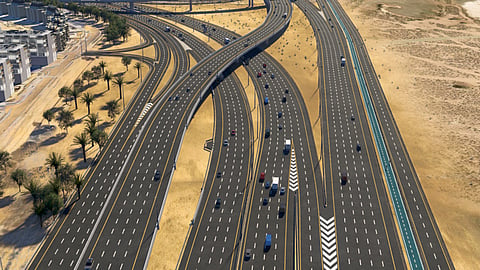
Dubai: Dubai has unveiled a Dh2 billion mega road project aimed at easing congestion, cutting travel times and improving connectivity across some of the emirate’s busiest road corridors.
The Roads and Transport Authority (RTA) in Dubai has awarded the contract for the 12-kilometre Latifa bint Hamdan Corridor Development Project, which will connect Sheikh Zayed Road, Al Khail Road, Al Meydan Street, Sheikh Mohammed bin Zayed Road, Sheikh Zayed bin Hamdan Al Nahyan Street and Emirates Road. Scheduled for completion by the end of 2028, the new corridor will serve more than 650,000 residents and visitors and accommodate over 130,000 vehicle trips daily.
Get updated faster and for FREE: Download the Gulf News app now - simply click here.
From 33 minutes to 15
One of the project’s biggest benefits for motorists will be a 54 per cent reduction in travel time between Umm Al Sheif Street and Emirates Road, with journeys expected to drop from 33 minutes to 15 minutes. The corridor will also increase the capacity of Dubai’s east-west road network by 12 per cent, helping improve traffic flow on key routes including Al Khail Road, Dubai–Al Ain Road, Umm Suqeim Street and Sheikh Mohammed bin Zayed Road.
Seven new bridges
The project includes the construction of 15 grade-separated structures comprising seven bridges stretching 2.3 kilometres and eight tunnels spanning 900 metres. Latifa bint Hamdan Street will be widened to four lanes in each direction, enabling the corridor to handle around 16,000 vehicles per hour in both directions.
RTA will also build a new road linking Al Khail Road with the extension of Latifa bint Hamdan Street, develop sections of Al Meydan Street and construct a new interchange to improve access to surrounding developments. In addition, 12.5 kilometres of cycling tracks will be built, connecting the existing cycling network from Al Qudra to Jumeirah.
Future demand
Mattar Al Tayer, Director-General and Chairman of the Board of Executive Directors of the RTA, said the project reflects Dubai’s strategy of investing in infrastructure ahead of future demand.
“Developing the road network is one of the key pillars of keeping pace with rapid urban and economic growth, supporting sustainable development, reinforcing Dubai’s standing as an investment hub, and consolidating its position as the best city in the world to live, work and visit,” he said.
Al Tayer said Dubai had adopted a proactive approach to infrastructure development by delivering major projects ahead of growth requirements to ensure the road network keeps pace with urban expansion.
Positive impact
“RTA continues to deliver strategic projects that strengthen connectivity between different areas, enhance traffic efficiency and ensure smoother mobility. These projects have a positive impact on quality of life and support the objectives of the Dubai Economic Agenda D33 and the Dubai 2040 Urban Master Plan,” he said.
He added that the Latifa bint Hamdan Corridor would strengthen integration across Dubai’s main road network, improve connectivity between the eastern and western parts of the emirate, support current and future development projects, and facilitate the movement of residents and visitors.
The corridor will serve several established and emerging communities, including Nad Al Sheba, Al Barari, Dubai Hills, Dubai District One, Mohammed Bin Rashid Gardens, Living Legends, Majan and Global Village, in addition to residential, commercial and industrial areas along Latifa bint Hamdan Street and Al Meydan Street.
Major upgrades
The project is the latest in a series of major road infrastructure schemes undertaken by the RTA to improve mobility across Dubai. In recent years, the authority has completed major upgrades on Umm Suqeim Street, Al Khail Road, Hessa Street, Sheikh Rashid Road, Al Khawaneej Street and Sheikh Zayed Road, while work is also progressing on projects including the Dubai Metro Blue Line and several strategic road improvements to support the city’s rapid urban growth.
The Latifa bint Hamdan project also builds on an earlier RTA phase that upgraded the western section of the corridor, reducing travel time between Sheikh Zayed Road and Al Khail Road from 12 minutes to four minutes. Once completed, the new phase will complete one of Dubai’s key strategic road corridors, further strengthening the emirate’s transport network and supporting its long-term economic and urban development plans.
Major highways connected:
Sheikh Zayed Road
Al Khail Road
Al Meydan Street
Sheikh Mohammed bin Zayed Road
Sheikh Zayed bin Hamdan Al Nahyan Street
Emirates Road
Communities that will benefit:
Nad Al Sheba
Al Barari
Dubai Hills
Dubai District One
Mohammed Bin Rashid Gardens
Living Legends
Majan
Global Village
Residential, commercial and industrial areas along Latifa bint Hamdan Street and Al Meydan Street