Dubai Municipality: Some toys can be dangerous
Flammable Halloween masks among hazardous items taken off shelves by inspectors
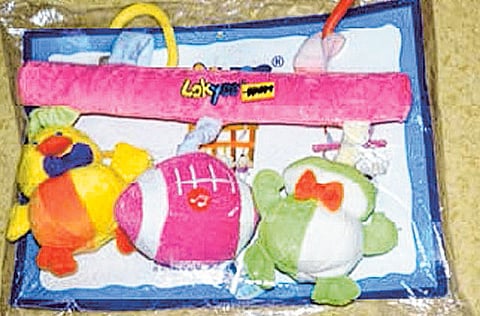
Dubai: Next time you buy a toy, think twice about its composition as some may be a hazard to your child’s health — that’s the message from Dubai Municipality.
A number of toys are confiscated every month by the municipality for exposing children to dangers through contact with skin, eyes or by ingestion or inhalation.
Redha Salman, director of the Public Health Department at the municipality, explained that 11 inspectors carry out random checks on retailers selling toys and confiscate and ban toys that do not meet the municipality’s safety requirements.
“All areas within the Dubai Municipality’s jurisdiction are under surveillance and a regular inspections programme implemented by the public safety section of my department,” he said.
According to the latest statistics provided by Dubai Municipality, 14 toys were banned in January 2012 and 17 toys in February, while a total of 184 toys were banned throughout 2011.
This year, Carnival’s Halloween masks made in Sri Lanka were banned as flammable materials were used in the manufacture of the toy, while music boxes made in China were taken off the shelves because they contained small parts and had accessible hazardous sharp points when subjected to an impact of more than one kilogram.
Last August, Bukkyballs magnetic toy was pulled from shelves across the emirate over child safety fears. The packets of small magnetic balls were banned because of injuries that affected children in the US who swallowed them.
As part of the inspection campaign, samples of toys are taken, including slides and swings, from shops and sent to the Dubai Central Laboratory for a variety of tests.
“We also conduct special campaigns and sudden visits to the market and shops before and during special events and celebrations as well as any required tasks to check for certain products recalled in the international market or other countries,” Salman points out.
However, he also noted that Dragon Mart is under Trakhees, the Department of Planning and Development at the Ports, Customs and Free Zone Corporation, and does not fall under the municipality’s jurisdiction.
Meanwhile, a senior official of the Emirates Authority for Standardisation and Metrology (ESMA), told Gulf News that consumers purchasing toys should ensure they have a G-Mark which certifies that toys are compliant with the mandatory standards,
The quality mark granted by Gulf Standardisation Organisation (GSO) is known as G-mark (Gulf Conformity Mark) which testifies compliance of GCC-wide safety and health regulations for toys.
The GCC regulations for manufacturing of toys were implemented in the UAE on January 1, 2011 and almost all market players have attained G-marks for toys as per the regulations, said Abdullah Al Muaini, Director of Conformity Department at ESMA.
“Still we find non-compliant toys in the market but stringent action is being taken against retailers and suppliers,” he said.
Al Muaini said all manufacturers, distributors and retailers must keep a technical file of each toy, which should describe the safety aspects including the materials used, chemical composition and potential risks.
The file should be ready to be given to the inspectors of ESMA at any time.
Violators are referred to the court which may issue a fine starting from Dh20,000 or imprisonment or both as per the legal provisions, depending on the seriousness of the violations.
ESMA conducts inspections in coordination with the local authorities in each emirate.


