Dubai's KHDA unveils roadmap to prepare students for the jobs of tomorrow
Standards will strengthen academic and career guidance from the early years to graduation
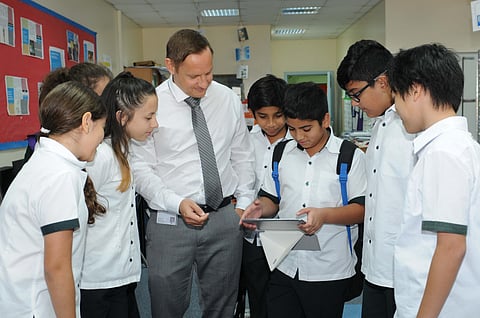
Dubai: Dubai’s Knowledge and Human Development Authority (KHDA) has launched a new framework to prepare students for future learning, work, and life as technology, artificial intelligence, and the world of employment continue to evolve.
"The FutuReady Framework: The Dubai Standards for Academic Guidance and Career Readiness in Educational Institutions" establishes nine standards for academic and career guidance across educational institutions, providing schools with a structured approach to helping students make informed decisions about their future.
The framework has been created to support students from the early years through to graduation, with an emphasis on developing adaptability, transferable skills, and an understanding of emerging career pathways.
The move has been part of Dubai’s wider focus on preparing learners for the future and developing the talent needed to support the emirate’s economic ambitions. KHDA’s wider future-readiness work has been aligned with Dubai’s long-term strategies, including the Dubai Economic Agenda D33 and the Education 33 Strategy.
Get updated faster and for FREE: Download the Gulf News app now - simply click here.
Preparing students
The new standards have recognised that traditional approaches to career guidance, such as helping students select school subjects, university courses, or a first career, are no longer sufficient in a rapidly changing employment landscape.
Dr. Amna Almaazmi, CEO of growth and human development at KHDA, has noted that many of the jobs students will do in the future do not exist yet.
“Academic and career guidance today must go beyond helping students choose subjects, programmes, or universities. The FutuReady Framework is about preparing young people to navigate uncertainty, develop transferable skills, and make informed decisions throughout their lives," stated Almaazmi.
“By embedding strong academic and career guidance across all phases of education, we are supporting students to be confident, adaptable, and ready for the jobs of the future.”
Career guidance
Under the FutuReady Standards, academic and career guidance has been set to become an ongoing part of a student’s education rather than something that happens only when a student is preparing for university applications or entering the job market.
The framework has laid out expectations covering structured academic and career guidance programmes, future skills, professional capacity and pathways, experiential learning, labour market insights, family and community engagement, digital and AI-enabled guidance, and inclusive, student-centred support.
Rather than focusing solely on what a student should study next, the framework has encouraged institutions to help learners understand their own interests and strengths while gaining a broader awareness of changing industries and possible career pathways.
Support for every student
Moreover, the FutuReady Standards has emphasised personalised and inclusive guidance. Institutions have been expected to provide student-centred support that takes into account individual needs, interests, and aspirations.
The framework has specifically included support for students of determination, with the objective of ensuring that all students can access meaningful academic and career guidance.
Family and community engagement has been another area covered by the standards, recognising the role parents and the wider community can play in helping young people make decisions about their education and future careers.
Private schools given three years
Dubai’s private schools will have three years to implement the FutuReady Standards or further develop their existing academic and career guidance provision in line with the new framework.
To help institutions do this, KHDA has published FutuReady Framework handbooks for schools and higher education institutions. The handbooks have been tailored to the different educational settings and provide expected practices and indicators across the areas covered by the standards.
Additionally, KHDA will organise workshops for education leaders and practitioners to explain the expectations and provide practical guidance on implementation.
The workshops have been eyed to help schools and other institutions translate the standards into effective academic and career guidance programmes.
KHDA partners with NCDA
KHDA has also signed a collaboration agreement with the National Career Development Association (NCDA) to support the launch and implementation of the framework.
The partnership will focus on research and professional development, with the goal of strengthening academic and career guidance practices across educational institutions.
According to Dr. Brett Anderson, president-elect of NCDA, the collaboration has reflected KHDA’s commitment to strengthening future-ready academic and career guidance for students.
“We look forward to working closely with KHDA to build high-quality guidance practices that help students make informed choices and prepare for meaningful futures,” said Anderson.
New approach
Meanwhile, the launch of the FutuReady Standards has marked a shift towards a broader approach to academic and career guidance in Dubai.
For students, the focus will be not only on deciding which subject to study or which university to attend, but also on developing the skills, confidence, and adaptability needed to respond to opportunities that may emerge years into the future.
With private schools given three years to align with the standards, KHDA is providing institutions with a defined period to strengthen their existing provision and embed future-focused guidance across the student journey.
The FutuReady Framework and its accompanying handbooks for schools and higher education institutions are now available on the KHDA website.