Catering to the hub
Dubai's educational institutions offer a host of business qualifications to meet the community's need for personnel
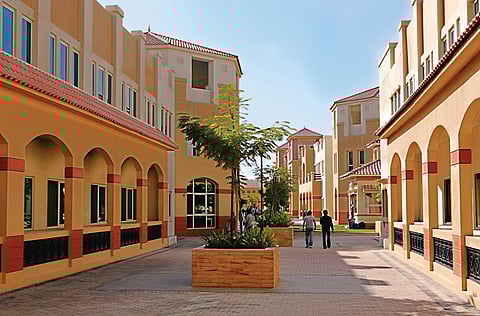
Over the decades, Dubai has established itself as a business hub, building on its trading history and making the best use of its location. Alongside this growth has been an expansion of opportunities for business education. This is tailored not only to supply the business community in Dubai with a skilled workforce but also to give students from other countries the experience of studying and working in the Middle East.
Many business schools have seen enrolments rise as employees use the global recession to ‘go back to school' to add some sparkle to their CV. Others take a general business degree to get a job in any sector, then take a master's when they are working. So do we know what employers want from a graduate fresh out of B-school?
"Employers want people who can act globally; people with hard skills such as banking, finance, marketing; and people who can act appropriately when their hard skills become outdated," says Prof. Nick Van Der Walt, Dean and Executive Director, Hult International Business School, Dubai International Academic City.
Hult is a good example of how Dubai creates a good environment for business education. Its students study at its other campuses around the world, and work with UAE businesses so that they go away with a degree plus real work experience in the Middle East and possibly basic skills in a new language. In its three-year history in Dubai, 83 per cent of Hult graduates have accepted a job offer within three months of completing their education.
About one-tenth of Dubai's entire higher education student population is studying for one of the MBAs offered at 21 institutions here. Other business qualifications in sectors from construction to finance to media are also hugely popular, and recently doctorates in business have been added at several universities.
Demand for doctorates
Prof. Rob Whelan, President, University of Wollongong in Dubai (UOWD), based in Knowledge Village, says, "Previously, it was necessary to study overseas to earn a doctorate. Our new DBA and PhD programmes in business met with an astounding 750 expressions of interest, more than 60 per cent from UAE nationals. Many are already in business or government, as senior managers and in other leadership positions. Our doctoral graduates will be in a very strong position to influence the future directions of their businesses, government policies and further improve the international competitiveness of the UAE."
As with any good business model, we see institutions in Dubai adapting to satisfy students who plan to stay in the UAE to work, and those from other countries who come here to obtain regional experience. A third example is Cass Business School Dubai, which is based in Dubai International Financial Centre (DIFC).
Ehsan Razvizadeh, Regional Director, Cass Dubai, says, "We recognise the importance of the region and are the first top-ranked business school in the world to offer Executive MBA programmes in Islamic Finance and Energy respectively. At the Dubai campus we also use numerous regional case studies, examples and guest speakers on the EMBA programme."
Ehsan, like other heads of institutions in Dubai, knows that Middle Eastern business experience is important for any employee in a global corporation who wants to climb the career ladder. Dubai offers such people a regional base with a strong field of top-class institutions to choose from and it is a good place to live while studying.
"Even those with long employment histories benefit from upskilling. The region's jobs market has become more competitive as it recovers from the economic crisis and more and more roles dictate that positions are filled by MBA holders," he says.
"The recession has made employers very choosy; having hundreds of applicants for an open position means candidates must stand out in every respect, and an advanced degree from a reputable school may supply that extra edge."
And business schools realise they must be flexible and offer courses so people who are working full-time can fit them into their schedules.
Hult, for instance, does a four-days-a-month EMBA. Its students fly into Dubai for face-to-face teaching every month, and the rest of their tutorials and teaching materials are uploaded onto an iPad, which also connects them with teaching staff. Of Hult's 250 students, 65 are full-time and the balance study part-time.
For those who want to work in Dubai, the choice of degrees at UOWD has been designed to suit the city's needs, says Prof. Whelan.
This is important for the development of Dubai, says Dr Warren Fox, Executive Director of Higher Education, Knowledge and Human Development Authority. "Dubai needs skilled employees in tourism, logistics, finance, and hospitality," he says. "If we can offer this wide variety of quality business degrees, then Dubai will benefit and we will keep our brightest graduates here."
— The author is Senior English Writer at the Knowledge and Human Development Authority


