Abu Dhabi's Manara Centre hosts dialogue on Resilience, highlighting coexistence as a national strength
“A young country where everything is possible,” say an expert about how UAE is different
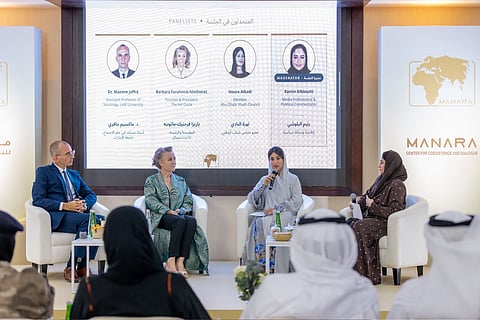
Abu Dhabi: Manara centre for Coexistence and Dialogue hosted the dialogue on Resilience through Coexistence, highlighting the role of UAE in maintaining measurable tolerance, shared cultural spaces and youth-led crisis preparedness in the strengthening of social cohesion.
The dialogue marked its beginning with the opening remarks by the Director of Alternative Service Management and Volunteering at the National Emergency Crisis and Disasters Management Authority, Fahad Butti Al Muhairi.
Speaking from an emergency management perspective, Al Muhairi said societies must be prepared for crises just as institutions are, by building capabilities and testing plans.
“That is where coexistence becomes a national strength,” he said, pointing to a neighbour who checks on a family, or a volunteer who may come from another country and speak another language, yet they all protect a safety that everyone shares.
The event addressed the role of UAE in bringing together people of different religions, languages, cultures and traditions under one umbrella while sharing the commitment to the place they call home. “That connection has practical value in an emergency,” he added.
What sets the UAE apart?
The address was followed by the panel of experts from different perspectives- research, art and a youth representative together to reflect on why Abu Dhabi, and the UAE stands out.
Dr. Maxime Jaffré, Assistant Professor in the Department of Government and Society at UAE University; Barbara Farahnick-Mathonet, founder and president of the Art Circle in Abu Dhabi; and Nora Albadi, an international business development professional at Etihad Rail and a member of the Abu Dhabi Youth Council, shared the opinions on the social cohesiveness from both view of expatriates and Emaratis.
Dr. Jaffré argued that diversity itself is not a challenge, it is whether the communities and government allow the people to hold their beliefs privately without the pressure of how others should practice. He said that religion is private, while linking that principle to the UAE’s peaceful social climate.
Mathonet said that her experience with the Art Circle pointed to similar directions. Originally from Belgium and based in Abu Dhabi since 2012, she founded the group in 2018 to build a community where members feel they belong.
According to her, visiting museums, institutions, and artists’ studios created a link between the members that are beyond their differences.
“A cultural space should do more than open its doors,” she added, pointing to how it should make people feel part of something, so that they both learn and contribute.
Speaking on the sidelines of the event, she said that the willingness of the country to be visible on a global level makes the country stand out.
“This is a young country where everything is possible. You have a lot of countries that are very old, where people are a little bit negative and pessimistic. And here you find a country, it’s not only that everything is possible, but on top of it, they give you the opportunity even when you are not from that country. And this is very rare.”
Albadi turned the discussion to preparedness. Working with ADCMC, the council helped develop an emergency response programme, announced in April 2026, that offered hands-on training and drew more than 1,000 registrations.
Participants came from all nationalities, she said, a sign of how many residents regard the UAE as home and want to help keep it strong. She also highlighted the role of the youth council in being the voice of Emirate’s youth within the government.
Abu Dhabi’s landmarks as bridges between communities
The discussion also included how tolerance can be measured. Dr. Jaffré presented findings from a survey of about 17,000 responses, conducted between 2019 and 2024, showing that residents who had visited cultural landmarks such as Louvre Abu Dhabi were different from those who had not.
“People who visit these institutions are more tolerant,” he said, explaining that those who have never visited tend to stay distant from them and struggle to understand their purpose.
Before the Abrahamic Family House opened, visitors to the Louvre were also more likely to welcome the idea of a mosque, a church and a synagogue standing side by side.
He said the Abrahamic Family House was the institution that respondents most often named as significant for cultural dialogue and argued that landmarks of this kind help build social cohesion by letting people experience coexistence for themselves.
Mathonet says that every country has a museum, but museums that are old. To her, what stands out about the region is the birth of new of museum, “which this is more rare than ever.” She added.
“When a museum is born, it’s a huge event, but it’s just one museum. Here, they are building so many museums and institutions in the same place, and that is unique. You don’t have that in any other country.”
An example of coexistence
Al Muhairi pointed to the recent case of fly Dubai. President His Highness Sheikh Mohammed bin Zayed Al Nahyan’s meeting with the fly Dubai crew, whom he recognised for their courage in protecting passengers.
Referring to the President’s remark on UAE being their country and that they always have a home and a family here, Al Muhairi said. “That is what makes belonging real,” he added, “knowing your contribution is valued, your safety matters and you are not alone.”
On the question of safety, Dr. Jaffré said that after the recent regional conflict, many expatriates had come to appreciate the high level of protection in the country, and that daily life had continued as normal.
While Mathonet pointed to the sixth edition of the Art Circle Award, which opened the week before the event. She said that the competition is open to all artists living in the UAE, whatever their nationality, and drew more than 200 entries on the theme “mending when the breaking is still happening.”
The entries showed how differently the same theme was interpreted depending on an artist’s country, religion and creative background, she said, and how many young creatives live in the UAE.
During the closing remark, Bakhita Ahmed Al Rumaithi, Executive Director of Manara Centre for Coexistence and Dialogue, stated the purpose of the Marana Centre while announcing the launch of an op-ed editorial series inviting intellectuals, university professors, and people working in coexistence, peacebuilding, or reconciliation to share case studies and perspectives.
"Manara is not here for a political agenda or a personal agenda, but we are here to create a movement," she emphasised, as she calls the people of this movement, the champions of peace.


