A bargain hunter's dream
Multicoloured neon lights that stretch along both sides of the bustling street give off a glowing hue
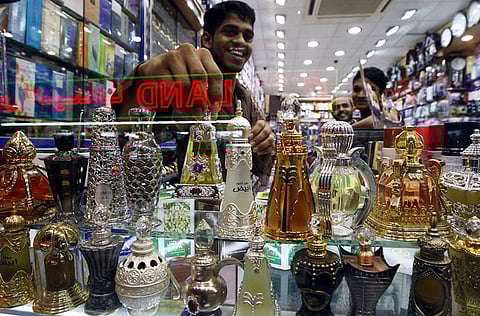
Dubai: There are a handful of places in Dubai where you can find just about anything, and the oldest is Al Fahidi Street in Bur Dubai. Though the street is busy at all hours of the day, it truly comes alive at night.
Multicoloured neon lights that stretch along both sides of the bustling street give off a glowing hue. On either side of the crawling traffic the sidewalks are full of activity; handbags, watches and sunglasses decorate the walls.
Every few steps you spot curiously-named stores like ‘Tourist Star', ‘Gift Land', ‘Queen Fashion Tailor' and ‘TGI Thursdays'. People pop in and out of one-metre wide alleyways. Don't be surprised to see someone sitting on the ground selling illegal DVDs.
Every kind of shop can be found here, from jewelry to textiles, electronic to sports goods and some of the best food in Dubai. You can discover a bargain at every door and prices are negotiable.
Benny D"souza has been shopping at Al Fahidi since the past 30 years. "The best time is to come between 9 to 10 am when there is no rush. I buy cloth and also get it tailored here, " she said.
Suresh Massand, who is a partner at Royal Jewellery, said, "This is the High Street of Dubai." He opened his shop here in 1997. Today he finds parking is a big problem.
Siddharth Sharma, who runs a family store, said the area has not changed over the 27 years he has been here. "Living here is cool. People come from all over to shop here. I just step down to the street."
Life here seems fast-paced; a stark contrast to the sandy residential area it was 50 years ago. Concrete and neon has replaced the old palm frond, Barasti houses and their windtowers, but right at the end of the street a handful of them can still be found in the Bastakiya area.
Little surprise
Scores of alleyways branch off Al Fahidi, each leading to a little surprise at the end.
Down one is Trivandrum Highland restaurant; famous for its Samosas and Jalaibi which Mohammad Kunni has been serving up for the past 25 years: "From 11am you can get hot fresh Zalaibya and Samosa. You come and try; we have all kinds of Indian sweets," he says.
Many of Al Fahidi's residents like to take a short walk to the creek to spend the evening with their family.
"Everything is nearby, all kinds of restaurants, shops and money exchange venues," says Mamta Gind, a 31-year-old mother from Mumbai, who has been living in Al Fahidi for the last four years.
"This area is not cleaned frequently," says jewelry shop owner Anil Javeri. "It's a very nice place to live, but there needs to be more control. Bicycles ride all over the place, even motorcycles drive on the sidewalk to take shortcuts," says the father of five.
Flourishing
Keralite Mohammad Zubair, 63, stands behind the counter at Fashion Fabrics. He has been working in Bur Dubai's textile market for 34 years.
"I started out in 1975 in the Old Souk near the creek. But in 1990's we moved to the shop to Fahidi street, business here was flourishing. Now it's a bit slow, mostly people come to buy sarees and shalwars. But parking and traffic is really affecting our sales, customers get fined for parking for only 10 minutes."
Police officers Dhafir and Ahmad have been patrolling the Al Fahidi area for the past three years. "It's a mixture of commercial and residential here and it gets very busy," says Dhafir, "but surprisingly it's a very safe and quiet neighborhood; people here have very simple lives.
"It's all Indians; I think there are only four or five Arab families," says Ahmad. "You know everyone here, if someone new comes to the neighbourhood you can immediately spot them, they just stick out.
- Where there is fabric, there are tailors. More than a dozen tailor and embroidery shops crowd this alley. With decades of experience, these craftsmen can fashion custom-fitted gowns of your own design, or just show them a picture of your favourite dress and they'll have it made.
- Al Fahidi Fort: Built around 1799, the fort is the oldest building in Dubai and the street's namesake; it's also the Dubai Museum.
- Bastakiya: The last of Dubai's Windtowers are preserved here along with a few old yus (gypsum) homes which give you the feel of what the old merchant city was once like.
Have your say
Do you live in the Al Fahidi area and have a story to tell us? What is your opinion of the
changes that have taken place in your area? Do you live in another neighbourhood and would like to tell us.
Sign up for the Daily Briefing
Get the latest news and updates straight to your inbox


