Winning the drone war requires a new playbook
The challenge is no longer just stopping attacks, but doing so affordably and at scale
The Iranian missile threat has long cast a shadow across the region, and the UAE has been preparing for this eventuality for decades, becoming the first foreign customer for the US Terminal High Altitude Air Defense (THAAD) system and procuring air defence equipment from a range of international partners.
It is a testament to our leadership’s long-term strategic planning, and the efforts of our air defence operators, pilots and emergency services, that these attacks have been largely blunted, with more than 90 per cent of projectiles intercepted.
Yet no shield is impenetrable. These attacks have claimed lives, injured dozens and damaged residential areas and critical infrastructure. The economic consequences are already significant and will endure long after the current conflict ends. Iran will inevitably seek to rearm and adapt its weapons systems based on lessons learned. We cannot afford complacency.
The leadership has already moved to strengthen our defences through new equipment, interceptor deliveries and defence agreements with international partners. While these investments are vital, they do not fully address one of the most pressing threats to emerge from this conflict: low-cost, single-use kamikaze drones.
To respond effectively, we must treat this threat on its own terms.
The drone menace
This war has highlighted the danger posed not by sophisticated and expensive unmanned systems, but by crude, inexpensive drones such as the Shahed 136.
These drones have, in many respects, proved more challenging than Iran’s ballistic missiles. Ballistic missiles carry heavier payloads and travel at extreme speeds, but their trajectories are relatively predictable, making them suitable targets for systems such as THAAD and Patriot.
Shahed drones pose difficulties at every stage of interception. Their small size and low altitude reduce radar detection ranges. Their modest payloads allow them to travel long distances and exploit gaps in air-defence coverage. By the time they are detected, they are often already close to their targets.
As a result, interception frequently falls to fighter aircraft and helicopters. Our pilots have performed admirably, but these operations carry risks and consume valuable resources.
The central challenge is economic.
A Patriot interceptor can cost $3-4 million dollars. A Shahed drone may cost only a few thousand dollars to manufacture. A single hour of F-16 flight time costs far more than the drone being hunted. Even strikes against drone factories and launch sites often involve weapons that are considerably more expensive than the targets themselves.
Yet these drones cannot simply be ignored. Despite relatively small warheads, they are capable of damaging critical infrastructure, military assets and economic lifelines.
Recent attacks across the Gulf have demonstrated the scale of the risk. Drone strikes have disrupted energy infrastructure, damaged air bases and targeted expensive radar systems used for missile defence. The financial costs can run into the billions, while the human costs are impossible to quantify.
How did it come to this?
While the scale of the current attacks is unprecedented in our region, the underlying trend should not be surprising.
The concepts behind these drones have existed for decades, but advances in manufacturing, electronics and communications have dramatically lowered costs and increased accessibility. Sanctioned states such as Iran have become particularly adept at producing effective systems using commercially available components.
The Russo-Ukrainian war provided a clear warning. Russia and Ukraine have deployed drones on an enormous scale, demonstrating how relatively inexpensive systems can exert extraordinary pressure on even sophisticated air-defence networks. Tens of thousands of Shahed-derived drones have been launched against Ukrainian targets, offering a blueprint that Iran has now adapted in the Gulf.
Closer to home, the Gulf states have faced this threat before. Houthi attacks on Saudi Arabia and the UAE demonstrated both the range and effectiveness of drone systems. The 2022 attack on the UAE served as an important reminder that homeland defence can no longer focus solely on traditional missile threats.
The lessons were recognised and acted upon. The large number of interceptions achieved during the current conflict reflects that preparation. Yet the sheer volume of attacks and the cost of countering them demonstrate that a new approach is required.
Why startups will matter
The solution to the drone threat must be affordable, scalable, adaptable and capable of being produced domestically.
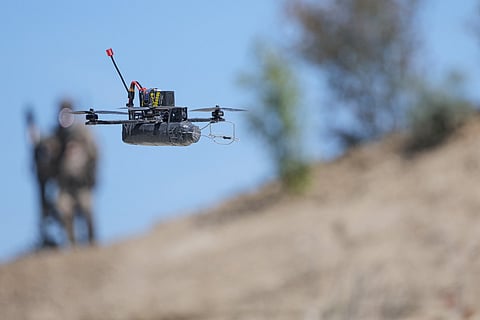
This is where defence startups can play a critical role. Unlike large defence contractors, startups are built around agility. Small teams can rapidly develop, test and adapt solutions to evolving threats. Limited resources often force them to prioritise efficiency and cost-effectiveness, precisely the characteristics needed to counter low-cost drones.
The barriers to entry in defence technology have also changed dramatically. Advances in consumer electronics, drone technology, sensors, software and manufacturing techniques such as 3D printing have opened opportunities that would have been unimaginable a generation ago.
This creates the possibility of drawing on a much broader pool of talent and expertise. Engineers, programmers, manufacturers, mechanics, hobbyists and students all possess skills that can contribute to national defence if properly organised and supported.
Importantly, this approach would complement rather than compete with established defence companies.
Successful startups can become suppliers, subcontractors and innovation partners for larger firms. They can help diversify domestic production, strengthen industrial resilience and reduce reliance on wartime imports.
A decentralised ecosystem also offers strategic advantages. Large factories and production centres are vulnerable to disruption. Networks of smaller manufacturers and workshops are harder to target and easier to sustain during crises.
Over time, successful startups can mature into established defence firms themselves, creating a stronger and more innovative national industrial base.
Lessons from abroad
This is not a theoretical proposition.
Ukraine has become a global laboratory for drone warfare and drone defence. The pressures of war have produced a wave of startups developing affordable interception systems capable of countering Shahed-style threats. Several of these systems have already demonstrated their effectiveness in operational conditions.
The United States has shown how startup-driven defence innovation can scale rapidly, developing products ranging from autonomous systems to advanced aerial platforms while attracting billions in investment.
Europe offers similar examples. Partnerships between startups and major defence companies are increasingly common, demonstrating how innovation and established industrial capacity can work together.
These developments show that the future of defence innovation will not come solely from traditional contractors. Smaller, faster-moving companies will play a crucial role.
A call to action
We cannot assume that today’s defensive successes will guarantee tomorrow’s security.
Technology will continue to evolve. Future systems will become more capable, more autonomous and potentially more difficult to intercept.
Fortunately, the UAE is not responding from a position of weakness. We have the resources, the talent and the institutional capacity to act before future threats become even more dangerous.
As the country continues to invest heavily in defence, a portion of that investment should be directed towards building a vibrant defence-startup ecosystem. This could include dedicated funding, regulatory support, streamlined procurement pathways and closer cooperation between startups, established defence firms and the Ministry of Defence.
Such investments would be modest compared with the potential costs of failing to adapt.
The precise structure of such a framework remains open for discussion. But the need for action is clear. The UAE has already demonstrated remarkable resilience in the face of conflict. If we can harness the ingenuity of our entrepreneurs and innovators, we can build a defence ecosystem capable of meeting the challenges of the future.
When the next test comes, our response should not depend solely on imported solutions. It should include home-grown technologies developed by the nation’s own engineers, entrepreneurs and innovators.
If we succeed, our adversaries will discover once again that this small nation is capable of punching well above its weight.
Khaleefa Hadef AlDhaheri is an Emirati startup founder and drone pilot with interests in geopolitics, aviation and technology investments.


