What is Laylat al-Qadr? The significance of Islam's holiest night
Find out the significance, history and timing of the holiest night in the Islamic calendar
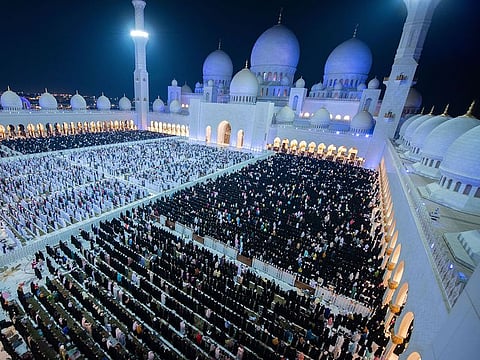
Dubai: Each year, as Ramadan draws to a close, Muslims around the world intensify their prayers, reflection and acts of charity in search of a single, extraordinary night. Laylat al-Qadr, is considered the holiest night in the Islamic calendar, and its significance stretches far beyond one evening of devotion.
What is Laylat al-Qadr and when does it fall during Ramadan?
Laylat al-Qadr, often translated as the Night of Decree or Night of Power, is regarded as the holiest night in Islam. It commemorates the moment when the first verses of the Qur’an were revealed to the Prophet Muhammad (PBUH), marking the beginning of the Islamic revelation.
For Muslims around the world, the night carries profound spiritual significance. Islamic tradition describes it as a night that is “better than a thousand months”, meaning acts of worship performed during this time are believed to hold the reward of a lifetime of devotion.
When is Laylat al-Qadr?
Laylat al-Qadr falls during the last ten nights of Ramadan, specifically on one of the odd-numbered nights. Many Muslims commonly observe it on the 27th night of Ramadan, although its exact date is not known.
Islam follows a lunar calendar, which is based on the sighting of the moon rather than the solar calendar. As a result, the precise timing of Laylat al-Qadr cannot be predicted with certainty. Instead, believers are encouraged to seek it throughout the last ten nights through prayer and reflection.
How do Muslims observe it?
The final ten nights of Ramadan are a time of heightened spiritual intensity. Many Muslims increase their acts of worship significantly, and some observe i'tikaf - a voluntary seclusion in the mosque for sustained prayer and reflection. Amongst the most encouraged acts during this period are:
Du'a (supplication) - Spending time in sincere personal prayer, asking for forgiveness, guidance and blessings for oneself and others.
Recitation and reflection - Reading the Qur'an and contemplating its meanings, drawing closer to its teachings and to God.
Voluntary prayers - Performing Tahajjud and other night prayers, which carry heightened reward during these final evenings.
Charity and giving - Acts of generosity, particularly monetary donations, are believed to hold multiplied reward on this night, given its equivalence to a thousand months of worship.
The spiritual significance of the night
Laylat al-Qadr marks the moment when the first verses of the Qur’an were revealed to the Prophet Muhammad by the angel Jibreel (Gabriel). The Qur’an itself highlights the significance of this moment in Surah Al-Qadr, describing the night as one in which angels descend and peace prevails until dawn.
Aside from commemorating the beginning of the Qur’an’s revelation, the night is also believed to be a time when divine guidance and decrees are delivered for the coming year.
For Muslims, it is not merely a historical anniversary but a living, annual invitation - to seek forgiveness, to purify intention, and to reconnect with faith in one of its most concentrated forms.


