
Savour the singular joys of a corn meal
There's a lot you can do with fresh corn - broths for example are a hearty result
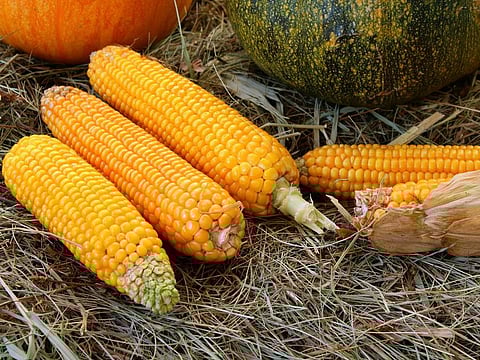
Until recently, I never thought to cook fresh corn just for myself. Why? The huge piles and the low prices seemed to suggest the purchase of a dozen ears — what's a solo cook going to do with all that corn?
But when a colleague put the corn-for-one challenge to me, I quickly saw the light. Like potatoes and eggs, fresh corn comes in a natural single-serving package.
One ear yields about 3/4 cup, enough for a simple side dish or the makings of a main course, be it an open-faced omelette, a bowl of spicy soup or a pasta “sauce''.
The only caveat: It always tastes sweeter when it's fresher, before the sugars in the corn convert to starch.
As it turns out, just about any corn dish gets an extra boost of flavour from a broth made from everything that's left once you take off the kernels: the cobs, of course, but also the husks and even the silks.
The result is a pure corn essence, which, unlike fresh corn, remains vibrant after refrigerating or freezing.
Newer pastures
I'm still experimenting with my batches of corn broth. After using it to satisfying effect in the accompanying recipes, I am turning my mind to other possibilities — some savoury, some sweet.
I had a lovely corn ice-cream at a restaurant the other day. Could I turn the broth into a single serving of corn sorbet?
Corn broth
The idea of using husks to make corn broth comes from Vitaly Paley of Paley's Place in Portland, Oregon, as mentioned in The Flavour Bible by Karen Page and Andrew Dornenburg.
This broth can be used as the base of soups such as corn-poblano or can stand in for chicken broth in corn risotto and can be added in increments to sauces for a boost of corn flavour.
Make ahead: The broth can be cooled, then portioned into several heavy-duty resealable plastic food storage bags or ice-cube trays. Refrigerate for up to three days or freeze for up to two months.
Servings: 9-10 cups
- 8 whole ears of corn
- 12 cups water
Rinse the corn, removing the husks and silks. Discard any blackened spots of silk and then roughly cut the remaining husks and silks into 2- or 3-inch pieces and place in a large stockpot.
Use a vegetable brush and running water to remove any remaining silks from the corn cobs.
Use a small knife or a corn zipper to remove the kernels; reserve for another use (freezing them if necessary). Cut the stripped cobs into 2- or 3-inch pieces and add them to the pot.
Add the water and place the pot over medium-high heat. Bring to a boil and then reduce the heat to medium-low; cover and cook undisturbed for about one hour or until very fragrant.
Strain the broth through a fine-mesh strainer into a large bowl, pressing on the solids to extract as much liquid as possible. Discard the husks, cobs and silks. Strain again as needed to remove any remaining silk.
The broth can be used right away; or let it cool to room temperature and then portion and refrigerate or freeze for future use.
Nutrition per serving (per cup): 15 calories; 0g protein; 3g carbohydrates; 0g fat; 0g saturated fat; 0mg cholesterol; 0mg sodium; 0g dietary fibre; 3g sugar.


