
Recipes using sustainable fish
A cookbook full of recipes that champion switching to sustainable fish
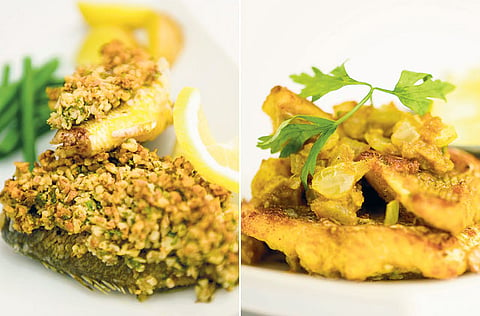
Like any recipe requires a degree of hunting and gathering, the key to a cookbook's success largely depends on the accessibility of the ingredients. In Dubai, we are spoilt for choice and can source mostly anything with ease. But little do we know that when it comes to fish, there is, forgive the pun, a catch. While families across the UAE tuck into the abundance of hamour or kingfish lurking in ice displays across the emirates' supermarkets, they are probably unaware that they are sinking their teeth into a dwindling breed. These are among a number of species facing extinction due to overfishing.
So how can you help? According to the UAE's first cookbook using only sustainable fish, the answer is simple: Educate yourself on the alternatives. The recently released recipe book, Sustainable Fish Recipes, offers a variety of tempting fish dishes using "green" options. But just how viable is it to cut hamour from our diets and turn our tastebuds to lesser-known species? I set out to test the waters.
At first glance, the home-made-style recipes are modern and exciting, yet unpretentious. The enclosed guide suggests a number of fish in the green "go for it" category, but the majority of recipes feature faskar, shaari eshkeli and trevally. Most of the sustainable options look appealing, with one exception — the tropical-style yellowbar angelfish. I was mildly relieved to see this little fella didn't end up on any of the plates — there is a fine line between going green and frying up Nemo. Instead, taking home the wrong sea critter can easily be avoided, as images of the species are pictured on each recipe. But when I front up to the seafood section of my local supermarket, I'm slightly puzzled — it's a little like trying to spot your friends on the world's busiest beach. Considering some fish have similar local names, it would have been useful had the cookbook also included images of the red "think again" species to assist with the selection process.
Scanning the icy cold crime scene with the diligence of a forensic investigator, on closer inspection I am disappointed to see that my local supermarket is stocking only one sustainable option. It would appear that the local grocers need as much education in promoting sustainable fish as the consumers. The next day, I make my way to a busier, international supermarket — it had four sustainable options. But, considering I'd rather pull out my own teeth than shop there, I had to weigh up how far I would go to sacrifice my routine to buy "green".
Shopping preferences aside, that evening I substitute shaari eshkeli (priced similar to hamour) for the faskar the recipe suggests, and cook up the book's delicious chowder, a fish and veggie soup in coconut broth with Indian spices and just the right amount of heat. The dish took less than an hour to get out on the table and was surprisingly full of flavour. I find the shaari eshkeli is a little tougher than I'm used to and, when cooked, it has a similar texture to chicken — so a stew-style recipe really softened the flesh. Needless to say, the dish got massive brownie points from my dinner guests.
Being a slightly tougher fish, shaari eshkeli is probably not the kind you would simply fillet, fry and eat with a squeeze of lemon. For anyone sceptical of the eating quality of the fish listed, I would suggest sticking to recipes where the fish is not the main focus, such as chowder or Tamil Nadu fish curry. The flavours will mask any imperfections and the fish comes across as subtle.
For my next attempt, I make an effort to use the exact species the recipe suggests. The fish cakes I select call for shaari eshkeli, which is a relief, as I know I can get it easily at my local supermarket. I whip up some totally awesome rissole-style cakes with shredded chunks of shaari eshkeli, mashed potato, zesty lemon and tartare sauce. To my amazement, once fried, the golden cakes look exactly like the photo in the cookbook and are super-tasty. I pair them with a light salad and home-made tartare dipping sauce. Between mouthfuls, they receive many oohs and aahs from my household. I make the immediate decision to add both dishes to my fortnightly rotation of meals.
In that sense, the cookbook has achieved what it set out to do. Most of the dishes are easy to make and add flair to the weeknight meals. The book itself has a warm, homely feel and reads like a collection of family recipes handed down through generations. Not surprising, given it is a collection of recipes submitted by UAE residents. The recipes are also paired with enticing professional images — a major plus, nobody wants to eat words. However, the cookbook's laid-back approach also comes with a price. There is the odd annoyance and inconsistency.
The main issue is that most of the recipes don't say how many people they serve. This can be overcome with trial and error but if you were planning on a sustainable fish dinner party, it could prove a turn-off. As busy consumers who thrive on convenience, there is no doubt that the ease with which one can source the alternative is crucial to changing our ways. The hook, line and sinker here will be whether your local supermarket regularly provides sustainable options.
Hot-smoked green tea souli wraps
- 4 souli fillets, large (approximately 1.5-2kg souli)
- 4 green tea bags
- 1/2 cup white rice
- 1/2 cup demerara sugar
- Canola oil
- Salt and pepper
Wraps
- Six white-flour tortillas, or your favourite wrap
- 1/2 cup mayonnaise or yoghurt
- 10 cherry tomatoes, quartered
- 10 black olives, pitted and chopped
- 2 spring onions, sliced
- 1/2 cup feta cheese, crumbled
- Juice of one lemon
- Mint leaves, a handful, roughly chopped
- Salt and pepper to taste
Cooking procedure
Line a pot with aluminium foil. Open the teabags and empty the green tea into the pot. Add rice and brown sugar, and place strainer/steamer basket into the pot.
Lightly coat the souli fillets with oil, season them with salt and pepper, and place them into the strainer.
Tightly cover the pot with lid and place over high heat (things will get smoky, so this is best done outside, or under an extractor fan).
Leave pot over high heat until smoke starts to escape from under the lid.
Don't open the lid. Turn off the heat and leave fillets to smoke for 30 minutes.
Remove the souli fillets (which should now be cooked and easily flaked, with a brown smoke coating), combine with the mayonnaise, vegetables, cheese and seasoning, and wrap in a tortilla.
— Recipe by Micki Johnson, Dubai
Samkeh Harra (Lebanese fish tagine)
- 1 onion, chopped
- 350g shari eshkeli fish fillet
- 1 bunch coriander leaves, very finely chopped
- 1 clove of garlic, crushed
- Chilli powder
- Pepper
- Salt
- 1/2 tsp ground coriander
- Juice of half a lemon
- Walnuts and pine seeds, a handful
Cooking procedure
The clean fish should be salted, peppered and cooked in the oven until well done.
In a separate pot, on medium heat sweat the onions in olive oiluntil translucent, add the crushed garlic, and the coriander and chilli powder to taste. Add salt, pepper and coriander. Stir until the flavours are mixed.
Add 2 cups of water and the lemon juice. When the mixture starts to bubble, turn it off. Put the cooked fish in an oven tray, pour the sauce on it and add toasted and crushed walnuts and pine seeds. Cover with foil and cook in the oven at 200° for 30 minutes. Serve hot with Arabic or pita bread.
— Recipe by Rana Bayat, Dubai
Walnut-crusted trevally
- 1kg fillets of Jesh Um al Hala (orange-spotted trevally)
- 2 bunches coriander, fresh
- 1/2kg walnuts
- 1 tsp ground cumin
- 1 tsp ground coriander
- 1 tsp sumac powder
- Juice of half a lemon
- 1 tbs vegetable oil
- 14 cloves garlic, peeled
- 3 tbs olive oil
- Salt and pepper
Cooking procedure
Wash the fish fillets in water and lemon and add the dry coriander, salt and pepper to them.
Grease a pan with the vegetable oil and put the fish in it. Put the pan in the oven on medium heat for 15 minutes.
In the meantime mix the walnuts with the fresh coriander and ten cloves of crushed garlic.
Take the fish out of the oven, top with the walnut mix and return to the oven for another 15 minutes.
In the meantime mix the lemon juice with olive oil and the remaining four cloves of crushed garlic and sumac powder.
Take the fish out of the oven and brush the fish with the lemon and olive oil mix.
Put the oven on grill and return the fish for another five minutes.
— Recipe by Nada Rezk Salloum, Abu Dhabi
Yanam balti
- 900g yanam fillets, rinsed and cut into large chunks
- 150ml vegetable oil or 140g ghee
- Sprigs of fresh coriander to garnish
Marinade
- 1/2 tbs garlic and ginger paste
- 1 green chilli, fresh, deseeded and chopped
- 1 tsp coriander, ground
- 1 tsp cumin, ground
- 1/2 tsp chilli powder
- 1/2 tsp turmeric, ground
- 1 tbs water
- Salt
Cooking procedure
Marinate the fish for between 30 minutes and four hours. Fry in ghee or vegetable oil.
— Recipe by Stephen King, Abu Dhabi
Jenny Hewitt is a UAE-based freelance writer
Sign up for the Daily Briefing
Get the latest news and updates straight to your inbox

