
Recipe: Asparagus tart with lemon and créme fraiche
Adding asparagus and broad beans to dishes can give them a whole new flavour
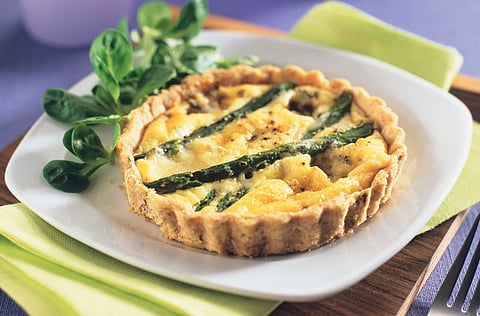
The late start to spring was exasperating — but that just means we can enjoy the asparagus season all that much longer. The locally grown spears only work out expensive if you eat them at their most straightforward, giving each person a generous bundle with a classic melted-butter sauce. Once you start using the spears with other ingredients, they start to represent better value.
Going a long way
I made a couple of puff pastry tarts for lunch one day. The size of a side plate, stuffed with an impromptu filling of créme fraiche and Parmesan, each made five thinnish spears go much further than if they had been served au naturel. The bottom end of each spear offered flavour elsewhere, in the deep, molten mass of a risotto the following evening.
In a quiche with tarragon leaves, a soup with chicken stock and cream, a salad with a little gem lettuce and a dressing of olive oil, cream and lemon juice, even the smallest bunch of asparagus will give a taste of luxury on the cheap. As flavours go, that of asparagus is generous and you don't need much to flavour a pilau or a soup.
The broad beans are a long way off but the Italian ones are just coming on line now and are a taste of what is to come from our own farms and vegetable patches. They are a bit pricey at the moment and I have yet to serve them as a vegetable (I will just have to wait for my first gammon, beans and parsley sauce). Instead, I tossed them into a quick fry-up of fatty meat, fennel and its fronds.
I got the beans on first, boiling merrily in a deep pan, then cut the meat into larger cubes than usual and let it fry on a low to moderate heat so that it could cook in its own melting fat. As the fat on the meat turns amber, in go the cooked and drained beans and then the young fennel. Rather like a stir-fry but less frantic.
This is the sort of dish that does as a light lunch or supper in its own right but would also make a great base on which to build. Cooked rice, pasta (maybe one of the shell or ear-shaped varieties) or couscous will work to make those early-season expensive vegetables go that extra mile.
Asparagus tart with lemon and créme fraiche
You need just the top half of the spears for these crisp, rich tarts. The lower halves could be eaten in a salad, made into soup, added to a stock or tossed with potatoes in a mixture of mayonnaise and créme fraiche. This recipe is easily doubled.
Servings: 2
II 10-12 asparagus tips
II 125g puff pastry
II 100g créme fraiche
II 20g Parmesan, grated
II 1 egg, lightly beaten
II A few sprigs of parsley, flat-leaf
II 1 lemon
Boil or steam the asparagus tips until tender. They will take five to nine minutes, depending on the thickness of their stems. They are ready when you can easily slide the point of a knife into the stem. Drain and set aside.
Set the oven at 200°C. Cut the puff pastry in half and roll out each piece thinly into a square large enough to cut a disc roughly 14-15 centimetres in diameter. Place the discs of pastry on a lightly floured baking sheet. Cut a narrow rim around each of the pastry discs by scoring the surface with a knife roughly 1.5 centimetres in from the edge. Don't score so deeply that you cut right through to the baking sheet.
Stir the créme fraiche and grated Parmesan and grind in a little black pepper. Divide half of the mixture between the centre of each tart. Place the asparagus tips on each one, then spoon the remaining créme fraiche mixture on to each. Brush the edges of the pastry with the beaten egg.
Bake in the preheated oven till the filling is just starting to turn golden brown in patches, for about 15-20 minutes.
While the tarts are baking, finely chop the parsley leaves, grate the lemon finely and mix them together.
Remove the tarts from the oven when they are ready and scatter over the lemon and parsley.
Serve immediately while they are still hot and crisp.
Broad beans, meat and fennel
I sometimes remove the pale grey-green outer skin of broad beans. Much will depend on the age and the size of the bean. The larger the bean, the tougher the skin. The beans are easily popped from their skins after cooking: Just squeeze them between your thumb and fingers. The skins can be put on the compost.
Servings: 3 as a side dish, 2 as a light lunch
II 500g broad beans (weighed before podding)
II 100g meat
II 4 spring onions
II 100g young fennel and the fennel fronds
II Pod the broad beans and boil them in deep, lightly salted water. Drain.
Chop the meat into large cubes roughly the size of a postage stamp. Put them in a shallow non-stick pan and let cook till the fat turns golden. (You may need a little olive oil if the meat is particularly lean.) Trim the spring onions, chop into short pieces and add to the meat.
Remove and set aside the fennel fronds, then slice the fennel thinly. Stir the fennel into the meat and leave to soften. It should not colour. Add the broad beans to the pan (you could remove their skins if the beans are large but it is not necessary for this dish). Check the seasoning (you may need salt and a little pepper), then tear up or chop the fennel fronds and stir in. When all is sizzling, serve.


