
Ode to the chickpea
Chickpeas, also commonly called garbanzo beans, are consumed in many ways the world over
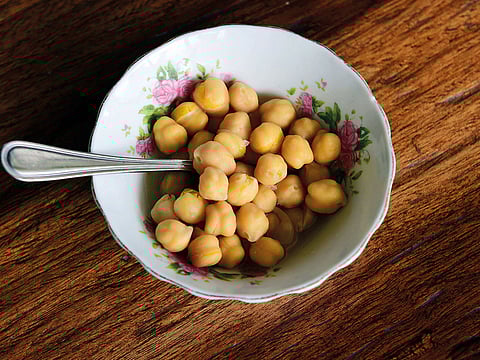
The humble and versatile pulse stars in many of the delectable dishes made by Lebanese chef Reem Azoury.
Could your inner cook find contentment in a six-pound, 14-ounce can of chickpeas? The ways in which Reem Azoury despatches its contents are convincing: a transporting soup, an exceptional hummus and a satisfying stew, all done with ease.
Long before the Lebanon native began cooking at her Figs café in Washington, Azoury would stock such small drums in her pantry. Chickpeas went into brunches and dinners for friends and into after-school snacks for her children, now 10 and 12.
She remembers the fresh green chickpeas from her childhood, eaten straight from the pod. She has rediscovered their taste, courtesy of the freezer case at Trader Joe's, but canned chickpeas continue to remain a daily inspiration.
Poetry in pods
Chickpeas, also commonly called garbanzo beans (and ceci in Italy), are consumed in many ways the world over. The United States grows its own, with somewhat less demand.
"Utilitarian, but there's poetry inside," Azoury says, preferring to demonstrate rather than engage in mere chickpea chatter.
During a recent kitchen session, she proves the point. Stockpot on the burner, plump cloves of garlic, soon to be smeared into a heady paste.
Turmeric, cumin, coriander and potent saffron threads close at hand. These are the familiar ingredients of balila, a Middle Eastern chickpea mezze, or small dish.
When the roof comes off a can six inches across, however, the swamp of brine seems like something that ought to be tossed out. Azoury dumps legumes and all in the pot. "A lot of people drain that liquid away, but there's flavour there!" she says emphatically. "Use this and you won't need any more water or salt." High heat brings glurpy bubbles to the surface and the spices are incorporated.
Ten minutes on, Azoury brandishes a substantial, well-worn mortar that she uses to mash some of the boiling chickpeas; the tool is essential to achieve the right texture, she says. With firm downbeats, the now deep-golden mixture becomes more of a chunky soup.
Before its half-hour of cooking time is done, she will have chopped the parsley and mixed the garlic paste, fresh lemon juice and a fruity olive oil, all for Part I from the big can: Chunky Balila With Citrus Explosion.
A small bowlful with the dressing and a shot of paprika across the surface is fragrant, bright and warming. Azoury says many of her female customers seem hooked to the soup, lingering over their servings in the afternoon. The dish is not particularly low in calories, but it is healthful and satisfying.
"One regular [patron] has told me, ‘I am yet to meet a man who can make me half as happy as a bowl of balila','' the proud cook says with a half smile.
It would be understandable to stop and indulge at this point, but Azoury is well into the preparation for Part II: Hummus. She transfers four cups of the soupy chickpeas — making sure to include a cup of liquid — to the food processor and begins the alchemy, adding ingredients that will yield the smoothest dip.
Her passion for this particular concoction overtakes her earlier reserve and furrows a brow that is otherwise line-free.
"People don't get this right," Azoury says about hummus. "You can start with the recipe, but you need to look, feel and taste. You don't want to make cement or something that's too runny."
On this day, she adds a bit of lemon juice, some minced garlic, olive oil and salt. "Add what you like. It's all in the technique," she says.
Taste and assess
In less than a minute of whirring, she has stopped to smell, taste and assess the texture at least three times. The attention pays off in a light, creamy hummus that clings to soft hunks of barbari, an Afghan flatbread used for scooping.
But there are still chickpeas in the pot. How can she pull off a stew in the half-hour she has granted her audience?
Azoury grabs a bag of cubed artichokes from the freezer and two small containers of potatoes and cooked, de-boned lamb shanks from the refrigerator. Leftovers, elevated for Part III's Chickpea Stew with vermicelli rice. She adds them to the chickpea pot, along with a cup of chicken broth and turns up the heat.
Then she gets the vermicelli rice under way by crushing a couple of nests of fine vermicelli, sautéing them to a golden brown before adding the water and rice that will cook to form the stew's tender platform. A pat of butter stirred into the rice mixture gives it a rich sheen:
"A small guilty pleasure. You don't have to," Azoury says. The finished dish, with its depth of flavour and textures, tastes and smells like it took hours to prepare.


