
Everyone loves macaroni cheese: here's a perfect recipe
Simplicity is the key to the dish - it's all about familiarity and comfort
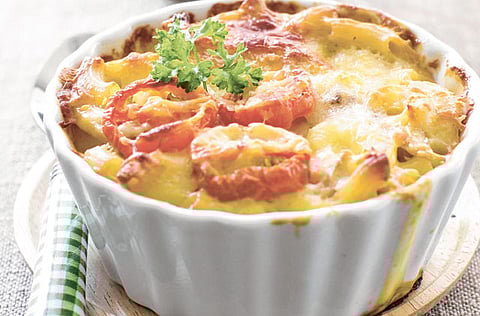
Everyone loves macaroni cheese. Whatever its alleged southern-Italian roots, it's a dish which we can safely embrace as an Anglo-American classic, which means I can merrily throw all notions of "authenticity" to the wind, and go with whatever tastes best.
Mum's version
In the absence of any advice from my mother, I turn to Chef Tom Norrington-Davies' handy collection of maternal recipes, Just Like Mother Used to Make. He reckons that "simplicity is the key to macaroni cheese ... nothing should leap out at you except a clumsy, gooey richness". There's no cream or spice here: just a plain white sauce, a modest amount of cheddar, and some pasta. The only concession to frippery is the vivid red grilled tomatoes that Norrington-Davies liked to top the dish with.
Although deliberately and undeniably bland, I find the dish oddly comforting: creamy, but not oppressively rich, faintly cheesy, the dominant taste is those caramelised tomatoes. This is nursery food extraordinaire.
Mater's posh version
After pointing out that there's "very little to get wrong here", Simon Hopkinson and Lindsey Bareham deliver a googly in The Prawn Cocktail Years by calling for penne, rather than macaroni "because the cheese sauce is better able to flow inside this larger-sized pasta". A few pointers, they insist, "will help to make this familiar yet sometimes disappointing dish into superior comfort food".
One is the pasta. The other is the seasoning and an "assertively flavoured" cheese. This means infusing the milk with a bay leaf and black pepper before making the white sauce, and adding a mature Lancashire cheese, and a slug of double cream. Bolder still, they suggest chucking in some sliced onion or leeks, softened in a little butter, along with a small bunch of chopped chives along with the sauce and pasta.
It's all very refined, down to the Parmesan topping, but I miss the velvety texture of the plain white sauce, and find the onion too bullyingly dominant: macaroni cheese should be something one could happily eat in bed, should opportunity call.
Tastes familiar
Norrington-Davies' plain and simple, and very British version, with its blandly familiar white sauce. Grilled tomatoes are enough to save the dish from blandness without stealing the limelight from the pasta, although I've substituted Parmesan for the cheddar on top — its salty savouriness is more welcome in small amounts.
Penne or rigatoni is often suggested as a substitute for the macaroni, as per Simon and Lindsey, but here, I think, it works perfectly: the pieces are small enough to not need cutting and to allow a satisfying volume in the mouth. (Also, it can be eaten with a spoon, which is the final proof of great sofa food.)
While surfing online, I come across Martha Stewart's advice about rinsing the starch off before adding the pasta to the dish: it helps to keep it separate, rather than clumped in a gluey mass.
The perfect recipe
Macaroni cheese is all about familiarity and comfort: introducing strong flavours like onion, or Parmesan, while undoubtedly delicious, misses the point. It should be subtly cheesy, creamy and soft.
- 200g macaroni
- 35g butter, plus extra for greasing
- 25g plain flour
- 450ml whole milk
- Grating of nutmeg
- 1/2 tsp English mustard powder
- 50g mature cheddar
- 1 slice of white bread, made into crumbs
- 1 tbs Parmesan, grated
- 2 tomatoes, halved
Cook the macaroni in plenty of salted boiling water until tender. Meanwhile, melt 25g of the butter in a pan, and stir in the flour. Cook for a couple of minutes, while stirring, then gradually whisk in the milk until you have a smooth sauce. Cook, stirring frequently, for a few minutes until it thickens, then add a grating of nutmeg and the mustard and stir in the cheddar until smooth. Remove from heat and season to taste.
Pre-heat the grill. Drain the macaroni and rinse under cold running water.
Grease a baking dish with butter, then combine the pasta and cheese sauce and tip into the dish.
Melt the remaining butter and toss it together with the breadcrumbs and the Parmesan. Spread over the top of the dish, then arrange the tomatoes, cut-side up, on top. Grill for about ten minutes until golden and bubbling. Allow to stand for five minutes before serving.
Servings: 2


