Explained: How Lupita Nyong'o's Helen of Troy casting in The Odyssey sparked a wider debate on accuracy and diversity
Elon Musk and critics target Helen of Troy casting, supporters say myth defies rules
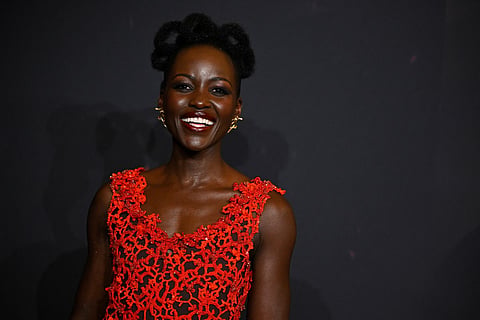
Dubai: Christopher Nolan's upcoming epic The Odyssey hasn't even reached cinemas yet, but it's already become the centre of a heated online debate.
At the heart of the controversy is Oscar-winning actress Lupita Nyong'o, who has been cast as Helen of Troy, the legendary beauty from Greek mythology whose abduction sparked the Trojan War.
Why are some people upset?
The backlash intensified after a Time magazine feature confirmed long-rumoured casting details, including Nyong'o's role as Helen.
Some critics, particularly conservative commentators on social media, argue that casting the Kenyan-born actress as a character traditionally depicted as Greek is historically inaccurate. They point to ancient descriptions of Helen and question why Nolan would make such a casting choice while simultaneously emphasising historical research elsewhere in the production.
Why is the criticism unusual?
Christopher Nolan has built his reputation on meticulous research and realism, even in ambitious films like Oppenheimer, Dunkirk and Interstellar.
According to Time, the production built a fully seaworthy ship to recreate Odysseus' voyage, while composer Ludwig Göransson said Nolan chose not to use a traditional orchestra because it would not have existed during the era in which the story is set.
Those details have led some critics to question why the same commitment to authenticity wasn't applied to every casting decision.
What has Lupita Nyong'o said?
Nyong'o has made it clear that she isn't interested in responding to every criticism.
Speaking to Elle, she said she fully supports Nolan's creative vision.
"I'm very supportive of Chris's intention with it and with the version of this story that he is telling. Our cast is representative of the world."
Asked whether she felt the need to defend her casting, she added:
"I'm not spending my time thinking of a defense. The criticism will exist whether I engage with it or not."
Elon Musk joins the debate
The discussion escalated after Elon Musk criticised Nolan on X, accusing the filmmaker of sacrificing historical accuracy for diversity initiatives.
Musk claimed Nolan had embraced "DEI lies" and later described him as "an anti-White racist."
His comments amplified the debate far beyond film circles and into the broader political conversation surrounding representation in Hollywood.
Others say the criticism misses the point
Many supporters argue that Helen of Troy is a mythical—not historical—figure, making arguments about historical accuracy less relevant.
Late-night host Jimmy Kimmel mocked the controversy by pointing out that, according to Greek mythology, Helen was the daughter of Zeus after he transformed himself into a swan.
"She was mythical," Kimmel joked. "It doesn't matter what colour a myth is."
Others have argued that Nolan has never described The Odyssey as a documentary recreation of ancient Greece but as his interpretation of Homer's epic.
Is this the first time Hollywood has faced this debate?
Not at all. Casting choices have increasingly become flashpoints in wider debates about race, diversity and historical representation. Similar controversies surrounded Disney's The Little Mermaid, Snow White and Amazon's The Lord of the Rings: The Rings of Power.
While such debates often dominate social media, there is little evidence they significantly affect box-office performance.
Has the controversy hurt The Odyssey?
So far, no. The film remains one of 2026's most anticipated releases. Early screenings reportedly sold out soon after tickets became available, while the first trailer generated more than 120 million views within its first 24 hours.
With Christopher Nolan directing an ensemble cast that includes Matt Damon, Tom Holland, Zendaya, Anne Hathaway, Charlize Theron and Lupita Nyong'o, industry observers expect The Odyssey to be one of the biggest releases of the year.
Whether the online debate continue or fades once audiences actually see Nolan's interpretation of Homer's classic—remains to be seen. The Odyssey will release in the UAE cinemas on July 17.


