UAE's Al Habtoor Group flags $1.7 billion losses in Lebanon, warns of legal steps
Group says talks failed after treaty notice, leaving no option but legal action
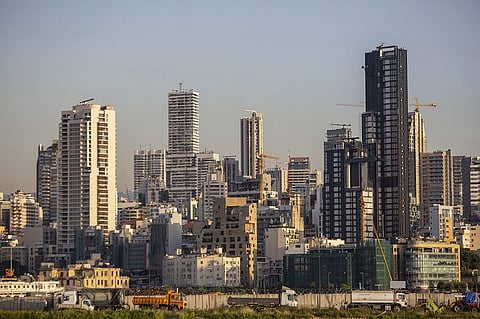
Dubai: Dubai-based Al Habtoor Group said it is preparing to pursue legal action against the Lebanese government after suffering losses exceeding $1.7 billion from its long-standing investments in the country, citing years of restrictions, inaction and failure to protect foreign investors.
A family-owned business, founded by Khalaf Ahmad Al Habtoor, the group’s businesses, headquartered in Dubai, span hospitality, real estate, automotive, education and publishing.
The conglomerate said in a statement issued Monday that its losses stem largely from measures imposed by Lebanese authorities and the central bank, Banque du Liban, which prevented the Group from accessing and transferring funds lawfully deposited in Lebanese banks.
These restrictions were compounded by Lebanon’s prolonged political, economic and financial crisis, which the Group says severely damaged its assets and operations.
Al Habtoor Group has been a foreign investor in Lebanon for several decades, with interests spanning hospitality and luxury hotels, retail, leisure, real estate and banking-related activities.
Its investments supported jobs, tourism and infrastructure development and were positioned as part of a long-term presence in the country. The Group said these assets have been materially harmed over recent years as Lebanon’s financial system seized up and investor protections weakened.
Also Read: IMF warns Lebanon at 'very dangerous moment'
Good faith investment
Al Habtoor Group said it invested in Lebanon in good faith, relying on Lebanese law and protections guaranteed under a bilateral investment treaty between the UAE and Lebanon, which has been in force since 1999. That treaty obliges both countries to protect foreign investments and ensure fair treatment.
“These losses are not limited to blocked bank deposits,” the Group said, adding that the broader collapse of institutional stability and the failure to safeguard private property also contributed to the damage.
Also Read: Lebanese banks to resume strike on March 14
Treaty notice, talks fail
In early January 2024, Al Habtoor Group formally notified the Lebanese government of an investment dispute, triggering a six-month cooling-off period under the bilateral treaty. The aim, the Group said, was to reach an amicable settlement without escalating the matter.
However, despite what it described as sustained good-faith engagement, the Group said discussions failed to produce meaningful progress or corrective action.
“Investor protection is not discretionary,” the Group said, calling it a fundamental obligation under international law and a requirement for economic credibility. While it remains open to lawful and constructive solutions, Al Habtoor Group said it cannot continue to absorb further losses caused by prolonged inaction.
With no effective remedies forthcoming, the Group said it has no alternative but to advance the matter and pursue all legal measures available under international agreements.
What’s happening in Lebanon?
The statement from Al Habtoor comes as Lebanon continues to struggle with one of the worst financial crises in modern history, marked by capital controls, banking restrictions and economic contraction — factors that have increasingly raised concerns among regional and international investors.
Lebanon has been in a prolonged economic and financial crisis since 2019. Its banking sector effectively froze access to foreign currency savings as banks struggled with insolvency, and the local currency lost most of its value, leaving both individuals and companies unable to freely withdraw or transfer their funds from Lebanese banks.
These capital restrictions and banking constraints have become a central part of the country’s economic woes and are cited by investors — including Al Habtoor Group — as a key cause of financial losses.
To add to Lebanon's woes, Lebanon and Israel remain in a tense standoff, largely over Hezbollah, the Iran-backed group that has a substantial armed presence in southern Lebanon. Although a ceasefire was agreed in November 2024 to end a long period of fighting, violence and military activity have continued across the border.
The Lebanese government says it documented 2,036 Israeli breaches of Lebanon’s sovereignty in the last three months of 2025.
Just days before Al Habtoor’s statement, Reuters also reported that Lebanon is negotiating revisions to a financial rescue plan with the International Monetary Fund (IMF) intended to address a deep funding gap, restructure the banking sector and return some frozen deposits — a sign of how serious and entrenched the financial collapse remains.


