Ramadan 2026 in Dubai will be business as usual, says tourism chief
The holy month is expected to fall between February and March 2026
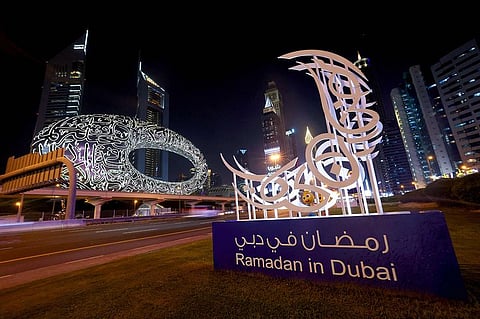
Dubai: Dubai’s tourism chief has set out how the city plans to observe Ramadan next year, saying the Holy Month will be treated as an integral part of daily life rather than a period of slowdown.
Issam Kazim, the CEO of Dubai Corporation for Tourism and Commerce Marketing (DCTCM) – a subsidiary of Department of Economy and Tourism, Dubai, told industry partners that Dubai is “not just a destination to visit, but the best city to live in”, and that Ramadan must reflect that mix of home, community and hospitality. He was speaking at a city briefing event hosted by DET.
Kazim said the strategy for Ramadan is to keep pushing the message that it is “business as usual” in Dubai. The Holy Month is expected to fall between February - March 2026.
“The trend is that it is more leisure, but our focus will be to drive business tourism a lot more because it is our peak business periods usually," said Kazim.
Over the past few years, the perception of Ramadan as a quiet month has been gradually changed, with more business events now held during the Holy Month, showing there is room “to do a lot more”. The official said there are still “tactical opportunities” that the city and its partners need to keep targeting together.
He also said that that Ramadan has been a “key topic” in talks with the trade, and that concrete changes have already been made to how the Holy Month is approached. He said the aim now is to align messaging and products so that hotels, attractions and travel partners can “do a lot more” during this period.
Who will travel and why
Based on historic trends, the travel patterns during Ramadan differ from the rest of the year. Couples are expected to form a bigger share of travelling parties, while the main purpose of visit will shift more towards leisure than business.
He noted that booking lead times are shorter in Ramadan, but the month is stretching into a “bigger period of time” within peak tourism quarters, making it even more important to keep campaigns and offers live in source markets. The tourism body wants partners to tailor packages, experiences and promotions to these specific segments and behaviours.
There is room for growth
Dubai welcomed 15.7 million international visitors between January and October 2025, a 5 per cent rise on the same period last year.
“We still have the last stretch of the month of this year ahead of us, which is usually the peak time. With the behaviour nowadays of last-minute booking, we still have the potential opportunity to still push that number up,” he added.
Kazim said Dubai had a strong start in 2025, “but of course, there were some turbulence within the market which impacted that growth,” he said, possibly referring to escalation of geopolitical tensions in the region. However, having a diverse portfolio gave Dubai the opportunity to focus on other markets that had not seen a decline,”
Dubai’s tourism chief has reported solid growth from major source markets and hinted at a new phase of infrastructure and mobility projects that will keep the city “one step ahead” in global tourism.


