Luxury spending hits $1.69 trillion, but shoppers want more than labels
Bain says luxury is stabilising, but shoppers are becoming harder to win
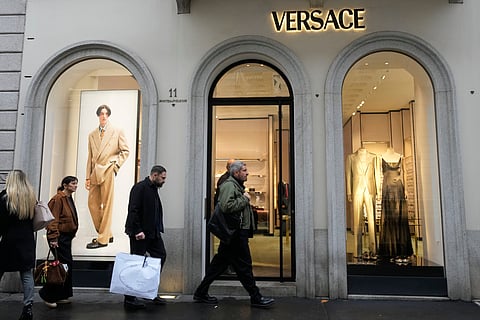
Dubai: Worldwide luxury spending reached about $1.64 trillion in 2025, but the industry is entering the second half of 2026 with a very different buyer from the one that drove the post-pandemic boom.
Bain & Company and Altagamma said global luxury spending reached $1.64 trillion last year and is expected to stabilise in 2026, with total spending forecast at $1.64 trillion to $1.67 trillion. That points to growth of zero to 2% at constant exchange rates.
Get updated faster and for FREE: Download the Gulf News app now - simply click here.
The headline number is still large, but growth has become harder to capture. Buyers are more selective, tourist spending is uneven, China is recovering slowly, and luxury brands are being forced to prove why they still matter to consumers who have more choices and less patience.
Luxury settles into slower growth
The personal luxury goods market, which includes fashion, leather goods, watches, jewellery and beauty, slipped to $407.78 billion in 2025 from $414.62 billion in 2024. Bain expects it to recover this year, rising 2% to 4% to between $415.75 billion and $424.87 billion.
That recovery depends on a few moving parts. Bain’s base case assumes Middle East tensions keep easing, local spending remains steady and Chinese demand continues to improve. A stronger recovery would need the US market to regain more momentum and China to come back faster.
Claudia D’Arpizio, Bain & Company senior partner and global leader of the firm’s Fashion & Luxury practice, said the industry is not returning to its old pattern.
“The luxury market is stabilising, but this is not a return to the old rhythm, it is the emergence of a new one,” she said.
Luxury is still desirable, but shoppers are less willing to pay more for products that feel repetitive, overexposed or disconnected from how they live.
Experiences pull ahead
Bain said consumer sentiment towards luxury experiences is growing 1.5 times faster than sentiment towards physical goods so far in 2026.
That explains why luxury hospitality, private jets, yachts, cruises and fine dining are holding up better than many product categories. Consumers are still spending, but more of that money is going towards travel, food, wellness and memorable moments.
Fine art is also returning to growth as investors rebalance their portfolios. Luxury cars remain under pressure because of the electric vehicle transition.
The change is significant for brands because it shows that luxury demand has moved towards areas where people feel they are getting a richer experience, a stronger memory or a clearer sense of value.
US improves while Europe waits for tourists
Regionally, the US is doing better, helped by stronger spending across apparel, hard luxury and beauty. American luxury brands grew by around 10% to 15% in the first quarter, excluding currency movements.
Younger shoppers are spending faster than older buyers, while upper middle-class households are increasing luxury purchases at about twice the pace of wealthier groups. That gives the US market a broader base, even if confidence remains fragile.
China is also improving, but the recovery is careful. Online luxury sales rose 25% to 35% in the first quarter, with shoppers showing more interest in ready-to-wear than in status-led leather goods.
Europe remains weaker because it depends heavily on tourist spending. International tourist spending fell around 20% in February, with Middle Eastern visitors affected by regional conflict. Bain said the Gulf luxury consumer base shrank by 15% to 25% in early 2026.
There are signs of a better second quarter. May tax refund data showed stronger spending by American, Chinese and Middle Eastern visitors compared with April, suggesting travel-related luxury demand may be starting to recover.
Jewellery holds up best
Category performance also shows how selective buyers have become. Jewellery is leading the market, while apparel, eyewear and fragrances are holding up better than cosmetics.
Leather goods and footwear remain under pressure, although Bain said both are improving. The watch market is also changing, with collectors paying more attention to craftsmanship and rarity after a period when hype drove much of the demand.
Resale is gaining more influence. Vintage bag searches online have more than doubled from last year, and around half of luxury shoppers now check the second-hand market before buying new products.
That creates another challenge for luxury houses. They are competing not only with rival brands, but also with their own past collections, especially when older pieces feel more distinctive than new ones.
AI becomes part of the luxury shop window
Artificial intelligence is also changing how buyers choose what to buy. Bain said around half of luxury consumers already use AI during the purchase journey, and nearly all plan to continue.
Around one in four luxury consumers use AI for brand and product discovery, while two out of three use it to compare products.
That means luxury brands now need to think beyond boutiques, social media and traditional search. If buyers are using AI tools to narrow choices, compare quality and validate purchases, brands need to make sure they are visible in that process.
Federica Levato, Bain & Company senior partner and leader of the firm’s EMEA Fashion & Luxury practice, said: “The appetite for luxury remains strong. The tolerance for disappointing experiences or products does not.”
She said more than 70% of customers who have left luxury intend to return, but they may not return to the same brands.
Consumers still want quality and exclusivity, but they also want relevance, personal meaning and better experiences.
Sports are becoming a bigger platform for luxury brands, with more than 80% of luxury market value now represented by brands that sponsored a sports experience in the past 12 months.
Immersive bookings across dining, leisure and entertainment are up 30% from last year, while travel beyond traditional hotspots has grown by 20%.
The market is still worth close to $1.7 trillion, but the easy growth phase is over.