How Dubai's delivery platforms keep riders safe on busy roads
Smart routing, safety protocols, and real-time monitoring protect riders and deliveries
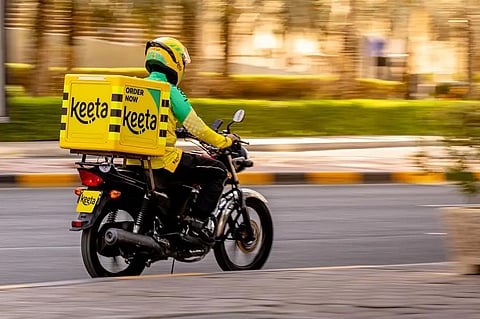
Dubai: Have you ever wondered how your food arrives on time despite traffic and busy roads especially during Ramadan? Delivery riders navigate tight schedules and crowded streets, but their safety has become a major concern. In the first weeks of enforcing a new regulation, Dubai Police issued 8,152 fines to riders for using fast lanes improperly. The rule bars delivery motorcycles from the two leftmost lanes on roads with five or more lanes and the leftmost lane on roads with three or four lanes. Riders may continue to use any lane on smaller roads.
The fines highlight the government’s effort to balance road safety with the efficiency of a growing delivery ecosystem. Platforms have had to adjust operational processes to protect riders while maintaining service reliability, employing a combination of technology, training, and incentives to ensure that safety is never compromised.
Operational measures prioritise rider safety
Delivery assignments are designed to reduce pressure on riders. Orders are allocated based on proximity to both restaurants and customer locations, while navigational tools calculate routes using real-time traffic data. Customer-facing estimated delivery times are kept hidden from riders, preventing them from feeling compelled to speed. A spokesperson from Careem Technologies explained, “We design our promised delivery times to be realistic and safety-first. The time shown to Captains is calculated using routes and buffers that assume full compliance with RTA road rules, including speed limits and traffic signals, so Captains are not incentivised to rush.”
Platforms also adapt to conditions dynamically. If traffic congestion, high order volumes, or adverse weather occur, delivery expectations are adjusted in real time. Riders are encouraged to log out in unsafe conditions, and systems ensure they remain aware of hazards without risking their safety to meet deadlines. Riders are never penalised for delays beyond their control, and incentives reward adherence to traffic rules rather than speed. In the event of accidents, support is available through 24/7 operations centres, comprehensive insurance, and coordinated assistance.
Safety embedded in delivery-time management
Customer compensation schemes and delivery guarantees are structured to protect the user experience without pressuring riders. Lucas Xie, General Manager of Keeta UAE, noted that compensation mechanisms are not communicated to riders as performance pressure, and that delays caused by traffic, weather, or merchant preparation are never penalised. Delivery-time estimates are generated using operational data and do not serve as instructions to riders.
Riders are consistently trained and reminded that no delivery is worth compromising personal safety or breaking traffic lawsLucas Xie, General Manager of Keeta UAE
Earnings and performance ratings are independent of speed, and internal monitoring flags unsafe patterns for intervention before they escalate.
Machine learning and intelligent routing systems further support safe operations by dynamically estimating delivery times based on order volume, rider location, restaurant preparation, and environmental factors. By factoring in these variables, platforms maintain timely deliveries without creating conditions that encourage risky riding.
Training, support, and risk mitigation
Riders receive comprehensive onboarding that combines practical and theoretical safety training. Continuous guidance is delivered through in-app updates and newsletters, and collaboration with regulatory authorities reinforces compliance with road-safety standards. Platforms also offer supplementary insurance that exceeds legal requirements, covering accidents, medical expenses, and income protection. Customer compensation is funded by the platform itself, eliminating any direct pressure on riders to meet strict deadlines. “If a delivery is delayed, we review the order to understand the underlying cause,” explained Yazan Aburaqabeh, Director of Operations at Deliveroo.
Where a delay is rider-related, the approach is on additional guidance or retraining, such as how to use the Riders App more effectively or reinforce safe delivery best practices, rather than penalisation.

Inclement weather or road hazards trigger operational adjustments, including reduced delivery zones, temporary pauses, and clear communication to customers about expected delays. These measures ensure riders can prioritise safety without disrupting service reliability, thereby balancing consumer expectations with operational integrity.
A maturing urban delivery ecosystem
The lane restriction fines highlight the regulatory focus on rider safety in Dubai’s delivery sector. Platforms have responded with layered operational safeguards, combining dynamic routing, realistic ETAs, continuous training, safety-oriented incentives, and comprehensive accident support.
By aligning customer expectations with operational realities, Dubai’s delivery ecosystem demonstrates how urban logistics can scale efficiently without compromising safety. Enforcement, technology, and process management together create a framework in which riders are protected, customers receive timely service, and regulators maintain oversight.