Beyond Carrefour: Shoppers grow at HyperMax, Faces, Tribe of 6, Tryano
Carrefour is still here, but home-grown brands are rising fast across the GCC
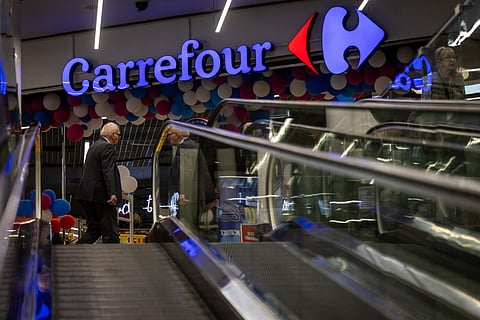
Dubai: Major retail conglomerates across the GCC have been ramping up investment in home-grown brands and proprietary store concepts, looking to protect margins, gain more control over sourcing and respond faster to shifting consumer sentiment and geopolitical risk.
The push comes as Alpen Capital forecasts GCC retail sales will rise to $386.9 billion by 2028 from $309.6 billion in 2023, a 4.6% compound annual growth rate, with the UAE and Saudi Arabia expected to be the main engines of expansion. Alpen projects UAE retail sales will reach $139.1 billion by 2028 and Saudi Arabia $161.4 billion, together making up 77.7% of GCC retail sales.
“Intensifying competition is causing operators to adopt aggressive promotional strategies that are impacting profit margins,” Alpen said in a recent GCC Retail Industry Report, adding that retailers are increasingly using technology and data analytics to streamline operations and enhance customer experience.
Test case: HyperMax
Majid Al Futtaim (MAF), Carrefour’s Middle East franchisee, has provided the clearest example of the shift by replacing Carrefour in four markets with its own grocery banner, HyperMax.
MAF suspended Carrefour-branded operations in Jordan in early November 2024 and said it would roll out 34 stores under HyperMax. Carrefour then ceased operations in Oman on January 7, 2025, according to a statement carried by regional business media.
In Bahrain and Kuwait, Carrefour said it would close as of September 14 and September 16, 2025, respectively, with HyperMax positioned as the replacement. MAF has said it has no immediate plans to replace Carrefour in the UAE, even after the closures elsewhere in the Gulf.
Saudi’s Panda expands
In Saudi Arabia, Savola Group continues to expand Panda Retail, which it describes as owning and managing 219 stores including six in Egypt, serving over 100 million customers annually across Saudi Arabia and Egypt.
Panda itself has said it operates both Hyper Panda hypermarkets and Panda supermarkets, with “over 100” stores referenced in its corporate overview.
Alshaya’s own brand
Alshaya Group, which built a regional retail empire operating international names including H&M and Starbucks, has also moved into owned-brand development. In April 2022, Alshaya launched Tribe of 6, describing it as a “homegrown” and sustainable “fash-leisure” label introduced across Kuwait, Saudi Arabia and the UAE.
Luxury distributor Chalhoub Group has expanded its portfolio of owned retail concepts, led by Faces and Tryano. Chalhoub’s beauty chain Wojooh rebranded to Faces in 2019, with trade coverage at the time citing 85 stores across 9 countries and an online presence.
Chalhoub also operates Tryano, a luxury department store concept at Yas Mall in Abu Dhabi, allowing the group to run the customer experience end-to-end rather than within the constraints of a single foreign franchise model.
Data-backed trends
Cushman & Wakefield has argued the shift toward local concepts is already changing mall strategy, writing that “local brands are no longer secondary players, but key drivers of footfall, engagement, and long-term asset value” in its “Beyond Global Chains” analysis.
PwC Middle East, in its Voice of the Consumer 2025 findings, reported that 47% of consumers in the Middle East had used local retailers, above the global figure of 45%, as shoppers diversify where they buy groceries and show a greater inclination to support local businesses.
Fortune Business Insights, in a 2025 market outlook, said MENA retailers are expected to diversify offerings tailored to local preferences and “increasingly localize their operations” to match regional tastes and cultures.
Chalhoub Group’s own market intelligence has pointed to resilience in the Gulf’s high-end segment, estimating $12.8 billion in GCC personal luxury retail sales in 2024 and +6% year-on-year growth, even as the company cited a global luxury decline estimate of -2%.
Jasmina Banda, Chalhoub Group’s chief strategy officer and president of joint ventures, had previously flagged the regional performance shows “tremendous potential” for brands to leverage the momentum.