Aldo Bensadoun: A cobbler’s grandson who built one of fashion’s most enduring brands
ALDO founder on listening to customers, navigating crises and building a lasting brand
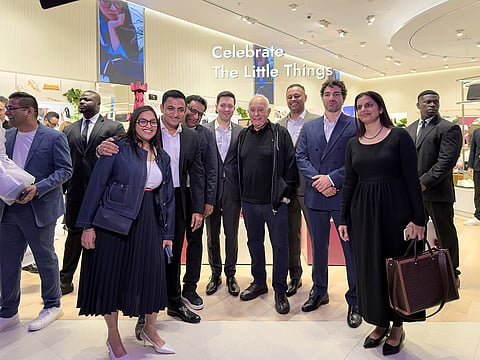
Dubai: Footwear was never an abstract idea in Aldo Bensadoun’s family. His grandfather was a cobbler in Algeria. His father sold shoes in Morocco and France. Long before ALDO expanded across continents, the business was rooted in customers and product.
That principle still resonates with how Bensadoun thinks about business today. More than five decades after founding ALDO in Montréal, he speaks less about scale and more about people. “What I try to do is listen to the request of the people and answer as best as I can, but always listening to their point of view,” he told Gulf News in an exclusive interview.
That mindset has been a constant, even as the company expanded across continents. ALDO began modestly in 1972 as a shoe concession inside a local fashion store. From there, it grew into a vertically integrated global footwear and accessories group, operating thousands of stores and supplying multiple brands and private labels. Yet Bensadoun insisted the formula behind that growth remains simple. “The key to my success is very simple,” he said. “It’s to listen to the customer, to study behaviour, and to try to satisfy that behaviour.”
Listening, however, has not always been easy. Over the years, the company has faced instances in which commercial decisions conflicted with moral responsibility. Bensadoun pointed to geopolitics as one of the most difficult challenges leaders face today. When the Russia-Ukraine war broke out, ALDO had to confront what it meant to operate in a country engaged in an active conflict. “What do you do?” he asked. “We had to take a position and make a decision. Sometimes we make the right decision, sometimes we make the wrong decision.” ALDO was among many companies who either pulled out of Russia or significantly reduced operations. According to The Globe and Mail, on March 2, the retailer stopped shipping products to Russia, ended e-commerce and suspended support for franchisees in the country.
From the conversation, it was clear that for Bensadoun, uncertainty is part of leadership, and so is humility. “Everybody has a point of view,” he said. “I think it’s important to listen to them.”
Middle Eastern markets
That openness extends to how he views markets, including the Middle East. After decades of global expansion, Bensadoun believes consumer behaviour has converged more than many assume. “The world today is very homogeneous,” he said. “There are differences, but in the Middle East, Europe or America, people behave in a very similar way. It’s the human being. What’s incredible is how knowledgeable everybody is, everywhere.”
The brand has been steadily strengthening its presence in the Middle East, and Bensadoun confirmed collaborations with regional designers are already underway. He sees local creative partnerships as a natural extension of listening to communities and reflecting their stories through design.
E-commerce versus brick-and-mortar
As fashion grapples with digital disruption, Bensadoun is equally clear-eyed about the future of physical retail. Despite the rise of e-commerce, he believes stores matter more now than ever. “People thought e-commerce would completely kill brick-and-mortar,” he said. “That’s not the case at all. The store is where you create atmosphere. It’s where you create exchange between human beings. There’s warmth. There’s love.”
For him, stores are living spaces where brands earn trust and relevance. “You need to be close to the customer,” he said. “To feel their need. To create an experience they will enjoy.”
Looking ahead 10 years, Bensadoun expects technology, platforms, and consumer habits to keep evolving. What must not change, he argued, are the values that shaped the company from the start. “Love, respect and integrity,” he said. “Helping society. Helping younger people. Those values are extremely important, and I hope we continue in that direction.”
It is a philosophy that also shapes his advice to entrepreneurs entering an increasingly crowded and competitive market. Brands, he believes, must know who they are and why they exist. “A brand has a purpose in life,” he said. “It needs its own character, its own goal. If you truly understand the customer’s needs and satisfy them, you will be successful.”