WGS 2026: Venezuela courts foreign investors after years of financial isolation
Vice president says early investors stand to gain if Venezuela regains market access
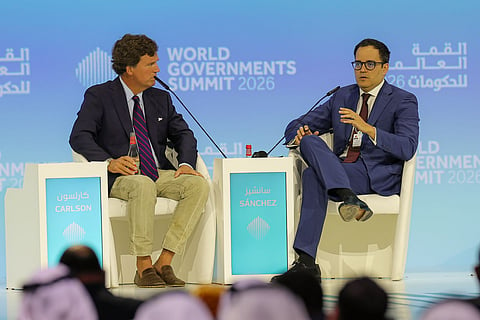
Dubai: “Venezuela is ready and I think this is a great opportunity right now for investors. The quicker the first ones enter the market, the more they will benefit,” said Calixto Ortega Sánchez, Vice President for the Economy, Venezuela, during a fireside chat at the World Governments Summit, where he laid out the country’s case for renewed access to global markets after years of economic isolation.
He said Venezuelan authorities and citizens have demonstrated an ability to move forward peacefully, even under pressure, and are now focused on rebuilding opportunity and welfare. The next step, he argued, is reconnecting with international finance, trade and investment.
Sanctions shaped the economy
Restrictions imposed over the past decade defined Venezuela’s economic landscape, Ortega Sánchez said. What they did was limit access to resources, capital and reserves, leaving the economy to adjust internally.
When he took charge of the central bank in 2018, hyperinflation and shortages dominated daily life. That picture has since shifted. Ortega Sánchez said hyperinflation has been defeated, scarcity has eased to its lowest levels in years and the economy is operating with greater normalcy.
“When sanctions were eased and some OFAC licences were introduced, the economy started functioning like a regular country,” he said. Inflation and exchange-rate performance in 2024, he added, marked the strongest readings in four decades, despite the absence of full market access.
Some general licences now allow private-sector investment and limited oil and gas trade, creating early momentum. Ortega Sánchez said reforms to the hydrocarbons law, approved by the National Assembly, are designed to provide legal assurance and more favourable terms for international investors.
The broader argument rests on growth data. According to United Nations-linked regional agencies, Venezuela led Latin America in GDP growth in three of the past five years, even while operating under restrictions. Economic agents and the private sector, he said, are positioned to accelerate further once barriers ease.
Also Read: US moves to reopen Venezuela airspace
Capital flows and sovereign funds
Future oil revenues are expected to be channelled through two sovereign funds, one focused on welfare and salaries, the other on infrastructure such as electricity and roads. Allocation decisions will remain under government control, Ortega Sánchez said, describing the framework as part of a longer-term reset.
He acknowledged that removing sanctions is slower than imposing them, describing it as a process rather than an event. Even so, he said engagement is moving in the right direction, particularly for US companies and investors, whom he described as natural participants in Venezuela’s market.
Political and economic stability has held for at least six years, Ortega Sánchez said, and maintaining that stability depends on allowing people and businesses to operate without restrictions that distort normal life.
“It doesn’t help the Venezuelan people. It doesn’t help the country that imposed those restrictions,” he said. Access to markets and assets, he argued, would lift consumption, strengthen welfare and allow Venezuela to compete on equal terms.