EGA restarts half of Al Taweelah smelter, targets full output by early 2027
UAE aluminium producer restores 631 production cells in recovery after March shutdown
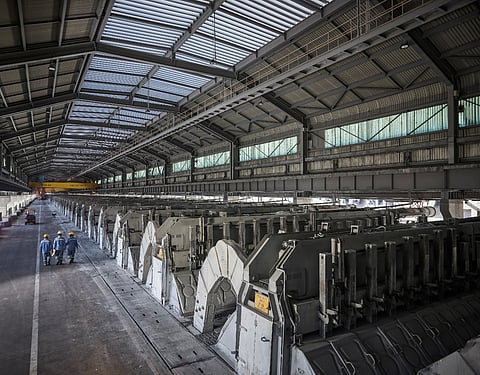
Dubai: Emirates Global Aluminium (EGA) has restarted half of the production cells at its Al Taweelah smelter in Abu Dhabi, marking a major milestone in restoring operations following an emergency shutdown in March.
The company said on Wednesday that 631 of the smelter's 1,262 reduction cells are now operational, with work progressing across all three production lines. EGA expects the facility to return to full production during the first quarter of 2027.
The Al Taweelah smelter was forced into an emergency shutdown on March 28 after an Iranian attack on Khalifa Economic Zone Abu Dhabi prompted the evacuation of the entire site.
EGA, the UAE's largest industrial company outside the oil and gas sector, restarted its first restored reduction cell on May 26 and has since been progressively bringing additional units back into operation.
“With our sustained good progress, we continue to expect that we will reach full production at Al Taweelah smelter during Q1 2027,” said Abdulnasser Bin Kalban, Chief Executive Officer of Emirates Global Aluminium.
“The restoration of Al Taweelah is the biggest challenge we have ever faced as a company. Thousands of dedicated colleagues are working around the clock to bring back Al Taweelah, and EGA, stronger than ever before.”
Get updated faster and for FREE: Download the Gulf News app now - simply click here.
Complex restoration process
Restoring the smelter has involved removing solidified aluminium from individual production cells after molten metal froze during the emergency shutdown.
According to EGA, the frozen metal formed solid pads weighing up to 45 tonnes in each cell, requiring extensive removal work before production could resume.
The company estimates that almost 80 per cent of the cells can be restarted after removing the solidified metal. The remaining units require more extensive repairs, including demolition and replacement of their internal linings, depending on how long they had operated before the shutdown.
Such repairs are part of routine maintenance in aluminium smelting, but the scale of the Al Taweelah restoration has required EGA to significantly expand its capabilities.
The company said it has more than tripled its capacity to safely repair and restart reduction cells compared with its normal maintenance programme. This has involved adding equipment, improving workflows, developing employee capabilities and introducing new industrial processes.
Once restarted, each reduction cell typically takes about a week to stabilise and reach full production.
Some of the molten aluminium produced is being used to restart other cells, while the remaining metal is transferred to EGA's casthouse for processing into finished aluminium products.
Technology upgrades underway
Alongside the restoration, EGA is accelerating a technology upgrade programme at Al Taweelah that would otherwise have required operating production cells to be shut down during construction.
The company is implementing its E40 technology pilot across 13 reduction cells using its existing DX technology.
The pilot will assess the performance of the upgraded technology before EGA considers extending it across all 808 DX reduction cells at the smelter.
If deployed across those cells, EGA estimates that E40 technology could increase annual molten aluminium production by 67,000 tonnes.
The initiative allows the company to undertake technology improvements while restoring the facility, rather than requiring separate production shutdowns at a later stage.
Alumina operating at half capacity
Meanwhile, EGA's Al Taweelah alumina refinery continues to operate at approximately 50 per cent of its production capacity.
The company said the refinery is technically ready to increase output further, but the timing will depend on supply chain conditions and its strategy for sourcing alumina.
Alumina is the raw material used in aluminium smelting, making refinery production and supply arrangements an important part of the wider recovery process.
EGA's latest update confirms that half of Al Taweelah's reduction cells have been restarted, with the remaining restoration work continuing as the company works towards its first-quarter 2027 full-production target.