Dubai’s finance hub draws 775 firms in first-quarter surge
DIFC’s first-quarter growth signals deeper investor confidence in Dubai’s finance hub
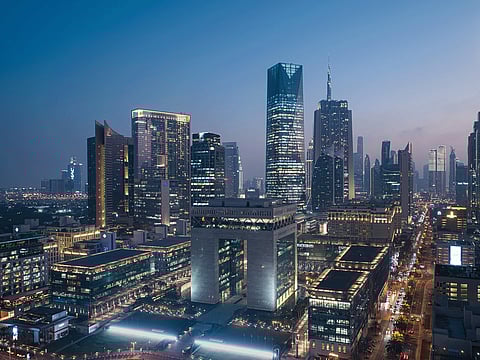
Dubai: Dubai International Financial Centre added 775 new companies in the first three months of 2026, marking one of its strongest starts to a year and signalling that global financial firms, family offices and wealth managers are still expanding in Dubai despite wider market uncertainty.
The number of new registrations was 62% higher than the same period last year, when 478 companies set up in the centre. March alone saw 258 new companies establish a presence in DIFC, up from 162 in March 2025, giving the financial district further momentum at a time when Dubai is trying to position itself among the world’s top four financial centres by 2033.
Get updated faster and for FREE: Download the Gulf News app now - simply click here.
The first-quarter performance also points to a broader movement of capital and institutions into the emirate. A stronger pipeline of asset managers, banks, insurers, family offices and advisory firms is deepening Dubai’s financial ecosystem, with DIFC increasingly being used as a regional base for business across the Middle East, Africa and South Asia.
Global firms deepen Dubai presence
The latest additions to DIFC include Arrowpoint Investment Partners, Braemar Securities, Blue Mountain Capacity, Janus Henderson Investors, Keystone Financial Solutions, National Bank of Canada, Photon Dance, Prospera Wealth Management, RV Capital Management and Ryan Specialty.
Sheikh Maktoum bin Mohammed bin Rashid Al Maktoum, First Deputy Ruler of Dubai, Deputy Prime Minister, Minister of Finance and President of DIFC, linked the centre’s performance to Dubai’s wider economic model.
“Dubai continues to consolidate a unique economic model rooted in a proactive and agile response to regional and global shifts,” Sheikh Maktoum said. “This approach is inspired by the strategic vision of His Highness Sheikh Mohammed bin Rashid Al Maktoum, Vice President and Prime Minister of the UAE and Ruler of Dubai, centred on foresight, economic readiness and transformation of challenges into opportunities for growth.”
He said the approach had strengthened Dubai’s position as “a trusted global business and finance hub” and an investment ecosystem capable of sustaining growth in changing conditions.
Regulation and confidence drive inflows
The centre’s regulated financial services authorisations rose 21% year-on-year in the first quarter, reflecting continued demand from firms looking to operate under a recognised financial framework.
Sheikh Maktoum said DIFC’s first-quarter growth reflects “the rising international confidence in Dubai’s economic ecosystem, its advanced regulatory and legislative frameworks and financial infrastructure.”
This is central to Dubai’s D33 agenda, which seeks to double the size of the emirate’s economy and place it among the world’s four leading financial hubs within the next decade.
Essa Kazim, Governor of DIFC, said Dubai’s position as a top-ten global financial centre during a period of uncertainty reflects the strength of the emirate’s long-term vision and DIFC’s role in delivering it.
“DIFC’s contribution to enhancing investor confidence, strengthening legal and regulatory transparency, and attracting global capital remains instrumental in reinforcing Dubai’s position as a leading financial hub,” Kazim said.
Family wealth chooses DIFC
The first quarter also showed a marked increase in family wealth activity. DIFC registered 158 foundations during the period, more than double the number recorded in the same quarter last year. March was particularly strong, with 60 foundations registered, representing 186% year-on-year growth.
Dubai has become an increasingly important destination for wealthy families relocating capital, businesses and residence plans to the region, and DIFC’s foundation regime is playing a larger role in that shift.
The growth in foundations also shows how DIFC is expanding beyond traditional financial services. The centre is being used by families and private capital groups to manage long-term wealth, build governance frameworks and connect with advisers, asset managers and legal specialists operating within the same jurisdiction.
Arif Amiri, Chief Executive Officer of DIFC Authority, said the centre’s performance was driven by the continued arrival of global, regional and local clients choosing DIFC as their base in the region.
“This growth not only reflects the strength of our platform, but also enhances our reputation as the region’s leading financial centre,” Amiri said. He added that more institutions and families joining the ecosystem are helping create “a dynamic, future-ready environment” that strengthens Dubai’s role as a gateway to opportunities across MEASA.
Space race follows company growth
The inflow of companies is also feeding demand for commercial space in DIFC. The centre completed DIFC Square ahead of schedule, with full occupancy achieved before handover, showing how tight demand has become for high-quality offices in the district.
DIFC is now preparing to add 1.6 million square feet of commercial space between 2026 and 2027 through projects including DIFC Living, Innovation Two and Immersive Tower. The expansion is intended to absorb demand from financial institutions, technology firms, innovation companies and family offices seeking a presence in the centre.
Work is also progressing on the Zabeel District expansion, which will add commercial, residential and lifestyle offerings around a signature boulevard. The district will include a conference centre, hotels, retail space and digital infrastructure, with more than one million square feet allocated to innovation.
That includes the world’s largest innovation hub and the first purpose-built AI Campus, placing DIFC’s expansion closer to where finance, technology and artificial intelligence are beginning to converge.