Make it in the Emirates summit opens with 5,000 products and SMEs in focus
Make it in the Emirates brings manufacturers, SMEs and investors to Abu Dhabi
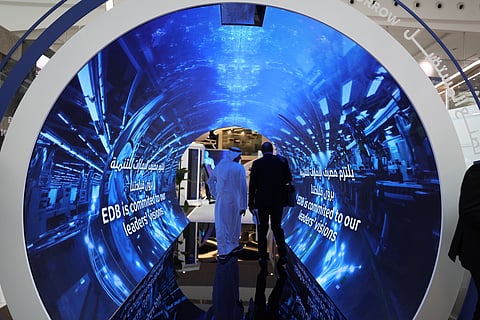
Abu Dhabi: Make it in the Emirates opens today in Abu Dhabi with a focus on local manufacturing, supply chain readiness, industrial financing and a bigger role for UAE-made products in shops, e-commerce platforms and export markets.
Get updated faster and for FREE: Download the Gulf News app now - simply click here.
The fifth edition of the UAE’s flagship industrial platform runs from May 4 to 7 at ADNEC Centre Abu Dhabi. It is hosted by the Ministry of Industry and Advanced Technology and organised by ADNEC Group, a Modon company, in collaboration with the Ministry of Culture, the Abu Dhabi Investment Office and ADNOC Group.
This year’s edition is the largest so far, bringing together 1,162 exhibiting companies across 88,000 square metres of exhibition space. SMEs account for 60% of exhibitors, giving smaller manufacturers and suppliers a direct route to buyers, financiers, government entities and larger industrial players.
The event follows a series of government measures aimed at strengthening the UAE’s industrial base, including a Dh1 billion national industrial resilience fund, wider use of the In-Country Value programme and new policies to increase the visibility of UAE-made products across retail and online channels.
Local production takes centre stage
A central focus of this year’s event will be the localisation of more than 4,800 products. The aim is to give manufacturers clearer visibility on priority goods that can be produced in the UAE, reducing dependence on imports across key categories.
The push covers strategic sectors such as food, pharmaceuticals, industrial goods, manufacturing inputs, base metals, chemicals, advanced technology and construction. For companies, the platform is expected to open access to procurement opportunities, financing options and incentives linked to priority sectors.
A stronger local manufacturing base can help keep essential goods available, reduce exposure to international shipping delays and support more stable supply across supermarkets, pharmacies, construction suppliers and industrial buyers.
From policy to contracts
Make it in the Emirates has grown from an industrial showcase into a platform where procurement pipelines, supply agreements, financing options and market access opportunities are brought together.
This year’s programme is built around industrial resilience and supply chain continuity, with discussions expected to cover logistics, raw materials, cash flow, SME liquidity, exports and business continuity.
The event also follows the Industrial Resilience and Supply Chain Continuity Forum held in Abu Dhabi, where government entities, manufacturers, financial institutions and commercial firms discussed practical steps to support the sector.
Companies attending the platform will be looking for purchase agreements, financing channels, local supplier partnerships and new routes into regional and global markets.
Bigger role for UAE-made goods
One of the clearest shifts this year is the move to increase the presence of UAE-made products across retail outlets and e-commerce platforms.
The first phase will focus on essential products that have scalable local production potential, including bottled water, dairy products, eggs, fresh and chilled poultry, bread, basic bakery items, flour, locally packaged vegetable oils and seasonal agricultural products.
The policy is designed to support demand for national products while helping UAE factories become more deeply connected to large retail and digital supply chains.
The expansion of the National In-Country Value programme will also direct more spending into the local economy. The programme is being extended as a mandatory framework across federal government entities and national companies with at least 25% direct or indirect federal ownership.
Since the launch of Operation 300Bn in 2021, the UAE’s industrial exports have doubled to Dh262 billion in 2025, growing at more than 25% year on year. Medium and high-tech exports reached Dh92 billion, exceeding the 2031 target six years ahead of schedule. The ICV programme has redirected more than Dh473 billion into the national economy.
AI and industrial data
Artificial intelligence will have a larger role in this year’s edition, with the government package linking AI adoption to production, operations, planning and supply chain resilience.
The newly approved National Industrial Data Committee will focus on the collection, integration and real-time availability of strategic industrial data. That is expected to support faster decisions by policymakers and companies during periods of supply pressure or demand changes.
MIITE 2026 will also introduce new features including the Industry Museum, Quality Hub, NextGen Hub, Intelligence Hub and Startup Hub. These platforms will cover manufacturing innovation, quality infrastructure, startups, robotics, autonomous systems and AI-powered industrial solutions.
Culture joins the manufacturing agenda
The Ministry of Culture will also have a significant presence at this year’s event, linking Emirati craftsmanship with the wider industrial and creative economy.
Its pavilion will feature 50 Emirati crafts created by more than 200 artisans in collaboration with 19 entities and institutions. It will also include 15 creative companies, five technology projects, more than 500 national products and heritage pieces from UAE museums.
The programme will include dialogue sessions, interactive activities and agreements aimed at supporting artisans and connecting traditional crafts with modern design, production and technology.
What to watch this week
The opening day will include a keynote by Dr Sultan Al Jaber, followed by a ministerial panel on resilient growth through strategic partnerships and industrial alliances.
Day one will also feature sessions on family businesses, energy, manufacturing and advanced technology. Day two will host the fourth edition of the MIITE Awards, along with a session titled Emirati Women Redesigning Industry.
Across the four days, the main measure of success will be whether the platform converts policy momentum into contracts, financing, supplier agreements and stronger visibility for UAE-made products.