From a small town in Pakistan to Dubai, he built a business with Dh15,000
Ammar Akhtar arrived with little and built his Dubai business from Dh15,000
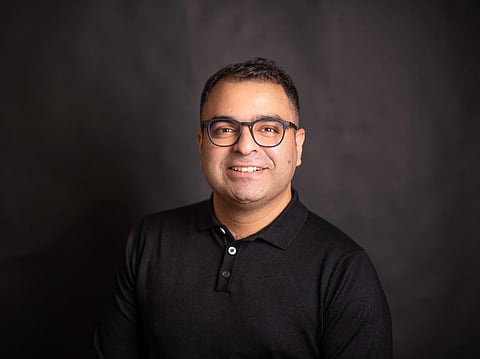
Dubai: Ammar Akhtar had Dh15,000 left after paying the licensing and setup costs for Finalrentals.
There was no advertising budget, and he chose to build the car rental platform without loans or debt. The business would rely on technology, organic online traffic and the industry knowledge he had gained during almost a decade in Dubai.
Get updated faster and for FREE: Download the Gulf News app now - simply click here.
Akhtar had arrived in the city on January 20, 2007, from a small town in Pakistan. He had little money and no clear business plan, but he was certain he had reached the place where he wanted to build his future.
“The thing I remember most clearly is the certainty. I had grown up in a small town in Pakistan, and I had this very specific thought when I arrived: this is the place where I need to be. I did not have money or a plan that anyone would call sensible. What I had was the feeling that the ceiling had just been lifted off whatever I could become.”
Within about a year of arriving, Akhtar was broke and moving between consulting assignments while trying to find a business model that worked.
The experience was difficult, but it did not change his view of the city.
But this is what is special about Dubai. It coaches you for the big league. The challenges and the commercial grooming start from day one, and the city teaches you never to give up, because Dubai never gives up. It is always alive. So I started again with a different business model, and things began to work better.Ammar Akhtar, Founder and CEO of Finalrentals
Responsibility came early
Akhtar was the eldest of seven siblings, which pushed him into work and family responsibility at a young age.
Long working days were part of life before he moved to Dubai, where he carried the same sense of responsibility into his career.
“Being the eldest of seven means you stop being a child earlier than other people. There was no version of my life where I got to figure things out slowly. From a young age I was working long days, sometimes eighteen hours, to help the family make ends meet.”
The pressure taught him that his decisions affected people beyond himself, an outlook that later shaped the way he approached business.
“That does two things to you. It teaches you that effort is non-negotiable, and it teaches you that other people are depending on whether you show up or not. I carried that into every business I have built since.”
The role that changed his career
Akhtar’s first major break came at Budget Rent a Car, where he was appointed Chief Software Architect.
His job was to develop the company’s website and build an online car rental booking system. The role introduced him to an industry that would define the next 15 years of his career.
Akhtar later built booking platforms for more than 100 rental companies, including Thrifty, Dollar and Payless.
The work gave him a close view of how rental companies operated and how customers booked vehicles online.
“I have a line I use about it: I did not choose the industry, the industry chose me.”
Years of building technology for rental businesses also exposed a gap that Akhtar believed the established operators were failing to address.
More than half of the world’s car rental companies were small, independent businesses, according to Akhtar. Many had strong customer service but lacked the eCommerce expertise needed to reach customers online.
Large rental companies dominated digital bookings, while local operators struggled to gain visibility.
Akhtar decided in December 2016 that he would stop building platforms for other companies and create his own.
“I did not want to keep handing that advantage to other people. In December 2016 I decided to build the platform I wished existed, one that put the independent operators and the customer first instead of the incumbents.”
Finalrentals began with Dh15,000
Akhtar invested Dh32,000 in Finalrentals. Licensing and setup costs left him with Dh15,000 in working capital.
He responded by designing the company around low costs from the beginning. Revenue was collected in real time, while borrowing was kept out of the business model.
“It is true. I started Finalrentals with Dh32,000, and after licensing and the other setup costs, the net operating capital I had in my hands was Dh15,000, to be exact.”
Advertising was one of the first expenses he ruled out because the company could not afford it.
Akhtar instead developed a technology layer he calls SEO DIP, which was designed to help individual pages appear in searches for specific locations, including phrases such as “rent a car in Karama”.
The biggest single decision was refusing to spend on advertising, because I could not afford to. So I built a deep technology layer I call SEO DIP, which I invented in those early days to rank pages organically for long tail searches like rent a car in Karama.Ammar Akhtar, Founder and CEO of Finalrentals
This led to Finalrentals to attract customers through search traffic without committing its limited capital to paid marketing.
“That is how a company with almost no marketing budget ended up getting effectively all of its traffic for free. Constraint forced the innovation. It usually does.”
Dubai became the foundation
Akhtar credits Dubai with giving him the environment to turn his software experience into a business.
The city allowed companies to be set up quickly and placed founders among people who had arrived with similar ambitions. Success, however, still depended on the founder’s ability to execute.
Dubai removes friction that other cities treat as normal. The speed of setting something up, the assumption that ambition is healthy rather than suspicious, the sheer density of people from everywhere who came specifically to build, all of it compounds.Ammar Akhtar, Founder and CEO of Finalrentals
Akhtar believes the city offers opportunity without promising an easy path.
“The flip side is that it is genuinely meritocratic in the hard sense: nobody is going to carry you, and the city does not owe you a soft landing.”
His advice to founders arriving in Dubai with limited money is to begin with a real product and place it in front of customers before becoming distracted by investors.
“Keep it simple. The most common mistake I see is people doing simple things in the most complicated way, usually to look impressive to investors who are not even in the room yet. You do not need their permission and at the start you may not need their money.”
Akhtar still describes himself as a homegrown Dubai entrepreneur. The city where he arrived with little money became the place where he learnt the car rental industry and launched Finalrentals.
“Dubai is the place that made me, and I will always say that plainly. I arrived from a small town in Pakistan with almost nothing, and Dubai is where I learned who I could be.”
“They say it takes a village to raise a child. I would say it takes an ecosystem to create an entrepreneur, and Dubai is that ecosystem for me.”