Oil prices fall despite Gulf security risks
Global oil supply expectations outweigh Gulf security concerns
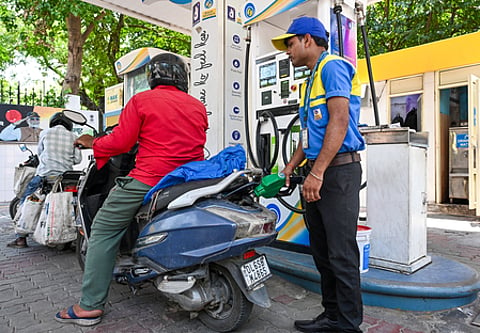
Oil prices declined on Tuesday (Nov. 17) as expectations of increased global supply outweighed concerns about attacks on Gulf shipping.
Brent crude fell to $91.71, down 72 cents or 0.78%, while WTI crude dropped 78 cents to $84.94, or 0.91% per barrel, according to latest OilPrice.com data as of 2.04pm Singapore time.
The decline reflects expectations that recovering Middle Eastern exports could exceed demand in the fourth quarter.
The International Energy Agency (IEA) has also forecast a return to a global oil supply surplus during the quarter.
Get it: Fast, verified news for FREE ... download the Gulf News app — simply click here
IEA data also showed the supertanker rates have fallen 64% in five weeks. Shipping crude from the Gulf of Oman to China peaked at 841 Worldscale points on Oct. 8 and was down to 308 by Nov. 13, per Baltic Exchange data.
That’s still well above the 150 to 200 range of the spring. Gulf exports are back near pre-war levels, so Asia needs fewer long voyages from the US, West Africa and the North Sea.
Lower international crude prices could ease pressure on fuel costs, but pump prices are determined through pricing announcements by jurisdictions.
November fuel prices should not be assumed to change immediately with daily crude movements.
VLCC freight rates drop
The 64% drop refers to freight rates for very large crude carriers (VLCCs, or supertankers) on the Gulf of Oman-to-China route, not to the price of crude oil itself.
Rates fell from a record 841 Worldscale points on October 8 to about 308 points on November 13, according to Baltic Exchange data cited by Reuters.
Sharp reversal
The decline is one of the sharpest reversals on record for the route. It reflects weaker demand for tanker charters and improved availability of vessels as Gulf crude flows return toward pre-war levels.
Worldscale is a benchmark used to price tanker freight. A rate of 841 Worldscale points means the cost of shipping was 8.41 times the nominal baseline rate; 308 points means it was about 3.08 times that baseline.
The drop does not mean oil is cheaper to buy. It means the cost of moving it by sea has fallen sharply.
The IEA stated that freight rates for moving crude from the Middle East to Asia remained near record levels, even as costs for smaller Aframax and Suezmax tankers eased.
The US Energy Information Administration (EIA) said attacks had disrupted global oil flows and reduced tanker availability, causing rates to spike.
Continued flows through the Strait of Hormuz using ship-to-ship transfers along Oman’s coast helped ease the pressure in late October and early November.
For oil importers, lower freight rates could eventually reduce delivered crude costs. For exporters, it means more of the sale price stays with the producer rather than going to shipping.
For global markets, the decline is a sign that the immediate shipping crisis is easing, even if the underlying conflict continues.
The key question is whether Gulf exports can sustain the recovery. If flows remain stable, freight rates could continue to fall. If the conflict escalates again, rates could spike.
What it means
For consumers, the impact will be indirect and delayed. Lower freight costs can help reduce fuel prices over time, but they do not guarantee immediate relief at the pump.
For traders and shipowners, the reversal marks a major shift in market dynamics after weeks of record-high rates.
The October peak of 841 Worldscale points was driven by a surge in demand for tankers amid the Iran conflict and disruption to Gulf exports.
By November 13, the rate had fallen to 308 points, with the Baltic Exchange’s Week 46 tanker report putting the TD34 Gulf of Oman-to-China route at WS310.71, down 234 points for the week.
The estimated round-trip time charter equivalent for a standard VLCC fell 66.3% to $307,160 per day, from $912,660 per day in the Week 41 report.


