Aster Hospital brings next-generation heart imaging to region
Latest OCT technology offers doctors clearer artery scans during complex heart procedures
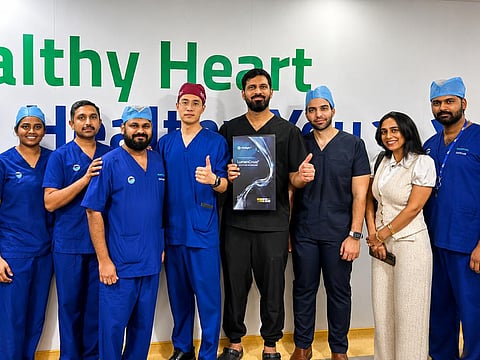
Dubai: Aster Hospital Mankhool has become the first hospital in the Gulf to use a new heart imaging system that gives doctors highly detailed, real-time views from inside the arteries during complex heart procedures.
The hospital, ranked fourth in the UAE in Newsweek's World's Best Hospitals 2026 list, successfully used the Cornaris P80/P80-E Optical Coherence Tomography (OCT) platform, developed by Vivolight, during a coronary intervention.
The technology is designed to help cardiologists diagnose and treat blocked arteries more accurately by providing detailed images of the artery walls from the inside.
Clearer view for better treatment
Unlike conventional angiography, which relies on X-ray images to show the outline of blood vessels, the OCT platform uses near-infrared light to create high-resolution cross-sectional images of the arteries.
This allows doctors to closely examine the size and nature of blockages, calcium deposits and blood flow before deciding on the most suitable treatment.
Get updated faster and for FREE: Download the Gulf News app now - simply click here.
Dr Naveed Ahmed, Head of Cardiac Services at Aster Hospitals & Clinics UAE, said the technology gives doctors a much clearer understanding of the condition of the arteries during treatment.
"Instead of relying only on traditional images, we can now assess the structure of the blockage and the surrounding artery in much greater detail. This helps us perform complex procedures with greater precision and make better treatment decisions for our patients," he said.
First patient successfully treated
The first patient treated using the new platform was a 52-year-old Dubai resident with diabetes, high blood pressure and high cholesterol. He was admitted with worsening chest pain and diagnosed with Acute Coronary Syndrome (NSTEMI), a serious type of heart attack that required urgent treatment.
Doctors found severe narrowing in a major heart artery, along with additional disease in another section of the vessel.
Using the OCT system, the medical team carried out a detailed assessment before treating the blockage with a drug-eluting stent, a drug-coated balloon and additional treatment for the affected artery.
The procedure restored normal blood flow. The patient underwent treatment on June 2, 2026, was discharged the following day and has remained symptom-free since.
Strengthening cardiac care
Dr Sherbaz Bichu, CEO of Aster Hospitals & Clinics for the UAE, Oman and Bahrain, said introducing the technology reflects the hospital's commitment to bringing proven medical innovations to patients in the region.
He said the system enables specialists to capture detailed artery scans within seconds, improving the management of complex heart conditions and supporting better patient outcomes.
The imaging platform offers several scanning modes, allowing doctors to examine different lengths of the artery in as little as one to three seconds without compromising image quality.
Supporting better outcomes
The technology is used during Percutaneous Coronary Intervention (PCI), a minimally invasive procedure that opens blocked heart arteries using balloons and stents, avoiding the need for open-heart surgery in many cases.
Heart disease remains one of the leading causes of death in the UAE and across the Gulf.
According to Aster, international studies have shown that OCT-guided procedures can improve treatment accuracy, reduce complications related to stents and lower the risk of cardiac deaths compared with procedures guided by conventional angiography alone.
The hospital said the milestone marks another step towards improving cardiovascular care in the UAE through advanced technology and more precise treatment.


