Tesla hits 10 million vehicles: The EV maker that forced the auto industry to change
How Tesla’s 10 millionth EV marks the dawn of a software-defined auto era
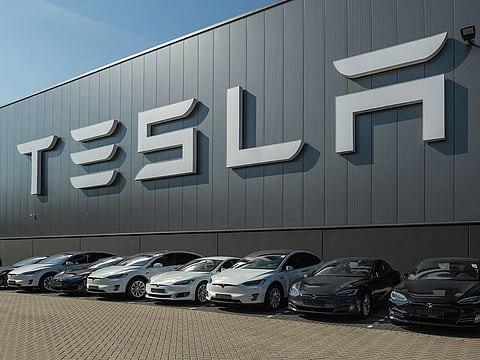
Tesla has just crossed a milestone that would have seemed almost absurd when its first Roadster entered production: 10 million fully electric vehicles produced.
The 10 millionth vehicle, a Model Y, rolled off Tesla's Fremont, California, production line this week, according to reports.
That makes Tesla the first automaker to reach 10 million purely battery-electric vehicles; BYD's comparable 10-million milestone includes both battery EVs and plug-in hybrids.
The number is significant not simply because it is large.
It represents the industrialisation of an idea that much of the traditional auto industry once regarded as niche, risky or commercially premature.
18 years from the first Roadster to 10 million
Tesla began producing the Roadster in 2008.
It took roughly 12 years to reach its first million vehicles, achieved in March 2020.
Then the production curve changed dramatically:
1 million: March 2020
2 million: about 18 months later
3 million: about 11 months later
4 million: about 7 months later
5 million: September 2023
10 million: July 2026
This shows Tesla needed roughly 12 years to go from the start of vehicle product to 1 million, and 6 years from from 1 million to 10 million.
Remarkanly, from hitting 5 million in September 2023, it only took the company about three years to add the second 5 million.
That acceleration is the real story.
Tesla went from struggling to manufacture a few thousand Roadsters to producing 1.65 million vehicles in 2025 alone.
Its current global manufacturing footprint has capacity for more than 1 million vehicles a year, alongside batteries and energy products.
Tesla's real moat isn't just the car
The common mistake is to look at Tesla as simply another automaker.
It isn't. Tesla's moat — although increasingly challenged by BYD and other EV makers — has several layers.
1. Manufacturing scale
Tesla spent years learning how to manufacture EVs at volume when virtually every major automaker was still treating electric cars as a secondary product line.
Gigafactories in the United States, China and Germany gave Tesla global production scale and experience that was difficult for legacy automakers to replicate quickly. Tesla says it has more than 2.8 million square metres of factory space and 70,000-plus employees across three continents.
2. Battery and powertrain expertise
The electric powertrain is fundamentally different from the ICE powertrain. There are fewer moving parts, but the competitive battlefield shifts toward: batteries → power electronics → thermal management → software → manufacturing efficiency.
Tesla has increasingly pursued vertical integration across its battery and semiconductor supply chains. Its latest filings say the company is focusing on localizing and expanding its supply chain while reducing manufacturing costs.
3. Software
This may ultimately be Tesla's most important strategic difference. Traditional automakers built cars and then added software.
Tesla effectively built a software-defined car that happens to be a vehicle.
Over-the-air updates allow Tesla to change features and functionality after the car has left the factory. That changes the economics of the automobile.
A conventional car largely depreciates technologically the moment it leaves the showroom.
A software-defined vehicle can continue to receive new capabilities.
That is why Tesla's competition increasingly isn't only Toyota, Volkswagen or Ford.
It is also Apple, Google, Nvidia, Chinese tech companies and software developers.
AlixPartners warned this year that Western automakers and suppliers are falling behind Chinese automakers and tech companies in the race to control key software layers of the vehicle.
4. The Supercharger network
Tesla understood early that selling an EV without making charging convenient was a problem.
It therefore built its own charging ecosystem.
Tesla says its Supercharger network had more than 80,000 charging stalls in 2025 and delivered 6.7 terawatt-hours of electricity that year.
That's not merely infrastructure.
It's part of the product.
Buy a Tesla → use Tesla software → navigate through Tesla's system → charge through Tesla's network → receive software updates → potentially purchase additional software-enabled functions.
That creates an ecosystem rather than a one-time vehicle transaction.
Tesla disrupted the industry's business model
Before Tesla, the dominant automotive model was essentially: design → manufacture → dealer → sale → service.
Tesla challenged almost every layer. It pushed:
direct sales
online ordering
over-the-air software
centralized computing
large battery packs
fast charging
minimalist interiors
continuous software updates
vehicle data
advanced driver assistance
energy storage
The car increasingly became a computing platform on wheels. And that forced competitors to respond.
The irony: Tesla is now being disrupted too. The story shouldn't become a Tesla victory lap. The company faces a serious new competitive threat.
BYD has overtaken Tesla in global battery-electric vehicle sales for the second consecutive year, according to the International Council on Clean Transportation.
Global EVs accounted for roughly one in four new vehicles sold in 2025, up from one in five in 2024. Chinese automakers are now competing not merely on price.
They are competing on:
batteries
manufacturing speed
software
vehicle design
infotainment
autonomous driving
supply-chain integration
affordability
The same disruption Tesla inflicted on Detroit, Europe and Japan is now being inflicted on Tesla.
That's how technological disruption works.
The disruptor eventually becomes the incumbent.
Some traditional automakers are paying the price
The transition has been brutally expensive. Global automakers have recorded approximately $55 billion in EV-related writedowns over the past year as they rethink or scale back electrification strategies.
Stellantis alone booked a €22.2 billion ($26.5 billion) charge, while Ford took a $19.5 billion hit and GM about $6 billion. Porsche also recorded roughly $6 billion in impact from its EV strategy reset.
The important point is not that EVs are failing. Quite the opposite.
The problem is that some traditional automakers misjudged the transition in both directions. Some moved too slowly. Others invested heavily but failed to build EVs at competitive prices, with competitive software and competitive batteries.
And now Chinese manufacturers are exploiting that gap.
The new automotive battlefield
The automobile industry used to be dominated by whoever had the best: engine + transmission + manufacturing + dealer network.
The emerging industry is increasingly dominated by: battery + software + chips + AI + manufacturing + charging + supply chain.
That is an enormous industrial transformation.
And it explains why Tesla's 10-million milestone matters. It is not merely a celebration of 10 million cars.
It is evidence that an entirely new automotive architecture has moved from experiment to niche to mass production to global competition.
But Tesla's biggest challenge may be its own future
Tesla is now trying to transform itself again. The company is investing heavily in:
Full Self-Driving
robotaxis
AI
Optimus humanoid robots
energy storage
autonomous vehicles
Tesla deployed 46.7 GWh of energy-storage products in 2025, and its first-quarter 2026 filing shows the company continuing to expand energy storage while investing in AI, software and robotics.
That's the gamble. Tesla doesn't want to remain merely an EV manufacturer.
It wants the automobile to become the physical platform for a much larger technology ecosystem. Whether it can execute that second transformation is far less certain.
But the first transformation is already history.
Lesson for traditional automakers — and for countries
Tesla demonstrated something that the automotive establishment underestimated:
Technology doesn't need permission from an incumbent industry to redefine it.
The companies that dismissed EVs as a niche discovered that consumers could change.
The companies that treated software as an accessory discovered that software could become the vehicle.
The companies that assumed manufacturing advantages would protect them discovered that new entrants could build entirely new factories and supply chains.
And companies that delayed electrification are now spending billions trying to catch up.
This is precisely why the transition matters for countries such as the Philippines.
The opportunity isn't simply to assemble today's gasoline-powered vehicles.
It is to position the country for the next automotive supply chain:
batteries,
semiconductors,
power electronics,
software,
EVs, hybrids, charging infrastructure and advanced manufacturing.
Tesla's 10-millionth car is therefore more than a company milestone. It is a warning about what happens when an industry waits too long to adapt.
And perhaps the most important lesson is this:
Tesla didn't win because it built an electric car. It won because it understood that the automobile was becoming something fundamentally different. Now the rest of the industry is racing to catch up.


