Will Iranians revolt as economic pain deepens? Tehran is already preparing
Police, Basij told to prepare as Tehran fears fuel prices, could trigger protests
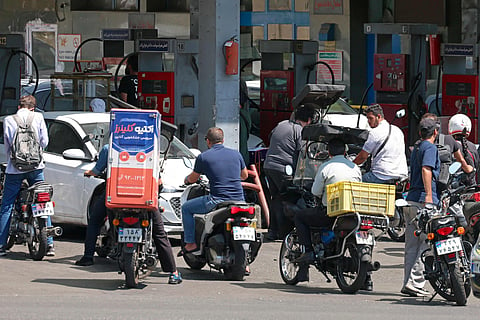
Dubai: Six months into the war, Iran is confronting a threat that cannot be stopped by missiles or air defences: anger on its own streets.
The country’s economy is being squeezed by war, a US naval blockade and increasingly severe sanctions. Annual inflation reached 66 per cent in July, food inflation hit 128 per cent and the rial has fallen sharply, while disrupted trade and falling incomes are making everyday life increasingly difficult.
President Masoud Pezeshkian acknowledged last week that Iran’s problems had “multiplied several times over” while its income had fallen. He said on Saturday that foreign trade had dropped 35 per cent during the war.
So far, however, there has been no new nationwide uprising.
The increasingly urgent question for Tehran is whether that will hold if economic conditions deteriorate further — and Iran’s security establishment is making clear that it is preparing for the possibility that they won’t.
Police told to prepare
Ahmad-Reza Radan, commander of Iran’s national police, warned senior officers last week that livelihoods, gasoline prices, unemployment and the wider economy could become triggers for unrest.
“The enemy is seeking to create unrest in parts of the country or across the entire nation,” Radan said, accusing Iran’s adversaries of seeking to exploit economic grievances.
More revealing was what he told his commanders to do about it.
Radan said police must have plans in place for any eventuality and called for “preemptive and preventive measures” to stop protests taking shape. He instructed cyber and public-security police to identify those they believe are encouraging unrest online and called for the Basij militia to be used in police operations.
Why Tehran fears the streets
2009 — Disputed election: The Green Movement brought huge crowds onto the streets after Mahmoud Ahmadinejad’s disputed re-election. The Basij, then commanded by Hossein Taeb, played a major role in crushing the protests.
2017-18 — Cost-of-living anger: Protests beginning over prices, unemployment and economic hardship spread to dozens of cities and increasingly turned against the political establishment.
2019 — Fuel-price shock: A sudden increase in petrol prices triggered nationwide demonstrations. Security forces launched a sweeping crackdown as protests spread rapidly across the country.
2022 — Mahsa Amini protests: Her death in morality-police custody sparked the Woman, Life, Freedom movement. What began over compulsory hijab expanded into one of the biggest challenges to the Islamic Republic.
January 2026 — Economic anger erupts again: Protests that began amid worsening economic hardship spread nationwide. Thousands were reported killed as authorities deployed overwhelming force to regain control.
Now — Tehran moves pre-emptively: With inflation at 66%, food inflation at 128% and fuel prices again under discussion, police have been ordered to prepare for unrest and take “preemptive and preventive measures”.
His warning comes as officials debate changes to Iran’s heavily subsidised fuel system — historically one of the country’s most politically explosive issues.
The government has indicated that the cheapest 60-litre monthly gasoline quota would remain protected, but officials have discussed reducing a second subsidised quota and gradually liberalising prices.
That is a dangerous calculation.
Economic grievances have repeatedly erupted into major protests in Iran, including demonstrations triggered by fuel-price increases in 2019. More recently, protests that began over economic hardship late last year spread nationwide in January before being crushed by security forces.
A veteran of crackdowns returns
Radan’s orders are not the only indication that Tehran is worried.
In a new round of appointments by Supreme Leader Ayatollah Mojtaba Khamenei, Hossein Taeb — a hardline cleric and veteran intelligence chief — was named commander of the Basij, the Revolutionary Guard’s volunteer force that has repeatedly been deployed to suppress dissent.
The Associated Press reported that Taeb’s appointment was perhaps the most telling of a series of changes that have consolidated power around veteran military commanders and clerics as Iran prepares for a potentially prolonged confrontation with the United States.
Taeb commanded the Basij when it helped crush the huge protests that followed the disputed re-election of President Mahmoud Ahmadinejad in 2009. He subsequently spent nearly 13 years running the Revolutionary Guard’s intelligence organisation.
Sascha Bruchmann, an analyst with the International Institute for Strategic Studies’ Middle East office, told AP that Taeb’s appointment suggested Tehran wanted to pre-empt unrest “before it even manifests”.
Khamenei has also ordered Taeb to deepen the Basij’s presence in Iranian social life and make greater use of new technologies. The organisation already maintains networks in neighbourhoods, government institutions and cultural centres.
The preparations may go even further. Commanders from the Revolutionary Guard, Basij and national police in Tehran province met on August 23 and announced an internal-security exercise involving a claimed 313,000 personnel, according to the Institute for the Study of War.
Why Tehran is worried
Iran entered the war already struggling with inflation, a weakening currency, sanctions and energy shortages. Six months of conflict have added damaged infrastructure, disrupted trade, reconstruction costs and a US naval blockade.
Iran’s Statistical Centre put annual inflation at 66 per cent in July, while consumer prices were 87.9 per cent higher than a year earlier and food inflation reached 128 per cent. The dollar value of the minimum wage has fallen despite a large nominal increase this year.
Reuters reported earlier this month that Iranian officials and political insiders were increasingly worried that another round of US economic pressure could deepen hardship enough to trigger renewed nationwide protests.
The crackdown has meanwhile continued. Iran Human Rights says at least 511 people have been executed so far this year, including 29 in connection with January’s anti-government protests.
But economic misery does not automatically translate into revolution.
Despite the extraordinary pressure on household finances, AP reports there has so far been no sign of another nationwide protest movement.
And that may explain why Tehran appears determined to act before scattered anger becomes organised resistance.
Can hardship overcome fear?
The leadership that has emerged after six months of war is notably hardline.
Khamenei has surrounded himself with veteran figures including Supreme National Security Council secretary Mohsen Rezaei and Revolutionary Guard commander Ahmad Vahidi — men with decades of experience inside Iran’s military and security establishment.
President Pezeshkian remains one of the strongest voices urging restraint. He has argued that it would be better to end the war while Iran still believes it holds power and leverage, exposing what Tehran-based political analyst Ahmad Zeidabadi described to AP as “serious differences over the future path of the country”.
Yet the security establishment appears to be preparing for a longer confrontation — abroad and at home.
That creates a striking paradox six months into the war.
Washington is increasing the economic pressure that could fuel public anger against Iran’s rulers. Tehran, rather than yielding to that pressure, is strengthening the institutions designed to contain its political consequences.
Radan’s warning makes clear what officials believe the potential triggers could be: jobs, livelihoods, gasoline and the cost of living.
The unanswered question is whether Iran’s economic pain eventually becomes powerful enough to overcome something its rulers have spent decades perfecting — the fear of what happens when people take to the streets.


