US-Iran war: What UAE residents need to know today (Sept. 9, 2026)
Oil prices climb, air travel disrupted as tanker attacks raise Hormuz fears
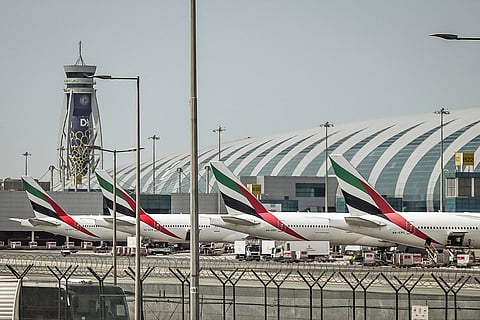
Oil prices rose, Gulf shipping risks deepened and UAE travelers faced continued flight disruptions Wednesday after the US military said it destroyed five Iranian crude oil carriers following attempted missile attacks on a US Navy warship.
The latest exchange also included Jordanian air defence systems engaging 20 ballistic missiles fired from Iran toward Jordanian territory, successfully intercepting and destroying 18 of them, with no casualties.
Two missiles fell in unpopulated areas.
The latest events have sharpened concern over commercial traffic around the Strait of Hormuz after Iran warned it could target oil tankers anchored or docked near Bahrain and Kuwait in retaliation.
The warning increases risks for regional shipping, energy supplies and air-travel operations.
UAE airports remain open and most airline networks are continuing to operate with rolling schedule changes.
Latest developments
US strikes: Central Command said American forces destroyed five Iranian crude oil carriers after the IRGC tried to attack a US Navy warship with ballistic missiles on two occasions. The reported strikes occurred near Kharg Island and in waters around Jask and the Gulf of Oman.
Iran’s warning: Iran’s Revolutionary Guard Navy warned crews aboard oil tankers in or near Kuwaiti and Bahraini ports to evacuate, saying vessels could be targeted in retaliation for the U.S. action. The warning extends the confrontation’s risk to commercial shipping operating near Gulf facilities that host US forces.
Hormuz diplomacy continues: Iran said it had made “significant progress” in Oman-mediated discussions on the administration of the Strait of Hormuz, even as the military confrontation escalated. Any arrangement that improves navigation safety would be closely watched by shipowners, insurers and oil markets.
UAE response: The UAE Ministry of Foreign Affairs said the government does not comment on media reports or speculation concerning conversations between government leaders. Its statement also emphasized the importance of de-escalation, regional stability and preventing further violence.
Flights and travel
Airports in Dubai and Abu Dhabi remain open, but passengers should expect potential delays, cancellations and rerouting as airlines respond to regional airspace restrictions, operational risk notices and other disruptions.
The flight chaos in the UK, blamed on a technical glitch that led to more than 1,000 flights being cancelled, adds another layer of challenge to the aviation sector. being cancelled, adds another layer of challenge to the aviation sector.
Emirates
Operating most services from Dubai, but selected Gulf flights, including some Bahrain and Kuwait services, have been adjusted or canceled.
Etihad Airways
Most core services are operating, including generally normal Bahrain and Kuwait flights, but individual departures and arrivals may be delayed or changed. Separately, Etihad Airways announced plans to begin year-round flights from Abu Dhabi to Saudi Arabia’s Red Sea International Airport in Tabuk Province on Oct. 4.
The service is scheduled to operate once weekly initially, rising to twice weekly from Oct. 25. The new route gives UAE travelers another direct link to Saudi Arabia’s Red Sea tourism developments. Its launch announcement comes as the airline continues to manage a fluid regional operating environment.
Air Arabia
Has canceled some Kuwait and Bahrain flights, while maintaining broader operations from Sharjah and other UAE bases.
flydubai
Continuing to operate much of its network, including listed Bahrain and Kuwait services, but says passengers should check flight status and arrive at Dubai Airport at least four hours before departure.
The European Union Aviation Safety Agency has extended its conflict-zone information bulletin covering the Arabian Gulf and Gulf of Oman through Sept. 30, prompting airlines to reroute flights and manage exposure to changing airspace risks.
What travelers should do:
Check airline flight-status tools shortly before leaving for the airport and again before boarding.
Allow extra time at the airport, particularly for Dubai departures.
Do not assume that a flight’s status the night before will remain unchanged.
Contact the airline or booking provider before making nonrefundable connections, hotel reservations or ground-transport plans.
Monitor official UAE and airline channels rather than relying on viral posts or unverified flight-tracking claims.
Oil and shipping
Crude markets rose as traders priced in a higher risk of supply disruption from the Gulf.
At 8:28 am Wednesday, the quoted market board showed WTI crude at $94.33 a barrel, up $1.30 or 1.40%; Brent at $97.92, up 92 cents or 0.95%; and Murban at $110.80, up $4.00 or 3.75%.
The disproportionate rise in Murban, the UAE’s flagship export crude, highlights how directly Gulf grades are exposed to threats to tanker movement and the Strait of Hormuz.
For UAE residents, the near-term impact is more likely to be seen first in airline operations, shipping and insurance costs, and market volatility than in an immediate physical shortage of fuel.
A sustained disruption to Hormuz traffic could add pressure to global oil prices and transport costs.
Economic pressure on Iran
The US tanker strikes come amid a broader effort to restrict Iran’s ability to earn oil revenue and finance military activity.
Reuters has reported that restrictions on Iranian oil exports have cut state revenue, while Iran’s efforts to impose broader economic costs through Hormuz disruption have not produced the global shock Tehran had sought.
Analysts caution that reduced leverage does not automatically translate into concessions; under greater pressure, Iran could seek to raise the costs of conflict by escalating maritime actions.
For markets and UAE residents, the most consequential signal will be whether the current threat to Bahrain- and Kuwait-linked tankers remains rhetorical, or develops into attacks, new navigation restrictions or a sharper reduction in commercial transits through Hormuz.


