US-Iran truce faces toughest test after fresh strikes: Why it matters
Military action on multiple fronts raises fresh doubts over the ceasefire
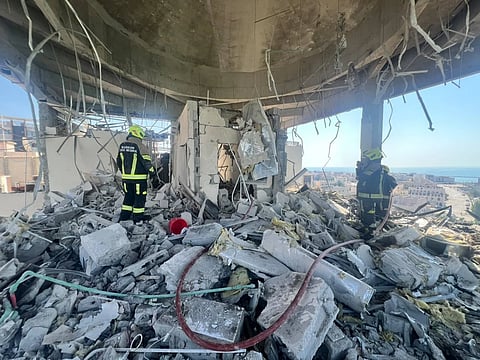
Dubai: Just weeks after Washington and Tehran hailed a ceasefire and a broader agreement aimed at restoring stability in the Strait of Hormuz, both sides are once again trading military strikes, raising fears that the fragile truce may already be unravelling.
The latest escalation began after Iran attacked a Singapore-flagged container ship near the Strait of Hormuz on Thursday, an incident that US President Donald Trump described as a “foolish violation” of the agreement that ended months of fighting.
On Friday, the United States responded with strikes on Iranian missile and drone storage sites as well as coastal radar installations around the Strait of Hormuz, saying the targets were linked to attacks on international shipping.
Tensions escalated further on Saturday.
Trump announced that US aircraft had carried out another round of strikes after accusing Tehran of violating the ceasefire once again.
“United States aircraft just struck Iranian missile and drone storage locations, and coastal radar sites, for violating the Cease Fire Agreement, AGAIN!” he wrote on Truth Social.
He followed the announcement with his strongest warning yet.
“There may come a point when we are no longer able to be reasonable, and will be forced to militarily complete the job that we very successfully started. If that happens, the Islamic Republic of Iran will no longer exist,” Trump said.
Iran retaliates
Iran responded by launching missiles and drones toward American military facilities across the Middle East, including bases in Kuwait and Bahrain, according to the Islamic Revolutionary Guard Corps.
A US official said a small number of drones were detected but failed to reach their intended targets. Washington also said there were no American casualties or major damage.
US Central Command later confirmed another round of strikes against Iranian military positions, describing them as a direct response to continued Iranian aggression.
Iran, however, argued that the American attacks themselves violated the ceasefire and warned they could end all diplomatic efforts.
Lebanon front heats up
Israeli air strikes, meanwhile, hit the southern town of Nabatieh Al Fawqa a day after Israel agreed to withdraw troops from parts of southern Lebanon.
The Israeli military said it had killed Hezbollah militants operating in the Nabatieh area and destroyed a rocket launcher.
The renewed violence raised concerns that the Lebanon front, which had eased following the broader US-Iran agreement, could once again become active.
Diplomacy under pressure
The renewed fighting has placed the recently signed US-Iran agreement under severe strain.
The deal expanded on the ceasefire reached after months of conflict and was intended to restore commercial shipping through the Strait of Hormuz while creating space for wider negotiations over Iran’s nuclear programme and regional security.
Instead, both governments are accusing each other of violating the agreement while continuing military operations.
Iran has warned that continued US strikes could bring diplomatic efforts to a complete halt, while Trump has threatened even stronger military action unless Tehran ends attacks on American interests.
With both sides hardening their positions, the agreement that appeared to offer a path away from conflict now faces its most serious test since it was signed.


