Trump threatens strikes on Iran’s bridges, power plants — major escalation beyond military targets
US leader signals shift from military sites to civilian infrastructure amid stalled talks
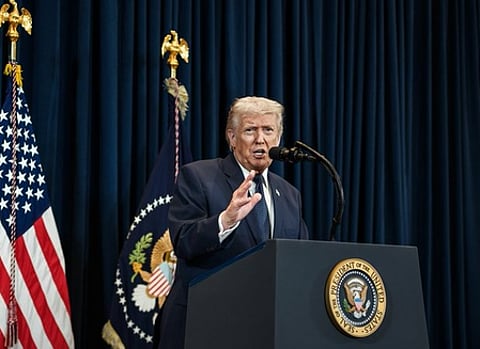
US President Donald Trump has threatened a major escalation in the military campaign against Iran, saying the United States could begin striking the country's powerplants, bridges and other critical infrastructure if Iran does not return to negotiations.
Get updated faster and for FREE: Download the Gulf News app now - simply click here
Speaking to reporters, Trump said the US military has so far refrained from attacking some of Iran's most important civilian infrastructure but warned that restraint could end if Iran continues military operations and refuses to negotiate.
"Next week, it gets REALLY bad for them, because next week comes the POWER PLANTS. Next week comes the bridges. We're going to knock out ALL of their power plants."
Trump reinforced the warning, saying the campaign could intensify next week if there is no diplomatic breakthrough.
"We'll knock out all of their bridges unless they get to the table and negotiate."
The comments come as the United States has resumed airstrikes against Iranian military targets and reinstated a naval blockade of Iranian ports following the collapse of the June ceasefire memorandum brokered by Pakistan, Oman and Qatar.
Iran hits commercial shipping
Iran has responded with missile and drone attacks against US positions and commercial shipping linked to American allies, while insisting Washington violated the agreement first.
Targeting major infrastructure such as bridges and electricity generation facilities would mark a significant escalation beyond strikes on military assets, potentially disrupting transportation, power supplies and economic activity across Iran.
International humanitarian law
International humanitarian law generally requires parties to distinguish between military objectives and civilian objects and prohibits attacks expected to cause excessive civilian harm relative to the anticipated military advantage.
The renewed exchange of threats has heightened concerns that the conflict could broaden further, with diplomats and international organisations continuing to urge both sides to return to negotiations to prevent a wider regional war.