Tahrir doctors risk life and limb to save wounded
They work at mosques and churches operating as field hospitals
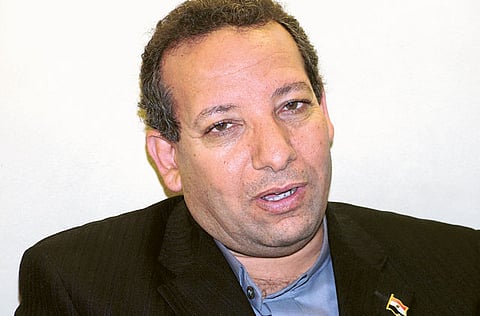
Cairo: During any clash there are fighters and then there are healers, none of whom leave the field unscathed.
Since Egypt's revolution started last January doctors, nurses, and medical students of all ages and walks of life flocked to Tahrir, never knowing if they would return home in one piece, or at all.
During the recent clashes, a doctor and a 23-year-old medical student were shot. The first while delivering medical supplies, the latter while tending to wounded protesters.
During those clashes, the field hospitals in Tahrir Square were attacked so many times doctors were forced to find new locations. The Virgin Mary Church, Qasr Al Dobara Church, as well as the Omar Makram Mosque opened their doors and provided volunteers, risking being attacked.
Jessica Combs, an American doctor who has lived in Egypt for six years, said her Egyptian friends' courage was what inspired her to serve at the Qasr Al Dobara field hospital.
"The worst case I ever saw was that of a young boy of 13 or 14. He had been shot."
Peter Joseph, a pharmacist, volunteered at the same field hospital during the last two days of the clashes that took place on Mohammad Mahmoud Street, that leads up to Tahrir Square. The clashes started on November 19, 2011 and continued for six days. Joseph was a protester before joining the field hospital.
"The worst case I ever saw was when a man in his late forties was shot in the throat, and his clothes were soaked in his blood." Fawzy Wahib Nasr Allah, the priest at Qasr Al Dobara church, stood side by side with volunteers, whether Muslim or Christian, during the protests.
"The church does not get involved in politics — our role is to raise good citizens and spread the love of our country amongst our people," he said.
"Inside our church there are imperialists, liberals and the religious. But we didn't start as a hospital — initially it was a place where doctors gathered and would then go to Tahrir as needed."
There had been rumours the church had been attacked by the army, but the priest said the army never entered the church. However, he said it did demand the church hand over the protesters that hid inside, but it refused to do so.
"Our protests started out peaceful, and so they shall remain," he said.
Dentist Abeer Abdul Rahman, a doctor at Omar Makram Hospital, joined the field hospital during the Mohammad Mahmoud clashes.
"I realised being a protester was not enough… so I volunteered to help here. I can still recall the first day I joined — most of the cases we received were of seizures caused by exposure to tear gas, as well as suffocation."
Dr Mamdouh Al Sherbini has been at Omar Makram Hospital since it was founded.
Waves of attacks
"Initially the hospital was founded in Tahrir but due to the waves of attacks we moved from one church to the other, and then to the mosque. Soon enough, we started taking crash courses from Doctors Without Borders — an international medical humanitarian organisation — on how to safely help our patients under fire. We then trained our volunteers to do the same."
The worst cases the doctor witnessed were injuries to the eyes or skull, caused by bullets that explode once they hit their target.
Dr Nabeel Abdul Hakeem, served in the same hospital. He, too, can attest the worst cases he'd seen were caused by live ammunition.
Dr Ahmad Abdul Khaleq deals the most with live ammunition injuries. "I joined Tahrir initially as a protester, but during the Mohammad Mahmoud clashes I decided it was time to join the field hospital."
What all the protesting doctors seem to have in common is the love for their country, and that fact they risked life and limb for their fellow Egyptians. They do not work shifts; they simply work until they drop. Another thing they seem to agree on is the Supreme Council of Armed Forces needs to step out of the political scene as soon as possible.


