Pentagon to try again at training Syrian rebels
Original plan was deemed a thorough failure by US lawmakers and military officials
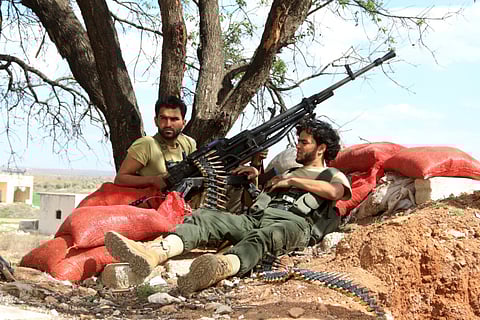
Washington: President Obama has authorised a limited new plan to train and arm rebel fighters to confront Daesh terrorists in Syria, relaunching a Pentagon programme that was suspended last fall after a series of embarrassing setbacks.
The renewed effort, which was recommended by Defense Secretary Ashton Carter, appears far less ambitious than the original programme, which aimed to train and arm 5,400 fighters a year but never achieved that goal.
“This is part of our adjustments to the train and equip programme built on prior lessons learned,” said Col. Steve Warren, spokesman for the US-led military coalition in Baghdad.
He said training will be focused on “select individuals in key capabilities,” and support for them “will be measured against their performance” against Daesh.
Warren declined to say how many fighters would be trained, where the training would occur, when it would start or other details, citing operational security. The programme is separate from a covert CIA-run training operation.
Warren said the new effort would “leverage the new relationships we have developed on the ground, and our approach to focus on existing groups currently active” in fighting Daesh.
The Pentagon has struggled to find a reliable proxy force inside Syria, restricting its ability to gather intelligence and to target Daesh leaders amid the country’s civil war.
Based in its self-declared capital of Raqqa, the terrorist group continues to lure recruits and maintain strongholds despite daily airstrikes by the US-led coalition since September 2014.
After the first Pentagon train and equip programme was suspended in October, up to 50 special operations forces were sent to Kurdish-held areas in northeast Syria to work with local militias and identify other potential partners.
Gen. Lloyd Austin III, commander of US armed forces in the Middle East, told Congress last week that the new programme will use a “different approach” than the previous effort.
“We were being effective but we were slow in getting started, in generating the numbers that we needed to generate,” he told the Senate Armed Services Committee on March 8.
The original plan involved selecting fighters from moderate Syrian rebel groups, taking them to Arab military bases outside Syria, and providing arms, equipment and six weeks of training. They then would sent back to Syria to help take on Daesh.
It was deemed a thorough failure by US lawmakers and military officials.
The first 54 recruits were ambushed in July by Al Nusra Front, an Al Qaida affiliate, after they crossed back into Syria.
The second class of 71 surrendered much of their US-issued ammunition and trucks to Al Nusra Front fighters in September in exchange for safe passage through northern Syria.
The programme initially was envisioned as a $500-million, three-year plan to recruit, train and equip fighters at bases in Jordan, Qatar, Saudi Arabia and Turkey.
Thousands of rebels applied, but each had to be vetted in a process that often took months. Many were underage or had militant backgrounds, which made them ineligible.
In addition, the prospective host countries and many of the fighters disagreed with the US emphasis on fighting Daesh, saying the training should focus on ousting Syrian President Bashar Al Assad.
The Pentagon shut the programme down in less than a year.
In its place, the Pentagon began providing communications equipment, weapons and ammunition to rebel commanders who had already gone through vetting and been approved.
The equipment was dropped into Syria by US aircraft and distributed among the units as they pushed into territory controlled by Daesh.


