Iran’s supreme leader acknowledges thousands of protesters killed: What happens next?
Iran on the brink of a revolution — or an iron-fisted reset? A high-risk countdown
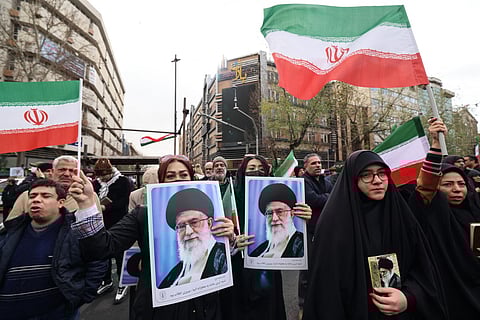
Iran's supreme leader Ayatollah Ali Khamenei has shocked the world by admitting thousands were killed in anti-regime protests.
Khamenei has put the blame squarely on the US President Donald Trump, tagging him as a "criminal" instigator.
Human right group HRANA reported 3,000+ dead, 24,000 detained amid economic collapse fury, CNN reported.
Khamenei's acknowledgement is the first official nod to the massacre's scale.
On Saturday, Trump openly called for an end to Ayatollah Ali Khamenei’s 37-year rule, escalating US rhetoric against Iran’s leadership even as nationwide protests appear to have waned following a deadly crackdown.
“It’s time to look for new leadership in Iran,” Trump told POLITICO, responding to a series of posts by Khamenei on X that accused the US president of being responsible for deaths during the unrest.
Iran detainee drama
Tension in Iran spiked this week after families and human rights groups confirmed that a detained protester from Shiraz is physically unharmed, temporarily easing fears of an imminent execution.
Tehran’s prosecutor swiftly denied reports of mass hangings — despite earlier threats that protesters could face the death penalty en masse.
Eyewitness accounts paint a darker picture than official statements.
Drones, laser devices
Protesters say drones and laser devices were used to identify and target faces, while security forces crushed crowds armed with nothing but stones. State media insists the demonstrations have been “extinguished.”
On the streets, however, residents describe a city under quiet occupation: daily life continues, but motorcycle patrols and Basij forces lurk at every corner.
What happens next? A high-risk countdown
Analysts warn that Iran is entering a critical window where small decisions could trigger massive consequences. Three scenarios dominate discussions:
#1. Sustained crackdown (most likely – ~70%)
If the internet blackout holds and security patrols normalize, the regime may succeed — temporarily — in suppressing unrest. Information control remains Tehran’s most powerful weapon.
#2. US military action (30%)
Should executions resume, pressure could mount on Washington. President Donald Trump has hinted that “help is on the way,” raising fears of direct — or proxy-based retaliation.
#3. Regime fracture (20%)
With reports of up to 24,000 detainees, a split within the military could spark a nationwide uprising — the nightmare scenario for Supreme Leader Ali Khamenei.
Khamenei’s gambit
Khamenei has vowed a “firm response” against what he calls “international criminals,” openly holding the United States responsible for unrest. Analysts believe Iran could retaliate indirectly through regional proxies such as the Houthis, widening the conflict beyond its borders.
Despite official claims of restored order, the regime’s posture suggests anxiety, not confidence.
Global ripples
The crisis reverberates far beyond Iran.
Potential US action, Iranian retaliation, and regional instability have migrant workers and their families watching closely.
The next 72 hours
Everything hinges on two decisions: execution verdicts in Iran and Washington’s response.
With the internet blackout masking realities on the ground, the world is left guessing whether Iran is on the brink of revolution — or bracing for an iron-fisted reset.
For now, the streets are quiet.
History suggests that silence in Iran rarely lasts.
Timeline of escalation:
Late Dec 2025: Protests erupt over 200% inflation, rial crash
January 17: Khamenei speech — "US/Israel-backed rioters killed thousands, destroyed mosques/power grids." Claims protests "extinguished" via pro-regime rallies
Trump fire: "Time for new leadership" — Khamenei sick man destroying Iran"; hints at strikes, praises protesters' courage; Iran threatens retaliation.


