Iran’s forgotten southeast front erupts: 94 dead in 6 months of violence as armed attacks intensify
Rights group records 63 incidents in 6 months: clashes escalate in Iran’s restive region
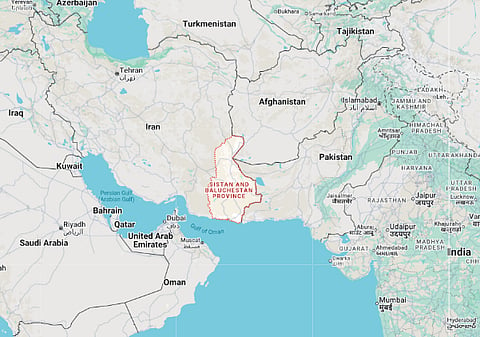
TEHRAN, Iran — At least 94 people have been killed and 33 wounded in armed attacks and security operations in southeastern Iran since March 31, with clashes becoming more frequent and involving heavier weapons, a US-based human rights group reported Monday.
The Human Rights Activists News Agency (HRANA) documented at least 63 armed incidents between March 31 and Oct. 10, mainly in Sistan and Baluchestan province, which borders Pakistan and Afghanistan.
The group stated the violence had intensified in recent weeks, with attacks evolving from targeted shootings and assaults on patrol vehicles to roadside bombings and coordinated ambushes, as reported by UK-based Iran International.
The figures were compiled from local and unofficial reports. Iranian official sources reported a lower toll of 87 deaths and 10 injuries, underscoring discrepancies in casualty reporting in the region.
The escalation has coincided with the US-Israeli conflict with Iran. HRANA said Iranian authorities had concentrated much of their attention on the country's western and northwestern regions while armed attacks and security operations continued in the southeast.
The latest violence has targeted police patrols, military convoys and security facilities, while government forces have deployed drones, artillery, armoured vehicles and heavy weapons during operations, HRANA reported.
Get it: Fast, verified news for FREE ... download the Gulf News app — simply click here
Attacks grow more sophisticated
Attacks on patrol vehicles and military convoys accounted for 17 recorded incidents, while 14 involved targeted shootings, according to HRANA.
Seven of the shootings occurred outside victims' homes or workplaces or along their commuting routes.
On Oct. 2, a vehicle allegedly linked to the Islamic Revolutionary Guard Corps' (IRGC) Quds Force Fatemiyoun Brigade was targeted with a booby trap and gunfire near Zahedan, the provincial capital.
Five days later, an attack on a police headquarters in Jalegh reportedly involved mines, rocket-propelled grenades and other heavy weapons.
A roadside bomb struck the route of a police convoy near Zahedan on Oct. 9.
The attacks followed a series of deadly incidents earlier in the month. On Oct. 8, at least five Iranian military and police personnel were reported killed in four attacks across the southeast within 24 hours, according to local rights outlet Haalvsh.
The reported incidents took place in Nikshahr, Nosratabad, Faryab and Jalegh. Casualty figures remained provisional, with conflicting accounts from Iranian authorities and local reporting.
Armed groups and longstanding unrest
The People's Fighters Front (PFF), an alliance formed in late 2025 that includes Jaish al-Adl and smaller Baluch armed groups, claimed responsibility for six attacks documented by HRANA.
Ansar al-Furqan claimed another, while many incidents remained unclaimed or could not be reliably attributed.
Sistan and Baluchestan has long experienced clashes between Iranian security forces and Sunni Baluch militant groups. The province is among Iran's poorest regions and has a predominantly Sunni Baluch population, in contrast with the country's largely Shiite population.
Jaish al-Adl emerged around 2012 as a successor to the militant group Jundullah and has repeatedly attacked Iranian security forces. Tehran has described such groups as terrorist organisations, while rights groups have also documented abuses and security crackdowns affecting residents in the region.
HRANA warned that the use of heavy weapons in residential areas increased the risk of civilian deaths and property damage. It reported that homes and sites of armed confrontations in Jahadabad, Gharibabad and Manzalab had been demolished, blown up or set on fire during security operations.
The latest figures point to a worsening security situation in a region where armed violence has persisted for years. However, the available reports do not establish responsibility for many of the incidents, and the competing casualty counts remain difficult to independently verify.
Why southeastern Iran matters
Sistan and Baluchestan lies along Iran's southeastern frontier with Pakistan and Afghanistan. Its remote terrain and cross-border routes have complicated security operations for years, while economic marginalisation and tensions between the Sunni Baluch minority and Iran's Shiite-led state have contributed to unrest.
The current escalation adds another security challenge for Tehran as it deals with the consequences of the US-Israeli war. HRANA recorded 18 armed incidents in the final 18 days of its reporting period, more than in any preceding full month covered by its six-month review.
HRANA relies partly on local and unofficial reporting, and Iranian authorities have reported substantially different casualty totals. Many attacks have not been independently verified or conclusively attributed to specific groups.


