High-stakes decision: Trump keeps region guessing on Iran deal
Mixed signals and unresolved issues leave regional capitals awaiting clarity
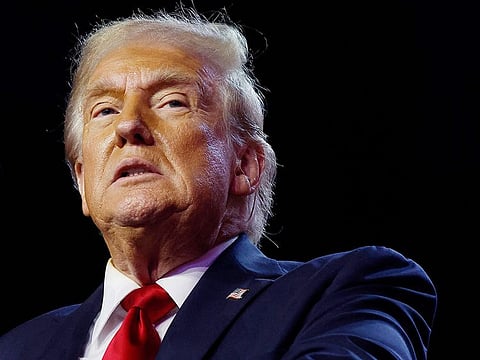
Dubai: The Middle East remained on edge on Saturday as President Donald Trump weighed a proposed deal with Iran, after saying he would make a “final determination” following a White House meeting but offering no announcement.
The uncertainty was heightened by Trump's often shifting rhetoric on negotiations, echoing a foreign-policy philosophy he championed during the 2016 campaign: That America's adversaries should be kept guessing. Trump has long argued that unpredictability can be an asset in negotiations, and whether by design or circumstance, his recent comments have left regional capitals trying to decipher Washington's next move.
Trump has alternated between signalling progress towards an agreement and threatening renewed military action, while Iran has insisted no final deal has yet been reached.
Major disagreements
The uncertainty comes as Washington and Tehran continue to negotiate a proposed memorandum of understanding aimed at turning the existing ceasefire into a broader settlement.
While both sides have signalled progress, major disagreements remain over the future of Iran’s nuclear programme, the reopening of the Strait of Hormuz, sanctions relief and access to frozen Iranian assets.
Trump said after Friday’s White House meeting that any agreement must meet his conditions, including guarantees that Iran will never acquire a nuclear weapon. But Iranian officials pushed back against what they described as excessive US demands, insisting that no final agreement has yet been reached.
Lack of clarity
The lack of clarity has fuelled anxiety across a region still recovering from months of conflict that disrupted shipping through the Strait of Hormuz, sent energy prices soaring and raised fears of a wider confrontation involving the United States, Iran and Israel.
Although officials on both sides have signalled progress in recent weeks, significant differences remain. Iran said on Friday there was still “no final agreement” with Washington, while US officials have continued to stress that any deal must meet Trump’s conditions.
Speaking at the Shangri-La Dialogue security forum in Singapore on Saturday, US Defence Secretary Pete Hegseth said Trump remained committed to securing a deal that met American conditions, but stressed that Washington was prepared for renewed military action if necessary.
US forces ready
Hegseth also dismissed suggestions that the US military had depleted significant stockpiles during the conflict, saying American forces were "more than capable" and remained ready should fighting resume.
According to details reported by The New York Times, the proposed agreement would effectively transform the current ceasefire into a broader framework aimed at ending hostilities and reopening the Strait of Hormuz, one of the world’s most important energy chokepoints.
Under the proposal, Iran would lift its blockade of the strait, allowing oil and gas shipments to resume, while the United States and Israel would halt military operations. However, many of the most contentious issues would be postponed to later negotiations.
Among them is the future of Iran’s nuclear programme, which remains the central dispute between Tehran and Washington.
Trump said on Friday that Iran would have to fully reopen the Strait of Hormuz and allow the removal and destruction of its stockpiles of enriched uranium. Tehran has so far shown little willingness to accept such demands publicly.
The proposed framework has also faced criticism from hardliners on both sides.
Uncertainty
In the United States, some Iran hawks have argued that postponing decisions on Tehran’s nuclear programme risks allowing the issue to remain unresolved. In Iran, conservative figures have accused Washington of making excessive demands and attempting to portray the agreement as a US victory.
The uncertainty has left many ordinary Iranians sceptical about whether a deal would improve their lives.
“We know that even if there is one, we will not receive any benefits from it,” The New York Times quoted a 43-year-old engineer from northern Iran as saying, reflecting broader doubts over whether any agreement would translate into economic relief.
The stakes remain high. Iran is seeking access to billions of dollars in frozen assets and eventual sanctions relief, while the United States wants assurances that Tehran’s nuclear activities can no longer pose a threat.
Yet the biggest challenge may be trust.
Iranian officials have repeatedly argued that previous negotiations failed to protect the country from military action, while US officials insist that any agreement must include clear guarantees and verification measures.
For now, the proposed deal appears less like a final settlement and more like a framework for further talks, leaving regional governments, energy markets and investors waiting to see whether diplomacy can survive another round of competing demands.
As Washington and Tehran continue to exchange messages, the Middle East remains caught between hopes of de-escalation and fears that the conflict could yet reignite.


