Anxiety grips village after Israel plans pullout
For much of the past half-century, the status of Arab residents of Ghajar has been like a political football
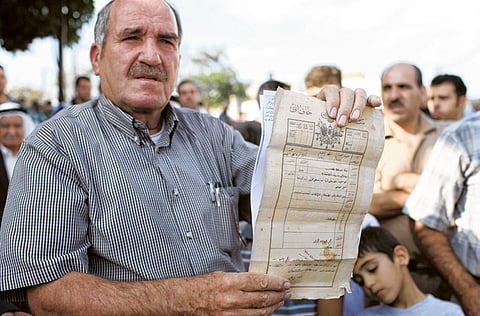
Occupied Jerusalem: The Israeli government on Wednesday approved the withdrawal of troops from the northern part of an Arab village in a long-disputed region along the border with Lebanon.
For much of the past half-century, the status of Arab residents of Ghajar, which straddles Israeli-controlled Golan Heights and southern Lebanon, has been like a political football.
The 2,200 villagers of the hamlet call themselves Syrians, but they carry Israeli citizenship, and most live on land claimed by Lebanon.
Najeeb Khateeb, a Ghajar leader and village spokesman, talked Wednesday with the Los Angeles Times about why residents are anxious about Israel's plan to leave its northern half.
QUESTION: If Ghajar residents were asked to choose, which country would they want to belong to: Syria, Israel or Lebanon?
Najeeb Khateeb: No one is asking us. That's the point. When we are asked and our positions are respected, then we will answer this. But listen, the village was seized together with all its lands from Syria in 1967. And it will be returned to Syria completely intact only by way of peace negotiations.
Why do you oppose an Israeli withdrawal from the northern part of Ghajar? Doesn't this merely restore the situation to the way it was until 2006?
Let me make clear. We do not oppose an Israeli withdrawal. It is the division of the village we oppose.
They say the "Blue Line" [the internationally agreed-upon border between Lebanon and Israel] runs through the village, effectively dividing it. Imagine the UN [guarding] that line.
Every time I want to visit my parents, I will need permission from a UN soldier. Six hundred and fifty children will need the UN's permission to go to school. Any time I will want to pray at the mosque, I will have to receive permission from a UN soldier.
And if someone dies and has to be buried, we will need permission for that, too, because the cemetery is in the southern part. We did not leave our homes in 1967 because we did not want to become refugees in another land.
We stayed, ready to even die to preserve the village and its lands. Now, the plan is to return the northern part with 1,700 people. [That includes] part of our families, our parents, our children.
Are there concerns about Lebanon, Hezbollah or any other groups entering the northern part of the village? Do you worry about retaliation against residents for accepting Israeli citizenship?
We are not afraid of anyone. We have done nothing wrong. We are simple people — good and modest folk. We want to live in peace and dignity.
Who currently provides services for Ghajar?
We live here in a remote corner — jailed, really. We have a border fence, checkpoints, inspection points at the entrance to the village.
The phone system has collapsed. There are people with no internet.
If something breaks, most chances are it will stay broken. Technicians don't enter the village...
The disputed part of Ghajar is the north. Why don't villagers relocate back to the southern part? Israel has even talked about compensating people to resettle in the south. We are not settlers. We do not want to be compared to the settlers. We would rather die here than live as refugees some place else.


