Winter in Saudi Arabia: Water freezes as polar wave grips Tabuk
Polar waves regularly bring harsh winters to this region
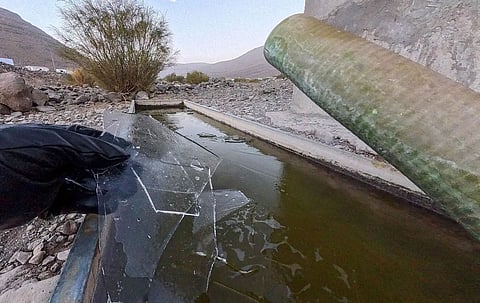
Dubai: The Tabuk region, particularly in its northern and southern areas, experienced a sharp drop in perceived temperatures on Friday, falling below zero degrees Celsius.
The Saudi Press Agency (SPA) shared images showing ice formation on water ponds and basins in open desert areas, emphasising the dramatic temperature decline.
This phenomenon highlights the impact of a polar wave sweeping through the region, which regularly experiences harsh cold spells during winter due to polar air masses from northern Europe.
As a result, both apparent and felt temperatures have dropped considerably, contributing to the winter landscapes that characterise the Tabuk region.
Drop in temperature
The National Centre of Meteorology (NCM) had earlier forecast cold to very cold temperatures across the Northern Borders, Al Jouf, Hail, Tabuk, and northern parts of Madinah, with potential frost in some areas.
The NCM also anticipates dust-stirring winds and low temperatures in Qassim, Riyadh, and Eastern regions, as well as parts of Najran. Additionally, there is a chance of fog formation in areas of Jazan, Aseer, Al Baha, and Mecca.
Winds over the Red Sea are expected to be northwesterly to northerly, with speeds of 25–50 kmph in the northern and central parts, and southeasterly at 15–40 kmph in the southern region.
Waves may range from one and a half meters to more than two and a half meters, creating choppy seas. In the Arabian Gulf, winds will be northwesterly to northerly at speeds of 25–45 kmph, with waves ranging from one to two meters and similarly choppy conditions.

