Thai floods expose waste pollution in 'garbage dump' region
Pollution fears rise as Thai floods uncover illegal dumping sites
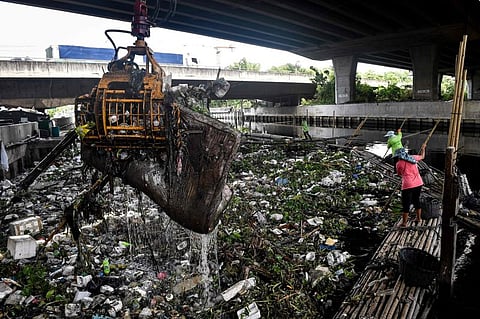
Father of four Adisorn Lakonburee used to catch fish for his family's dinner, but stopped after floodwaters brought oil slicks and foul chemical smells into his village in eastern Thailand.
"Now I'm too afraid to catch or eat them," the 43-year-old homebuilder told AFP at his home in Prachinburi province, adding that he and his family are also too scared to drink the tap water.
Located between the capital Bangkok and Thailand's flagship industrial zone further east, Prachinburi has long faced concerns over waste pollution.
But heavy flooding in September and October exposed the scale of the problem, spreading foul, rainbow-coloured water across rice paddies and waterways.
Get it: Fast, verified news for FREE ... download the Gulf News app — simply click here
In water sampled near one landfill in October, Thai authorities found "unusually high" levels of petroleum hydrocarbons -- chemicals associated with oil and fuel -- as well as toxic concentrations of aluminium.
The landfill operator, Green Environment Technology, denied any wrongdoing, but after resident complaints, the industry ministry ordered it temporarily closed.
The ministry also suspended operations at two other waste facilities in the surrounding area and ordered a nationwide inspection of 3,000 similar plants across Thailand -- with 300 already found to have breached regulations.
As residents protested against the pollution, Prachinburi's then-acting governor ate locally caught fish to show residents it was safe.
But Navaporn Sanguanmoo, director of industrial waste management in the government's Department of Industrial Works, said authorities needed to do more.
"Prachinburi is a lesson that makes us rethink many things," she told AFP.
Garbage dump
Farmland stretches as far as the eye can see in Prachinburi, a major food-producing province known for rice, sugarcane, cassava and fruit orchards, as well as livestock and fish farming.
But among the fields are waste facilities and illegal dumping sites.
During a visit this month, AFP saw a pile of electronic scrap mixed with chicken manure in the middle of a sugarcane plantation, and a massive landfill hidden inside a forest.
A burning stench hung in the air near some of the sites, akin to machine oil or weedkiller.
Environmental researcher Somnuck Jongmeewasin said the area had been a "garbage dump" for the Eastern Economic Corridor (EEC), a flagship industrial zone spanning the neighbouring provinces of Rayong, Chonburi and Chachoengsao.
An adviser to the Thai parliament's industrial sub-committee, he has conducted research that identified more than 60 suspected illegal dumping sites in Prachinburi in recent years.
Dawan Chantarahassadeen, an activist with environmental watchdog EARTH Thailand, blamed cheap land and lax law enforcement for what she described as an "empire" of waste facilities.
The floods have "clearly shown that government oversight has not been strict enough", she said.
Campaigners trace the problem to a 2016 military junta order that exempted waste facilities from town-planning laws, allowing them into agricultural green zones.
"This area is designated for agriculture," said local activist Sumet Rianpongnam, 54.
"Yet (waste-processing) factories have been built right next to our homes."
Last year, Thailand banned the import of plastic waste and strengthened controls on electronic waste to help protect the environment and public health.
But Navaporn, from the industrial works department, said the country still deals with around three million tonnes of hazardous industrial waste each year, and over 30 million tonnes of non-hazardous waste.
She said some can be sold, including scrap metal, but waste with little resale value, such as oil-contaminated water or low-grade plastics, was particularly vulnerable to illegal dumping because of high treatment costs.
"That is precisely the type of waste we find illegally dumped across multiple areas," Navaporn said.
She added that the penalties for dumping were too low, meaning "breaking the law makes economic sense" for violators.
At a Buddhist meditation centre near a suspected dumping site, nun Suparpron Tapowpong, 64, said they have had to wash with rainwater and drink donated bottled water.
"We just don't know where to get safe water anymore," she said, adding that "this has become a serious crisis, the worst I've ever faced".
Food security
The contamination has caused immediate health concerns, with academics warning the chemicals could cause skin irritation or breathing difficulties.
There are also longer-term issues.
"Don't forget, if the land and water are contaminated, we lose our food security," said Dawan.
For farmer Chalida Mongkon, the fallout is already visible in her once-verdant rice paddies, which turned black and rotten after floodwaters receded.
"We don't even know if we'll be able to grow anything next year," the 60-year-old said.
"We're afraid to set foot in our rice fields because we're worried about toxic chemicals."
The government pledged in early November to expand testing to riverbed sediment for heavy-metal contamination, but many say it is moving too slowly.
"In the end, we might lose the forensic evidence we need to identify who's responsible," said Somnuck, adding: "Delay is injustice."


