Toll-free until April 30: Marcos opens Cavitex-C5 link to ease Holy Week exodus, to cut travel time from 90 to 15 mins
New Cavitex-C5 Link Segment will cut travel time from coastal Sucat area to Taguig
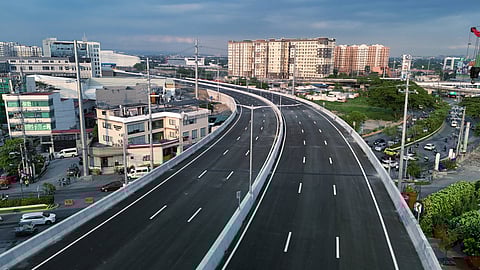
President Ferdinand Marcos Jr. on Monday (March 30, 2026) unveiled a critical new stretch of Metro Manila’s expressway network, opening Segment 3B of the Cavitex-C5 Link Expressway, declaring it toll-free for the entire month of April.
The newly completed 2-kilometer segment connects Parañaque to Taguig — a link long anticipated by motorists navigating some of the capital’s most congested corridors.
Timed with the surge of Holy Week travel, the move aims to ease the burden on thousands of commuters heading out of the city.
“From now until the end of April, this will be toll-free… especially now that many are traveling during Holy Week,” Marcos said, underscoring the government’s effort to provide immediate relief.
A 90-minute travel cut to 15
The President highlighted the dramatic impact of the new road: trips that previously took one to one-and-a-half hours could now be completed in just 15 minutes.
This is expected to decongest key arteries surrounding southern Metro Manila while improving access to business districts and residential zones.
With an estimated 36,000 vehicles projected to use the segment daily, the new link is more than just a convenience — it is a pressure valve for a city long burdened by traffic gridlock.
Infrastructure as economic shield
The opening of Segment 3B comes at a time when global energy roil household budget due to ongoing tensions in the Middle East.
Rising fuel prices have placed additional strain on Filipino households and transport operators.
Against this backdrop, the toll holiday serves a dual purpose: immediate financial relief and a signal of policy direction.
The project forms part of the administration’s broader “Uplift” strategy — an integrated push to cushion the economy through infrastructure, transport efficiency, and mobility improvements.
In essence, faster roads mean lower fuel consumption, reduced logistics costs, and improved productivity — key levers in navigating an uncertain global energy environment.
Strategic context: Why this road matters
The Cavitex-C5 Link is not just another expressway — it's a strategic connector in the evolving map of Mega Manila:
It links coastal expressways to inland business hubs
It improves access to Ninoy Aquino International Airport
It supports freight movement between Cavite, Parañaque, and Taguig
It complements ongoing expansions in southern growth corridors
As Metro Manila continues to expand southward, these connectors are becoming essential arteries for both commerce and daily life.
This short 2-km link closes a critical gap between coastal and inland routes— From Cavite Expressway / CAVITEX] to Parañaque (Coastal Zone), through Segment 3B (NEW), which takes motorists to Taguig (C5 Corridor), then BGC and inland Metro Manila unlocking disproportionate travel time savings.
The bigger picture
This development reflects a broader shift in Philippine infrastructure strategy: targeted, high-impact connectors rather than just large flagship projects.
In a time of rising fuel costs and global uncertainty, efficiency — not just expansion — has become the new metric of progress.
And for thousands of motorists this Holy Week, that progress will be felt not in policy papers — but in minutes saved on the road.


