He went to school barefoot, now Filipino billionaire is about to ride 'nickle boom' wave
Filipino business tycoon Lucio Tan Sr, 91, shows resilience amid great old
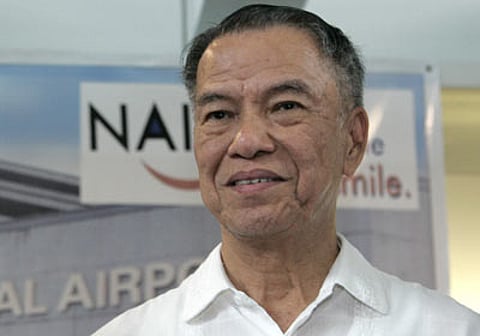
Manila: Growing up in Cebu, Lucio Chua Tan Sr. sometimes attended school barefoot.
In his teens, he took on manual jobs, as his family struggled to make both ends meet after they moved from China's Amoy province to the central Philippine city with nothing but a grit to survive and thrive.
He worked as a stevedore tying cargo and later as a janitor in a tobacco factory, where he mopped floors to help pay for his education.
Now, he's one of the country's richest tycoons, with interests in airlines, tobacco, beverages, banking, property and mining.


Tan (born July 17, 1934), is a Chinese-born Filipino businessman behind the Philippine Airlines and the Philippine National Bank (PNB).
He is currently one of the Philippines’ most influential entrepreneurs, with a diversified empire spanning tobacco, beverages, banking, aviation, property and more.
Early life and upbringing
Tan was born in Amoy (now Xiamen), Fujian Province, China, and immigrated with his family to the Philippines as a child.
His family struggled financially.
He earned a degree in chemical engineering from Far Eastern University in Manila (FEU), learning the trade of tobacco production as a “tobacco cook” — a role where he regulated product blends — a formative experience that would later inform his business ventures.
Building a business empire
In 1966, Tan co-founded Fortune Tobacco Corporation, which would become one of the Philippines’ largest tobacco manufacturers.
He introduced affordable cigarette brands that helped fuel local market growth.
By the late 1970s and early 1980s, he expanded into banking and beverages:
In 1977, he acquired the insolvent General Bank and Trust, later renamed Allied Banking Corporation.
In 1982, he established Asia Brewery, Inc., challenging the dominance of existing brewers.
Under the scanner
Tan’s relationship with political leaders — most notably then-Senator and later President Ferdinand Marcos — was a factor in his early growth, helping his companies navigate regulatory landscapes and expand rapidly.
In 1992, he successfully bid for the newly privatized Philippine Airlines (PAL) and became its chairman by 1995.
His empire continued diversifying with stakes in distilling (Tanduay), banking (Philippine National Bank), property (Eton Properties), and education.
In 2012, Tan consolidated many of these interests under LT Group, Inc., a conglomerate listed on the Philippine Stock Exchange that today spans tobacco, spirits, aviation, banking, real estate, and more.
Despite his success, Tan’s journey included controversy.
Governments after Marcos’ fall pursued allegations that his companies benefited from undue favouritism or failed to pay taxes, but many of these legal challenges were eventually dismissed by Philippine courts.
Documents obtained by the Los Angeles Times indicated that Tan provided an estimated $11 million in cash for campaign contributions and was, in turn, granted favourable treatment in the operation of his brewery, bank, and hotels.
Legal outcome (2007-2023)
The Presidential Commission on Good Government (PCGG), created after the end of Marcos Sr's 21-year rule over the island, filed massive ill-gotten wealth cases to recover 60% of Tan's holdings.
From 2007 to 2023, the Philippine Supreme Court ruled on multiple occasions, the government (via PCGG) failed to provide "sufficient evidence" to prove that the assets were illegally acquired or that a trust agreement between Marcos Sr and Tan Sr existed.
The SC affirmed the Sandiganbayan's dismissal of the cases, citing that the evidence presented was either inadmissible or insufficient to prove ownership.
With legal battles behind him, Tan has made forays beyond tobacco, banking and aviation.
Critical minerals: Nickel Mining
In recent years, Tan’s business interests have extended into critical minerals — specifically nickel, which is in increasing demand for batteries and electric vehicles.
His aviation support services and diversified holding company MacroAsia Corporation (MAC) traces its origins back to a mining entity that operated a nickel mine in Palawan in the 1970s.
On January 22, 2026, MAC has announced that its wholly-owned mining arm, MacroAsia Mining Corp. (MMC), has secured clearance from the Mines and Geosciences Bureau of the Department of Environment and Natural Resources (DENR) to develop and operate the Infanta nickel project in Palawan.
MMC, holds Mineral Production Sharing Agreements (MPSAs) covering over 1,110 hectares in Brooke’s Point, Palawan, where the Infanta Nickel Project is located.
After decades of dormancy, the project is being revived amid higher nickel prices and global demand.
Compliance
In 2023, MMC secured a key Environmental Compliance Certificate (ECC) once regulators confirmed the mining area lies outside protected landscapes.
In January 2026, MMC — in partnership with its operator Calmia Nickel, Inc.— received regulatory approval from the Philippine Mines and Geosciences Bureau (MGB) to proceed with the development and mining operations under MPSA No. 220-2005-IVB, subject to compliance with conditions set by regulators.
The approval allows MMC and Calmia to extract and commercially sell nickel and associated minerals from the site.
Nickel often represents roughly 15-20% of the total weight of today's battery cells, specially those used in electric vehicles (EVs).
While still in the early stages of development, these approvals mark a significant step in bringing Tan’s mining project into commercial operation, aligning his long-standing interest in natural resources with the growing critical minerals sector.
Legacy and influence
Lucio Tan’s life — from immigrant youth to one of the Philippines’ richest and most diversified business leaders — illustrates resilience, strategic expansion and adaptation across industries.
Now, his foray into nickel mining underscores how legacy conglomerates are repositioning themselves in emerging global supply chains for critical materials, and the on-going energy storage revolution.


