Nepal’s youngest PM 'Balen' takes charge: A nation’s expectations soar
Youth wave brings Balendra Shah to power, but challenges loom large
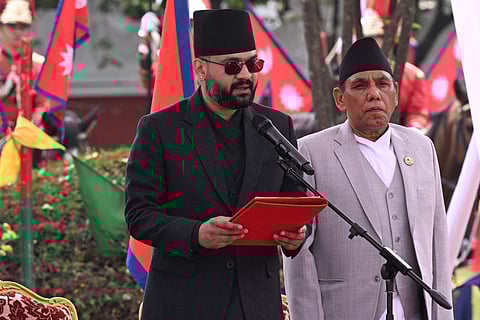
Nepal’s youngest prime minister, Balendra Shah, was sworn in on Friday after a landslide election victory, marking a dramatic political shift in the Himalayan nation. At 35, Shah — widely known as “Balen” — becomes one of the youngest leaders globally, riding a wave of public anger against corruption and political instability.
His rise follows a youth-led uprising that toppled the previous government, and his party’s sweeping parliamentary majority gives him a strong mandate. But expectations are equally high — and the challenges confronting his administration are immediate and complex.
What are the biggest challenges facing the new PM?
Shah inherits deep public frustration with Nepal’s political establishment, long criticised for corruption, inefficiency and instability. Delivering clean governance will be his first and most urgent test.
He must also stabilise a fragile political system that has seen frequent government changes, while addressing economic stagnation and unemployment — key drivers of the protests that brought him to power.
Balancing reform with governance will be difficult. His outsider image helped him win, but it now raises questions about his ability to navigate entrenched institutions.
Who is Balendra Shah?
Shah is a structural engineer-turned-rapper-turned-politician who first rose to prominence through Nepal’s hip-hop scene, where he criticised corruption and inequality.
He later became Kathmandu’s mayor in a surprise victory as an independent candidate, before entering national politics and leading his party to a landslide win.
Balendra Shah: At a glance
Age: 35 — one of the world’s youngest prime ministers
Background: Structural engineer, rapper, politician
Political party: Rastriya Swatantra Party (RSP)
Rise to power: Landslide win in March elections with near two-thirds majority in parliament
Previous role: Mayor of Kathmandu (elected as an independent in 2022)
Key themes: Anti-corruption, governance reform, youth-driven politics
Support base: Strong backing from younger voters and urban electorate
Trigger moment: Emerged as a key voice during 2025 youth-led protests
Leadership style: Direct communication, heavy use of social media
Vision: Liberal economic model with social justice focus, including public services for the poor
How did he come to power?
Shah’s rise is closely tied to the September protests, a youth-driven movement against corruption and economic hardship that led to the fall of the previous government.
Although not a direct protest leader, he publicly supported the demonstrators and became a symbol of change for younger voters.
What kind of mandate does he have?
His party secured nearly two-thirds of the seats in parliament’s lower house, giving him one of the strongest mandates in recent Nepalese history.
This provides political stability — but also increases pressure to deliver quickly.
Key challenges
Public demand for clean governance and anti-corruption action
Economic pressures, including unemployment and stagnation
Managing expectations after a landslide victory
Navigating entrenched political and bureaucratic systems
Balancing reform with stability
What is his governing vision?
Shah has emphasised a mix of economic liberalism and social justice, including promises of better public services such as education and healthcare.
His messaging has focused on transparency, accountability and youth-driven governance.
What concerns are being raised?
Critics point to his record as Kathmandu mayor, where he was accused of heavy-handed policies and bypassing traditional media to communicate directly with supporters.
Rights groups have previously criticised actions such as evictions and crackdowns without adequate rehabilitation measures.
How will his leadership style differ?
Shah represents a generational shift. He relies heavily on social media and direct communication, reflecting his strong youth base.
This could help him maintain public engagement — but may also complicate relations with institutions and the press.
What happens next?
The immediate focus will be forming a cabinet and setting a reform agenda.
The real test will be whether Shah can translate popular momentum into sustained policy outcomes — and whether he can maintain public trust while navigating political realities.


