Top 10 most polluted cities: Where air quality remains dangerously high
Vast majority of the world’s cities continue to breathe air far above safe limits: Report
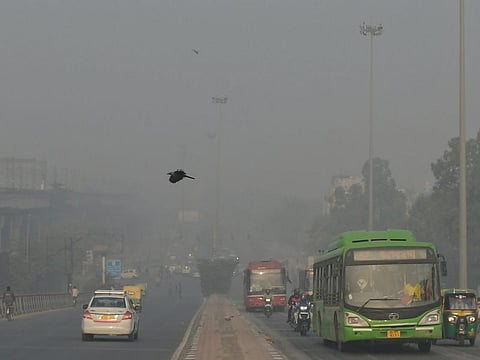
Dhaka, Bangladesh, has ranked on top of the world's cities with a "very unhealthy" air quality index (AQI) of 299, placing it in the purple category just below hazardous levels, according to the latest industry report.
Delhi, India follows at 264, Lahore, Pakistan at 228, and Kolkata, India at 225 — all in the very unhealthy range.
Bishkek, Kyrgyzstan (213), Sarajevo, Bosnia and Herzegovina (201), and others like Kraków, Poland (195), Medan, Indonesia (194), Warsaw, Poland (180), and Kabul, Afghanistan (175) complete the list, mostly in the unhealthy or very unhealthy zones (red/purple).
These elevated readings are driven by a number of factors, including vehicular emissions, industrial activity, brick kilns, biomass burning, construction dust — as well as seasonal weather patterns.


Together, they pose serious health risks including respiratory issues, cardiovascular problems, and reduced life expectancy for residents, according to the latest AQI (Air Quality Index) report.
The latest global ranking based on data from tens of thousands of monitoring stations, only about 17 % of cities meet World Health Organisation (WHO) annual PM2.5 guidelines.
Countries in South Asia and Africa recorded average particulate matter (PM2.5) levels at least ten times higher than WHO’s recommended annual mean of 5 µg/m³.
Two Indian metropolitan regions, notably Delhi and Kolkata, appeared among the highest PM2.5 concentrations in the world.
Hourly data: How monitoring is conducted
IQAir’s system integrates real-time monitors and ground-level data that feed into live AQI mapping, enabling day-to-day public tracking of air quality and health risk alerts.
These monitors make it possible to see hourly AQI spikes that often exceed hazardous thresholds — particularly in polluted regions like northern India and Pakistan, where thermal inversions and weather patterns prevent dispersion of pollutants.
Winter smog
Delhi, India’s capital with around 32 million residents, exemplifies the winter smog crisis.
While daytime AQI may fluctuate, winter months regularly push PM2.5-based AQI above 300 and into ‘hazardous’ territory, often crossing 400 on real-time readings during cold spells and smog episodes.
Contributing factors
This surge is driven by a mix of the following:
Vehicle emissions,
Industrial pollution,
Construction dust,
Crop residue burning (in neighbouring states)
All these are trapped near the surface by "temperature inversions" and calm winds that characterise post-monsoon winter weather.
Lung, cardiovascular harm
Health scientists and air-quality researchers commonly use cigarette-equivalent comparisons to convey risk: sustained exposure to PM2.5 at levels above 300 AQI across a day can equate to smoking multiple cigarettes per day in terms of lung and cardiovascular harm.
Independent health assessments have likened heavy outdoor exposure during peak smog to inhaling the equivalent of dozens of cigarettes daily, increasing risks of respiratory disease, heart problems and long-term mortality.
The 2025 IQAir report and the associated real-time air quality monitoring infrastructure highlight the persistence of dangerous air pollution globally.
Improvements
Though incremental improvements are noted in certain cities, most urban populations are still breathing air that poses significant short- and long-term health threats.
This ranking underscores persistent air quality challenges in densely populated urban centres of South Asia, Central Asia, and parts of Eastern Europe, highlighting the urgent need for emission controls, cleaner energy transitions, and international cooperation to mitigate widespread pollution impacts.
US AQI (Air Quality Index) is a scale developed by the US Environmental Protection Agency to communicate air pollution levels.
The updated table lists the top 10 cities with severely degraded air quality, reflecting a snapshot likely from mid-to-late January 2026 during winter inversion and dry conditions that trap pollutants.
(Sources: IQAir's World Air Quality Report, real-time monitors)


