Retail is no longer retro
From road-side bazaars to air-conditioned supermarkets, the face of shopping is changing, as seen in the mushrooming of branded stores and global supermarket chains
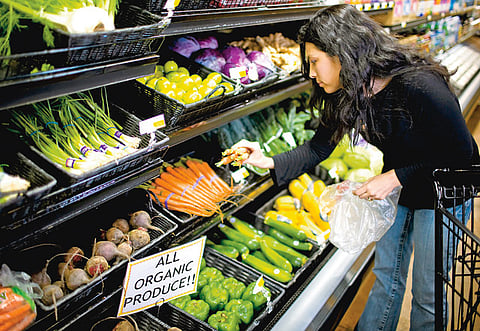
Shopping in India is serious business. For the nearly two billion people in the country, buying everything from groceries to clothes, and engineering goodsto two-wheelers has, for a long time, been a highly personalised experience, evidenced by the age-old cultureof door-to-door salesman or ‘wallahs'.
In more recent times, the rise of the middle class has turned the country into the fifth largest retail destination globally. A McKinnsey report estimates that the Indian consumer market is likely to grow four times by 2025. Much of the sharp rise in consumer spending in the past few years can be attributed to the sudden increase of disposable income among theyoung part of the population — according to some estimates, nearly 35 per cent of the country is below the age of 15.
In the past four years alone, India witnessed an impressive75 per cent increase in consumer spending. The country's overall retail sector is expected to touch $833 billion (about Dh3,059 billion) by 2013, reaching a whopping $1.3 trillion (aboutDh4.7 trillion) by 2018. This increase in consumer demand, supported by a growing disposable income and willingnessto spend, have proven to be strong incentives for retailersto constantly increase their presence.
While everybody from apparel to telecom companies are frantically opening more stores across the country, it is the companies dealing with fast-moving consumer goods (FMCG) that have proven to be the real show stealers in growth. This has included the big names of the Indian market, includingRPG's Spencer's Retail, Reliance Fresh as well as Aditya Birla's More supermarkets.
Attracting global interest
The potential offered by India's retail market constantly attracts foreign investors, even though there are several restrictions imposed on them by the government. One of the most recent and among the more prominent firms to enter the market is Walmart.
In August 2007, Walmart announced an agreement with Bharti Enterprises, one of India's leading business groups with widespread interests, to establish a joint venture, Bharti Walmart, for wholesale cash-and-carry and back-end supply chain managementoperations in India. Under the agreement, Bharti and Walmartwill each hold a 50 per cent stake in the joint venture.
First wholesale cash-and-carry facility
In May 2009, the first wholesale cash-and-carry facility, named Best Price Modern Wholesale, was opened in Amritsar. According to Walmart, Best Price Modern Wholesale store is a one-stop shop that meets the day-to-day needs of restaurant owners, hoteliers, caterers, fruit and vegetable resellers, kiranas, other retail store owners, offices and institutions.
The store offers an assortment of around 6,000 items,including food and non-food items, which are available at competitive wholesale prices, allowing retailers and businessowners to lower their cost of operations.
Bharti-Walmart plans on opening several more shops acrossthe country in the next three to five years. A typical wholesale cash-and carry facility will stand between 50,000 and 100,000 square feet and sell a wide range of fruits and vegetables, groceries and staples, stationery, footwear, clothing, consumer durables, and other general merchandise items.
These stores will target the more than 6 million small grocers spread across the country, most of whom depend on wholesalers for their goods. In the long term, the company is also planning on targeting the traditional pushcart ‘wallahs', and even introducing a few of their own pushcarts in select cities. Their huge numbers provide for huge volumes and they will form the major customers of Bharti-Walmart's shops.
In order to make themselves more relevant to these small grocers, Bharti-Walmart has worked upon and streamlinedits supply chain in the country to minimise or do away withthe disruptions that could prove crippling to the average wholesaler. The firm is also aggressively targeting small grocers in the country by offering better price bargains and being more willing to accept and display new products.
Though not directly in retail, the joint venture has the potentialto change dynamics of the wholesale business within India,thereby influencing the end-customer and how he buys his goods. >
Walmart has also been said to be liaising with theIndian government to get it to relax the laws enough to allowfor a direct retail presence in the country. If this does happen, Walmart will join the increasing number of retailers inthe organised sector of the country.
Modern retailing still a modest affair
The nouveau riche and a growing mall culture may be representative of a changing India, but a predominant number of Indians still buy their groceries from small mom-and-pop shops. According to several reports, the organised sector or modern retailing in India constitutes only 5 per cent to 10 per centof the overall market.
As the big retailers make an attempt to break into andcover more of the market still dominated by small shops,they are fast realising that with many of the major cities alreadywell covered, real growth in the coming years is most likelyto come from B-class cities and smaller towns, apart fromthe rural market. Nevertheless, retailers remain reluctantto invest in these markets, which prove expensive to coverwithout any assurance of reliably large throughput numbers.
Despite this reluctance, the organised sector is predicted to become 20 per cent of the entire retail market by the end of 2010. Pegged at around $8.14 billion, this sector is also expected to grow at a CAGR of 40 per cent and reach $107 billion by 2014.
Such healthy growth predictions are likely to rush more foreign retailers, like Australia's Retail Food Group which has already expressed interest in the market, to form partnerships with Indian ventures and set up shops in the country, thereby increasing competition and demanding more operational efficiency from companies to ensure survival in a toughening market.
The true beneficiary all this frantic activity will remainthe demanding Indian end-consumer, who is likely to find himself or herself spoiled for choice when it comes to shoppingin a little more than two years time.


