India adopted its Constitution on November 26 — so why is Republic Day on January 26?
The historic freedom pledge that shaped the nation’s most important date
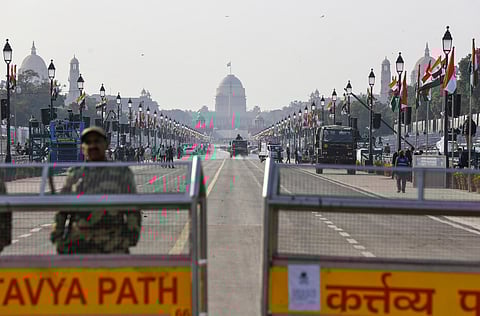
Dubai: Every year on January 26, India celebrates Republic Day — the moment the nation formally became a sovereign, democratic republic under its own Constitution.
While August 15 marks freedom from British rule, January 26 symbolises the beginning of self-governance based on laws written by Indians for Indians.
In 2026, India marks its 77th Republic Day, bringing together history, democracy and national pride.
Why Republic Day on January 26
The Constitution of India was adopted on November 26, 1949. Legally, it could have come into force immediately. But India’s leaders made a deliberate and symbolic choice to implement it on January 26, 1950.
The reason goes back to January 26, 1930.
At the Lahore session of the Indian National Congress in December 1929, leaders passed the historic Purna Swaraj (Complete Independence) resolution. Rejecting British proposals of limited “Dominion Status,” the Congress declared that Indians would seek full freedom from colonial rule.
January 26, 1930 was observed across the country as Independence Day, when millions pledged to fight for complete sovereignty. For the next 17 years, the date remained a powerful symbol of resistance and the dream of self-rule.
When independence finally came in 1947 and the Constitution was ready two years later, leaders chose January 26 to honour that earlier pledge. The move transformed a day of aspiration into a day of achievement — from declaring freedom in 1930 to fulfilling it through self-rule in 1950.
From Independence to Republic
Although India became independent on August 15, 1947, the country initially remained a Dominion under British legal structures, operating under the Government of India Act of 1935. The British monarch was still the ceremonial head of state.
Over nearly three years, the Constituent Assembly, led by Dr B.R. Ambedkar, drafted a Constitution that guaranteed democratic rights, equality and justice.
KEY HIGHLIGHTS
Parade held along Kartavya Path, New Delhi
EU leaders to attend as chief guests
Indian Army to debut Battle Array format
30 colourful tableaux from states and ministries
Focus on Vande Mataram and Atmanirbhar Bharat themes
2,500 artists in cultural performances
10,000 special guests from across India
Constitution drafted over nearly three years
Adopted on November 26, 1949
Nationwide flag hoisting and parades
Celebrations conclude with Beating the Retreat
Ceremony reflects military and cultural heritage
WHY JANUARY 26?
Constitution came into force in 1950
India officially became a Republic
Honours the 1930 Purna Swaraj pledge
Marks rejection of British dominion rule
Symbol of complete sovereignty
Shift from colony to self-governing nation
End of colonial legal system
Constitution became supreme authority
Power placed with the people
Fulfilment of freedom struggle dream
Foundation of India’s democracy
Link between freedom struggle and modern governance
BEATING THE RETREAT CEREMONY
Held on January 29 at Vijay Chowk
Marks formal close of Republic Day celebrations
Based on an old military tradition of troops returning to camp at sunset
On January 26, 1950, the colonial framework was formally replaced. The Constitution became the supreme law, the Governor-General’s office gave way to the President of India, and the nation officially became a Sovereign, Democratic Republic.
In simple terms:
August 15 ended foreign rule
January 26 established India’s own democratic system
The parade and its global message
Republic Day is marked by a grand parade along Delhi’s Kartavya Path, featuring marching troops, military equipment, fighter jet flypasts and colourful cultural tableaux from across the country.
But as the BBC notes, the event is also a major diplomatic moment.
The chief guest seated beside the President is carefully chosen each year, often reflecting India’s foreign policy priorities and strategic relationships.
Since the first parade in 1950, which was attended by Indonesian President Sukarno, leaders from neighbouring countries, global powers and long-time partners have been invited.
For Republic Day 2026, India has invited European Commission President Ursula von der Leyen and European Council President António Costa, placing the European Union at the centre of the celebrations — a signal of growing strategic ties.
Republic Day 2026 Theme
This year’s theme is “150 Years of Vande Mataram”, celebrating the national song written by Bankim Chandra Chattopadhyay that inspired generations during the freedom struggle. The theme links India’s emotional journey to independence with its constitutional transformation into a republic.
More than a holiday
Republic Day is not just about parades and ceremonies. It is a reminder that India’s democracy was carefully envisioned, fought for and built.
January 26 stands for the courage of those who demanded complete independence in 1930 and the wisdom of those who turned that dream into a constitutional reality in 1950.


