Delhi Belly: Catering to ancient tradition in Old Delhi
Referred to as the walled city, Old Delhi is a foodie's delight
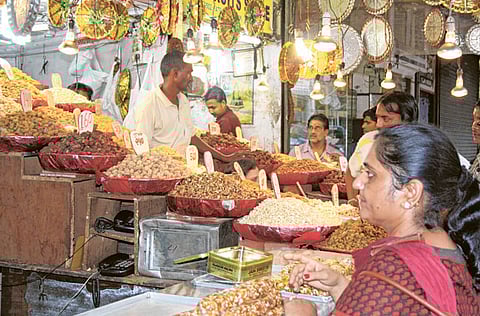
New Delhi: It's festive time throughout the year at Old Delhi and some of the celebrations only enhance the whole food experience.
Referred to as the walled city, Old Delhi is a foodie's delight. Jama Masjid, Red Fort and Chandni Chowk are few of its best-known landmarks, but so are the food joints that abound the place and are steeped in history.
The most famous are those in Dariba in the vicinity of Jama Masjid and in the more than 300-year-old lane, Chandni Chowk. One of the narrowest, busiest and prospering trading centres, several businesses take shape here.
A source of pleasure for food connoisseurs, the famous eateries boast VIP and celebrity clientele. Framed photographs of various dignitaries — from Maharaja of Patiala to Bollywood actor Akshay Kumar and former prime ministers Jawaharlal Nehru to Atal Bihari Vajpayee, along with the owners, adorn the walls of the shops.
Though it may not be possible now for these celebrities to visit some of these shops due to security reasons, the mouth-watering delicacies, which remain their weakness, continue to be delivered at their homes.
Karim's is well-known for its kebabs. Started in 1857, it specializes in Mughal cuisine and is also famous for phirni (a sweet dish). Though Karim's décor isn't fancy, the aroma that wafts across when you walk in is something that swankier places do not have. Their biryanis and naans are awesome.
A hub and centre of social and cultural life, there are numerous lanes in Chandni Chowk, but Gali Paranthe Wali is the most popular among foodies. For six generations, families have been serving parathas in this area.
It all began with the aroma rising from a shop. At ‘Gaya Prasad', the first establishment named after the owner, the whiff was such that it enticed people to simply move in that direction. Once there, none could resist the temptation of consuming the mouth-watering delicacy. And that's how the paratha network originated at an unknown gali (lane) in the Dariba Khurd area in 1882.
It spread across so rapidly in the entire lane that almost all shops that opened in the vicinity were paratha related. Overnight there were nine shops doing paratha business. Over the years, though, only three shops remain.
Informs Rajiv Sharma, great great grandson of Pandit Gaya Prasad, "I heard numerous stories about the business. We were often called to late Prime Minister Lal Bahadur Shastri's residence to make parathas for the family."
The entire vegetarian paratha selection is made without onion and garlic and cooked in ghee (clarified butter). The varieties include stuffing of potatoes, tomatoes, cauliflower, paneer (cottage cheese), rabri (sweet milk dish), papad, peas, radish, carrot, fenugreek, sugar and banana. The paratha is served on a thali (steel plate) with subzi (vegetarian preparations), achar (pickle) and chutney. Take a walk in the market and almost every structure has a story to tell.
Owner of the Ghantewala (bell ringer) sweet shop, known for their lip-smacking jalebis (sweet preparation), said, "Legend has it that in Mughal times, great processions passed along Chandni Chowk and one of the royal elephants would stop in front of this shop and ring its bell. It would refuse to budge until fed some sweets. Hence the name Ghantewala."
The other, small but significant, jalebi shop is simply known as the Old and Famous Jalebi Wala. A senior citizen, residing in the area claimed, "The jalebis in these outlets are cooked in ghee and the taste remains the same down the years."
He suggested the golden delectables should follow the spicy samosas. Filled with peas and potatoes, the samosas are served at this outlet with green chutney made from coriander and mint leaves.
The other major draws at Chandni Chowk include Chaina Ram's Karachi halwa. Owned by Hari Gidwani, the shop was established in 1901. Further down, the serpentine queues all day long at Natraj's Dahi Bhalla tells the whole story. It sells one of the best dahi bhalla (lentil dumplings and yoghurt preparation) in the city. Established in 1940, the tiny kiosk also sells sumptuous aloo tikkis. Similarly, Giani Di Hatti, a rabri-falooda shop is another place of pride. A glass-full of this sweet delicacy won't leave any room to ask for more.
Early beginnings in Mughal era
During the Mughal period, Chandni Chowk was Delhi's most popular landmark. When the area was conceptualised, it evoked a sense of beauty as the moon shone brightly on the water channel that ran alongside the road from Red Fort to Fatehpuri Masjid. That's how the historical place got its name — Chandni Chowk or the Moonlit Square.
Mughal emperor Shah Jahan's favourite daughter, Jahanara built it in 1650 AD to complement Red Fort in Shahjahanabad. During Shah Jahan's reign, the arcade of shops had been built in a half-moon shape. But with the passage of time, a lot has changed and today it brings images of congested alleys and chaos all around.
Houses of the nobles
Chandni Chowk was earlier chock-a-block with mansions of the nobles. But sadly, the only remnants of the old grandeur remain and the splendour is missing. In fact, just as the Delhi government was ready to celebrate the 210th birth anniversary of noted Urdu poet Mirza Ghalib in 2006, it was shocked to see the pitiable condition of his haveli (mansion). It was subsequently restored. The place is also famous for its jewellery shops. Some of the shops are nearly two centuries old. Set amidst sundry shops of clothes and other knick-knacks, you can smell your way to the 190-year-old shop Gulabsingh Johrimal, which sells at least 200 varieties of ittars (perfumes).
Bollywood fascination
Delhi has become a favourite with Bollywood. In the last few years, several film directors have caught the flavour of Old Delhi and New Delhi, dotted with the old-world charm of the monuments. Movies have captured the wide roads around India Gate as much as they have encapsulated the sprawling spread of rooftops and minarets that dot Old Delhi, especially the Chandni Chowk area.
Some of the most popular Hindi films shot here include Chandni Chowk to China, Delhi 6, Delhi Belly, Dev D, Oye Lucky Lucky Oye, Love Aaj Kal, Aisha, Band Baaja Baraat, Yeh Saali Zindagi and Mere Brother Ki Dulhan.


