The world's first anti-ageing gene therapy has just been injected into a human - here's what it does
First human gets experimental gene shot to rewind ageing cells in the eye
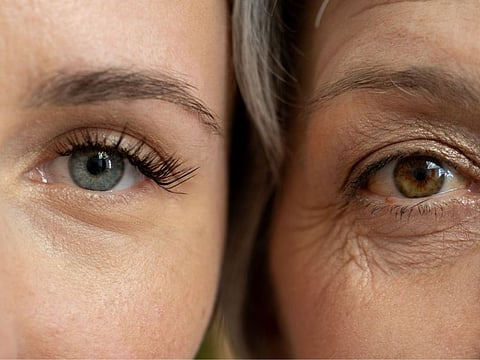
Dubai: A human has received a gene therapy designed to partially reverse ageing at a cellular level for the first time.
Life Biosciences, a biopharmaceutical company based in Boston, Massachusetts, announced on June 9 that the first participant has been dosed in what is believed to be the world's first clinical trial of partial cellular reprogramming in humans.
The experimental drug, known as ER-100, works through epigenetic medicine, a field that modifies how the body reads its genes rather than altering the underlying DNA sequence.
The therapy targets a form of glaucoma, a condition that can lead to blindness, and will eventually be extended to patients with non-arteritic anterior ischaemic optic neuropathy (NAION), a severe acute condition that damages the optic nerve.
Participants receive a single gene therapy injection directly into the eye. Over the following weeks, they take a course of antibiotics that acts as a chemical 'on switch' for three therapeutic genes embedded in the treatment.
The Phase 1 trial's primary goals are to assess safety and tolerability. Fewer than 20 patients are expected to participate, recruited across clinics in Boston, New York, Los Angeles, and Charleston.
Get updated faster and for FREE: Download the Gulf News app now - simply click here.
Why the eye first?
Researchers and regulators consider the eye an ideal organ for testing gene therapy for the first time. As reported by Nature, changes made to cells in the eye are far less likely to cause dangerous, body-wide side effects than changes made to cells in other organs. That makes it a natural place to trial techniques that scientists hope to one day apply across the rest of the body.
What is cellular reprogramming and why is it such a big deal?
The science behind ER-100 goes back to a Nobel Prize-winning discovery made roughly 20 years ago.
According to Massachusetts Institute of Technology (MIT), researcher Shinya Yamanaka showed that introducing a small set of powerful genes into a cell could reprogram it back into a stem cell, one that resembles cells found in an early embryo and can grow into any tissue type. These are now known as Yamanaka factors, sometimes described as a biological factory reset.
The problem is that a full reset is dangerous. That risk led scientists to a more cautious approach - 'partial' or 'transient' reprogramming. The idea is to expose cells to only some of the reprogramming genes or to switch them on only briefly, so cells act younger without forgetting what they are supposed to do.
ER-100 uses three of these genes to target damaged eye cells. Researchers hope the treatment can rejuvenate ageing retinal cells and restore some of the vision patients have lost.
Silicon Valley's interest and the Musk connection
The trial has attracted attention well beyond the medical community. Earlier this year, at the World Economic Forum, Elon Musk described human ageing as a "very solvable" problem. Life Biosciences co-founder and Harvard researcher David Sinclair appeared to respond on X, confirming that human trials were imminent.
When Musk cryptically asked, "ER-100?", Sinclair replied with a single word: “Yes."
Sinclair, one of the most prominent figures in longevity science, has staked much of his reputation on cellular reprogramming. He has previously claimed that partial reprogramming restored vision in mice after their optic nerves were deliberately damaged and suggested there was evidence the nerves physically regrew.
His profile, however, has become increasingly impactful, yet also contested.
The FDA said yes but scientists are watching carefully
Earlier this year the US Food and Drug Administration (FDA) cleared the planned trials, giving Life Biosciences the regulatory go-ahead before any patient was dosed.
Early research in non-human primates has suggested that ER-100 may be able to restore function in damaged cells.
However, the medical community remains cautious and for good reason. According to Science Alert, Altering gene expression is not without risk and the most serious concern is that reprogramming signals could push certain cells towards becoming cancerous.
It is precisely why a Phase 1 safety trial, in the relatively contained environment of the eye, is the necessary first step before anything more ambitious is attempted.
ER-100 is not a longevity elixir not yet. What it is, as of this week, is the first partial cellular reprogramming therapy to enter a human body under clinical conditions. Whether it is safe, and whether it works, will take years to find out. But the trial has begun.


