Hegseth makes surprise trip to Venezuela, inks defence pact
US and Venezuela unite against narco-terrorism in landmark military agreement
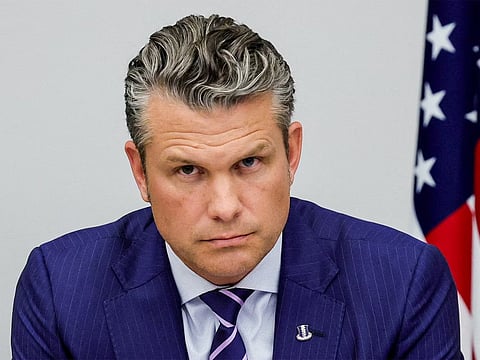
Embattled US Defence Secretary Pete Hegseth made an unannounced appearance in Caracas on Wednesday, the highest-level US visit since the January ouster of president Nicolas Maduro.
Hegseth — who recently avoided congressional impeachment and faces sustained scrutiny for his handling of the Iran war and the legality of deadly anti-drug strikes — met interim leader Delcy Rodriguez.
State television broadcast images of the pair side by side as Hegseth announced a military cooperation agreement, underscoring a dramatic thaw in long-hostile relations.
Get updated faster and for FREE: Download the Gulf News app now - simply click here.
Signaling a partnership "against narco-terrorist and criminal enterprises," Hegseth said the United States also wanted to unlock oil-rich Venezuela's "incredible resource capabilities".
"We see this as a reestablishment of our defence partnership and the opportunity to work together between our two great militaries," he said.
Rodriguez — bolstered by US support — hailed a "resumption of the technical-military relationship between both countries" after years of rupture and US sanctions.
She has governed Venezuela with Washington's backing since US special forces captured Maduro and spirited him to New York, where he faces trial on charges of "narco-terrorism."
Washington's embrace of Maduro's vice-president has been deeply controversial among Venezuela's often-repressed pro-democracy opposition.
While Venezuelans enjoy more freedoms than a year ago, Donald Trump's administration has allowed swaths of the authoritarian state apparatus to remain in place.
Hundreds of political prisoners remain behind bars and no date has been set for free and fair elections.
But Venezuela is seen as vital for US efforts to secure new sources of oil, isolate the communist government of Cuba and to curb cocaine trafficking from South America.
Caracas has long harboured Colombian drug-running guerrilla groups including the ELN, which operate across vast tracts of territory on either side of the border.
Without specifically mentioning the ELN, Hegseth said the US wanted to "ensure the Venezuelan people are not threatened by foreign actors or narco-terrorists or criminals and that they are safe and secure inside sovereign borders."
Southern strategy
Since Trump returned to office two years ago, the United States has significantly stepped up military operations in Latin America.
US forces have struck alleged drug-smuggling boats in the Caribbean and eastern Pacific, killing more than 230 people, according to an AFP tally.
Rights groups say the administration has provided scant proof that the vessels were involved in drug trafficking and have warned the strikes may amount to extrajudicial killings.
Washington has deployed troops, powerful Reaper drones and other military assets to the region.
Satellite imagery shows the base undergoing significant construction work in recent months.
The US has also backed anti-narcotic strikes in Colombia, where Hegseth is expected later on Wednesday.
Washington and Bogota have long counted each other as allies in the war on drugs, with one governing the world's biggest cocaine market and the other its largest producer.
Colombian President Abelardo de la Espriella has sought to deepen the relationship even further since his inauguration in August, boosting military cooperation with the United States and bombing drug-running guerrillas.
More than 300 US soldiers recently took part in anti-drug-trafficking exercises in Colombia alongside 400 Colombian soldiers.
Defence Minister Jorge Eduardo Mora announced Hegseth's visit on Tuesday, telling Congress the Pentagon chief would also deliver a C-130 military aircraft.
The Pentagon has yet to announce that Hegseth is traveling and has not provided any details on his trip.
Hegseth's trip follows an impeachment attempt by Congress that threatened his job less than two years into his tenure.
Analysts say that when the Democratic majority is sworn in in January, Trump's policies and his alliances in Latin America will come under fierce examination.


