Bessent warns Iranian elites: ‘We know where your money is’ as US targets offshore fortunes
White House escalates pressure, vowing to seize wealth ‘stolen from Iranian people’
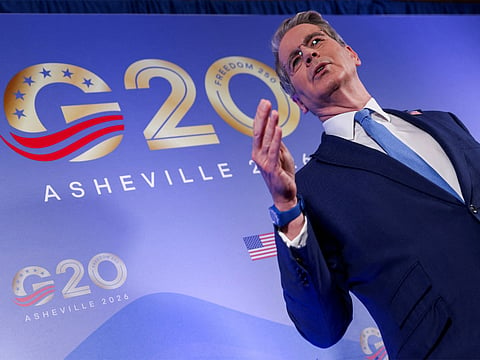
US Treasury Secretary Scott Bessent has warned senior Iranian officials that the Trump administration will pursue their alleged hidden wealth overseas, including offshore bank accounts and luxury properties, as Washington intensifies its campaign to financially isolate Tehran.
Speaking on the sidelines of the Group of 20 finance meetings, Bessent delivered a direct warning to Iran's ruling elite, saying US authorities have identified assets held through offshore structures, including in the British Virgin Islands (BVI).
"We know who is helping the Iranians, they know who they are — and it is going to stop. This is the final move for this regime after 47 years," Bessent stated in a video clip shared by the Tump's administration's X account @RapidResponse47.
“We know where in the British Virgin Islands your accounts are at these trust companies,” Bessent said.
“We know the $100-million houses you have around the world, and we are going to freeze those.”
'Assets stolen from Iranian people'
He added: “We are going after the regime's assets they have stolen from the Iranian people.”
Bessent said the United States would work with international partners to shut down the financial structures used to conceal the wealth.
He also suggested that recovered assets could ultimately be directed toward the Iranian people or victims of terrorism.
“After 47 years — it is over,” Bessent said, echoing the Trump administration's broader message that Washington intends to end what it describes as decades of Iranian hostility.
From sanctions to hunting the money
The warning marks a further escalation of the Trump administration's economic campaign against Iran.
On Aug. 24, Treasury formally launched “Operation Economic Outcast,” describing it as a global effort to sever the financial connections sustaining the Iranian regime.
Treasury said it had mapped Iranian oil-smuggling networks, financial facilitators and sanctions-evasion mechanisms and would pursue a “zero-leakage” strategy.
The campaign is moving beyond conventional sanctions against Iranian government institutions.
Washington is increasingly targeting individual financiers, shell companies, exchange houses, shipping networks and assets held outside Iran.
In July, Treasury sanctioned Iranian financier Ali Ansari, accusing him of building an international network of real estate and commercial holdings benefiting Supreme Leader Mojtaba Khamenei and other regime figures.
The department said the network stretched across multiple jurisdictions and used shell companies and bank accounts to obscure ownership.
Treasury has also targeted the network of Iranian businessman Babak Zanjani, alleging that it used financial services, commodities, digital assets and overseas companies to obscure ownership and move money offshore.
The dollar is the bigger weapon
Bessent has also warned that Washington could cut Iranian-linked institutions and businesses off from the global dollar-based financial system.
That potentially gives the United States considerably more leverage than simply freezing assets. Banks, companies and financial intermediaries that continue doing business with sanctioned Iranian entities could themselves face US penalties or lose access to the American financial system.
On Sept. 1, Bessent said Treasury was preparing additional sanctions against an Iranian bank and warned that the campaign could extend to companies that do business with Iran's Islamic Revolutionary Guard Corps, including airline-leasing companies.
The administration's objective, Bessent said, is to “economically asphyxiate” the Iranian regime.
Tehran pushes back
Iran has rejected the picture of an economy on the verge of collapse.
Central Bank Governor Abdolnaser Hemmati said Tuesday that Iran still has sufficient foreign currency and that the central bank could inject up to $2 billion into the foreign-exchange market to stabilise the rial.
He acknowledged that sanctions and the naval blockade have created serious economic difficulties but said Iran's economy had not collapsed.
The confrontation is unfolding as U.S.-Iran military tensions have also sharply escalated, with fresh U.S. strikes on Iranian military and maritime targets followed by Iranian missile and drone attacks on U.S. and allied positions in the region.
That makes Bessent's warning significant: Washington is not only trying to cripple Iran's ability to earn money. It is signaling that it intends to identify, freeze and potentially recover the private fortunes of the people who run the regime. And Bessent's message to Tehran was blunt: “Either you are with us, or against us.”


